
- Blanch and Slow-Braise the Oxtail and Tripe

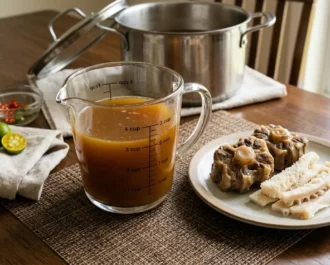
Place the oxtail and cleaned tripe in a large stockpot and cover with cold water. Bring to a rolling boil and cook for 12 minutes, allowing impurities to surface. Drain completely, rinse each piece under cold running water, and scrub off any residue. Return to the clean pot with fresh water to cover by two inches. Bring to a second boil, reduce to the gentlest possible simmer, then cover and cook for 2.5 hours, skimming the surface every 30 minutes. The oxtail is ready when it yields easily to a fork with minimal resistance. Reserve exactly 3 cups of the rich, collagen-laden cooking broth — this is the non-negotiable foundation of your peanut sauce and should never be replaced with plain water.
- Prepare the Annatto Water and Toasted Rice Powder
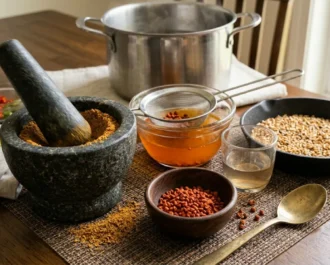
While the meat simmers, prepare the two components that give kare-kare its color and body. For the annatto water, soak the seeds in one cup of warm water for 10 minutes, pressing them repeatedly to extract maximum orange color, then strain and discard the seeds. For the toasted rice, dry-toast raw white rice in a clean skillet over medium heat for 8 to 10 minutes, stirring constantly until each grain turns deep golden-brown and smells nutty. Remove from heat and cool completely before grinding to a fine powder using a mortar and pestle or blender. These two components are both traditional and functional — the annatto provides color and earthiness, while the rice powder thickens the sauce with a subtle wheaty depth.
- Build the Peanut Sauce Base
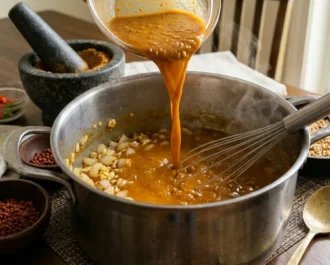
Heat cooking oil in a large, heavy pot over medium heat. Saute the diced onion until completely translucent and soft, about five minutes. Add the minced garlic and cook for one more minute until fragrant and lightly golden. In a bowl, whisk together the peanut butter, ground toasted peanuts, toasted rice powder, annatto water, and 3 cups of reserved oxtail broth until completely smooth. Pour this mixture into the pot with the softened aromatics, stirring constantly as it heats to prevent sticking. Simmer over medium-low heat for 8 to 10 minutes, continuing to stir, until the sauce is thick, glossy, and a beautiful deep amber-orange. Season carefully with salt and white pepper — the sauce should be rich, nutty, and slightly sweet.
- Integrate the Meat into the Peanut Sauce
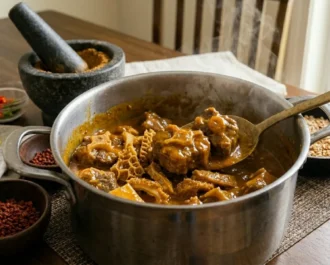
Add the fully cooked and drained oxtail and tripe to the peanut sauce, stirring gently so every piece is completely coated. Reduce heat to low and simmer together for 15 to 20 minutes, stirring frequently to prevent the thick sauce from scorching on the bottom. This integration stage is what separates excellent kare-kare from ordinary — the meat must absorb the peanut sauce rather than simply sitting in it. If the sauce tightens too much during this stage, add reserved broth in small increments, whisking to maintain a smooth, flowing consistency. The finished sauce should coat the back of a spoon thickly and have a beautiful glossy sheen. Taste one final time and adjust salt before moving to the vegetables.
- Blanch Vegetables and Final Assembly
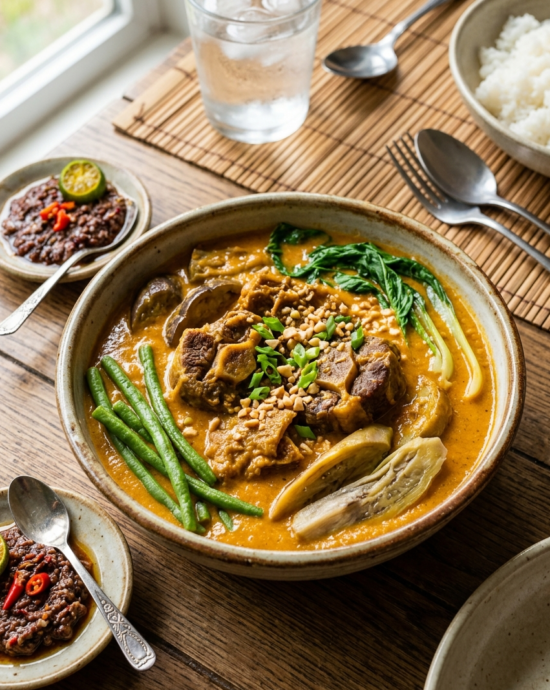
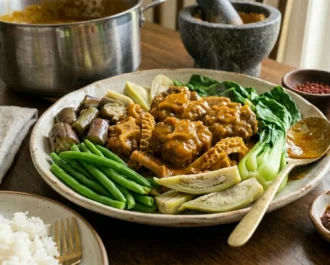
Bring a separate pot of salted water to a boil. Blanch the vegetables individually to preserve their vivid colors and distinct textures: string beans for 3 minutes, eggplant for 4 minutes, banana heart for 5 minutes, and pechay for just 60 seconds. Transfer each to an ice bath immediately after blanching to stop cooking. Blanching vegetables separately rather than directly in the kare-kare prevents the sauce from absorbing vegetable water and turning thin. Arrange the oxtail and tripe on a large, wide serving platter. Surround generously with all the blanched vegetables. Ladle the thick peanut sauce over everything. Serve immediately alongside steamed white rice and a generous side of bagoong alamang.
- Calories:560 kcal28%
- Protein:46 g92%
- Carbohydrates:20 g7%
- Sugar:4 g4%
- Fat:34 g44%
- Salt:0.9 g15%
- Energy:2,343 kJ28%%
Table of Contents
What Is Beef Kare-Kare?
Beef Kare-Kare is a slow-braised Filipino stew made with collagen-rich oxtail and tripe cooked in a thick, golden peanut sauce seasoned with toasted rice and annatto, and served with fermented shrimp paste as its essential condiment. It is widely regarded as the crown jewel of Filipino festive cooking and one of the most complex, rewarding dishes in the entire national culinary canon.
Originating from Pampanga, the culinary capital of the Philippines, kare-kare is the dish most associated with Kapampangan culinary pride — a region renowned throughout the archipelago for producing the country’s finest cooks and most sophisticated food traditions. The Kapampangan people attribute the dish to their ancestral ingenuity, and it has been passed through generations with devotion and precision.
The flavor architecture of kare-kare is deceptively sophisticated. The peanut sauce is built from multiple layers: the natural sweetness of ground roasted peanuts and peanut butter, the earthy amber note of annatto, and the subtle wheaty depth of toasted rice powder, which thickens the sauce while contributing a dimension no starch substitute can replicate. Beneath it all is the collagen-rich oxtail broth, which gives the sauce its glossy, almost gelatinous viscosity.
Kare-kare is inseparable from bagoong alamang — fermented shrimp paste. This pungent, intensely salty condiment is stirred into each individual bowl in whatever amount the diner prefers, and the contrast between sweet, creamy peanut sauce and funky, briny bagoong is one of the most inspired and irreplaceable flavor pairings in world cuisine. Eating kare-kare without bagoong is considered incomplete by every Filipino.
For Filipino families, kare-kare is celebration food — prepared for birthdays, fiestas, and holidays. Its labor, patience, and cultural weight make every bowl feel like an occasion.
Ingredient Notes
- Oxtail: The oxtail is the heart of kare-kare; its generous collagen and bone marrow dissolve into both the cooking broth and the peanut sauce during the long braise. Choose thick-cut cross-sections with marrow clearly visible in the center for the most luxurious result.
- Beef Tripe: Tripe adds textural contrast and absorbs the peanut sauce beautifully. Choose honeycomb tripe for the most pleasant texture and clean it thoroughly by blanching twice before using. Pre-cleaned packaged tripe from Asian grocery stores saves significant preparation time.
- Peanut Butter: Use natural, unsweetened smooth peanut butter for the most authentic flavor. Commercial sweetened versions push the sauce toward cloyingly sweet. Some traditional cooks prefer freshly ground roasted peanuts for a more pronounced, less processed nuttiness.
- Toasted Rice Powder (Bigas na Sinangag): This is the traditional kare-kare thickener and is worth making from scratch rather than substituting with cornstarch. Toast until properly golden for the best nutty, wheaty flavor. Under-toasted rice produces a starchy, raw-tasting sauce.
- Annatto Seeds (Achuete): Annatto provides the characteristic deep amber-orange color of kare-kare without significantly affecting flavor. Look for plump, deep-red seeds at Asian or Filipino grocery stores. Old, pale seeds produce a much less vivid color.
- Bagoong Alamang: Use the sauteed (ginisang) bagoong version rather than raw, as its flavor is more rounded and less aggressively pungent. This condiment is non-negotiable — it is not merely a garnish but the essential counterpoint that completes every bite.
Ingredient Suggestions
- Calabaza Squash — Cubed squash added with the eggplant contributes a gentle sweetness that complements the peanut sauce naturally; it is one of the most common regional additions.
- Extra Banana Blossom — Adding more puso ng saging increases textural variety and stretches the dish further for larger gatherings without additional cost.
- Crispy Fried Garlic — Scattered over the finished platter just before serving, crispy garlic adds crunch and an aromatic punch that elevates every spoonful.
- Coconut Milk (1/2 cup) — Stirring a small amount into the peanut sauce at the end creates a creamier, slightly sweeter variation popular in some regional versions.
- Soft-Boiled Quail Eggs — A restaurant-style garnish that adds elegance, richness, and a touch of visual contrast against the deep amber sauce.
Helpful Tips & Pro Tips
- Why is my Kare-Kare sauce too thin? Insufficient peanut butter, too much broth, or not enough reduction time are the usual causes. Remove the lid for the final 10 to 15 minutes of simmering to allow evaporation, and stir in an extra tablespoon of peanut butter to recover the consistency. The sauce should always coat a spoon thickly before serving.
- Always save the oxtail cooking broth. The collagen-rich broth is the liquid backbone of the peanut sauce — it carries both flavor and the natural gelatin that gives kare-kare its distinctive viscosity. Never substitute with plain water or commercial stock, which lacks the gelatinous depth that homemade broth provides.
- Blanch vegetables separately, always. Cooking vegetables directly in the kare-kare pot releases water that dilutes and thins the peanut sauce irreparably. Blanch separately, shock in ice water, and add to the platter at the last moment to preserve color, crunch, and sauce consistency.
- Kare-Kare is dramatically better the next day. Like most Filipino braised dishes, the peanut sauce continues to penetrate the oxtail overnight. Prepare the day before, refrigerate, and reheat gently — you will notice a significant difference in flavor depth and integration.
- Serve the bagoong on the side, always. Never stir bagoong into the kare-kare pot. Each diner should control their own bagoong addition — some prefer a whisper, others want a generous spoonful. Respecting this individual ritual is part of authentic kare-kare hospitality.
- Toast the rice until properly golden. The toasted rice powder should smell nutty and rich before grinding — if it smells raw or starchy, keep toasting. Under-toasted rice produces a sauce that tastes floury rather than nutty, missing the depth that makes traditional kare-kare distinct.
How to Serve and Store
Serve kare-kare immediately in a large, wide bowl or platter that showcases the glistening oxtail, vibrant vegetables, and amber peanut sauce together — visual presentation is part of the kare-kare experience. Accompany with steamed white rice and ginisang bagoong alamang on the side. Leftover kare-kare stores in an airtight container in the refrigerator for up to 3 days; store the peanut sauce and vegetables separately if possible to prevent the greens from overcooking on reheating. Reheat over low heat on the stovetop, adding a splash of broth to restore consistency and stirring constantly to prevent scorching. Freeze the sauce and meat (without vegetables) for up to 2 months; thaw overnight in the refrigerator and add freshly blanched vegetables when reheating.
Substitutions
- Oxtail → Beef knuckle or beef shank — both provide similar collagen content and braise beautifully; adjust cooking time slightly.
- Beef Tripe → Additional oxtail or beef tendon — maintains the gelatinous character of the dish for those who prefer not to eat tripe.
- Peanut Butter → Sunflower seed butter — a safe and effective swap for peanut allergies; flavor is milder but sauce structure is identical.
- Bagoong Alamang → White miso paste (1 tbsp) — a non-seafood vegan alternative that provides fermented umami depth; a fusion-friendly adaptation.
- Toasted Rice Powder → Cornstarch (2 tbsp mixed with water) — a quick substitute that thickens the sauce well but lacks the nutty toasted character.
- Fresh Banana Heart → Canned young jackfruit — widely available and absorbs the peanut sauce in a similar way; a practical substitute outside the Philippines.
Suggested Recipes
- Beef Pochero — Another festive Spanish-influenced Filipino beef stew that appears alongside kare-kare at celebration tables, offering tomato richness and chorizo depth as a complementary flavor contrast.
- Beef Caldereta — A richly spiced tomato-and-liver-spread braised beef that shares kare-kare’s slow-cooking patience and fiesta-occasion status in the Filipino culinary tradition.
- Beef Balbacua — A Visayan collagen-rich beef stew made with peanuts and coconut milk that shares kare-kare’s fondness for gelatinous braised cuts and peanut flavor notes.
- Chicken Kare-Kare — A lighter, faster variation using bone-in chicken pieces with the same peanut sauce formula — an accessible weeknight version of the same beloved flavor.