
- Step 1. Freeze the Milk Base
Pour the whole milk and 3 tablespoons of the sweetened condensed milk into a shallow, freezer-safe container, whisking to combine thoroughly. Freeze for at least 6 hours, or ideally overnight, until completely solid. Using a shallow container rather than a deep one helps the milk freeze more evenly and makes it easier to shave later, since a large solid block can be difficult to process in a standard blender or shaver.
- Step 2. Prepare the Rice Cake Topping
Bring a small pot of water to a boil and add the sliced garaetteok rice cakes, cooking for 2 to 3 minutes until soft and slightly translucent. Drain and toss the warm rice cakes with a small amount of the roasted soybean powder, coating them evenly. This sweet, nutty coating is a classic bingsu topping that adds a chewy texture alongside the fluffy shaved ice.
- Step 3. Shave the Frozen Milk
Remove the frozen milk block from the freezer and let it sit at room temperature for 5 minutes to soften slightly, which makes shaving easier. Using a countertop ice shaver or a high-powered blender, process the frozen milk in short pulses until it transforms into light, fluffy, snow-like shavings. Work quickly, since the shaved ice will begin melting as soon as it is processed.
- Step 4. Build the Base
Divide half of the shaved milk ice between two serving bowls, mounding it into a soft, snowy pile. Drizzle each mound with a spoonful of the remaining condensed milk, then add a generous scoop of sweet red bean paste over the top, spreading it slightly so it is visible from multiple angles once the rest of the toppings are added.
- Step 5. Add the Remaining Ice and Toppings
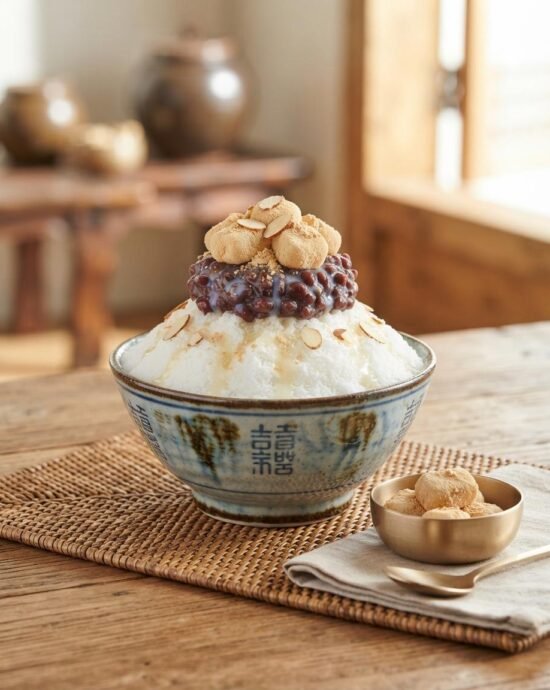
Top each bowl with the remaining shaved milk ice, building the mound higher. Arrange the soybean-coated rice cakes, frozen injeolmi bites, and sliced fresh fruit artfully over the top of the ice, distributing them evenly so every bite includes a mix of textures and flavors. A visually appealing, colorful arrangement is part of the traditional bingsu presentation.
- Step 6. Finish and Serve
Sprinkle the toasted rice cereal or cornflakes over the top for an extra crunchy element, and add a final light drizzle of condensed milk and a dusting of roasted soybean powder if desired. Serve bingsu immediately with a wide spoon so each bite can capture a bit of ice, red bean, rice cake, and fruit together, since the dessert is meant to be eaten quickly before the ice melts.
- Calories:380 kcal19%
- Protein:10 g20%
- Carbohydrates:68 g25%
- Sugar:42 g47%
- Energy:1590 kJ19%
- Salt:0.3 g5%
- Fat:8 g11%
What is Bingsu?
Bingsu is a beloved Korean shaved ice dessert built from finely shaved, snow-like ice, traditionally made from frozen sweetened milk, topped generously with sweet red bean paste, chewy rice cakes, fresh fruit, and a drizzle of condensed milk. The most classic and historically significant version, patbingsu, takes its name directly from pat, meaning red beans, reflecting the dish’s origins as a simple combination of shaved ice and sweetened red beans that dates back to the Joseon Dynasty, when ice harvested from frozen rivers was stored in insulated ice houses and reserved as a luxury enjoyed primarily by royalty and the wealthy. As ice became more widely accessible throughout the twentieth century, bingsu transformed from an exclusive delicacy into one of Korea’s most beloved warm-weather desserts, now sold everywhere from casual cafes to dedicated dessert restaurants that compete to create increasingly elaborate and photogenic versions. What distinguishes modern bingsu from a simple snow cone is the ice itself, which, rather than being coarsely crushed, is shaved so finely that it achieves an almost powdery, snow-like texture that melts smoothly on the tongue rather than crunching. The technique of freezing sweetened milk rather than plain water before shaving has become especially popular, producing a naturally creamy, slightly sweet base without the need for excessive added sugar. With countless contemporary variations featuring ingredients like matcha, mango, chocolate, and cheesecake alongside the traditional red bean and rice cake toppings, bingsu remains one of Korea’s most creative and visually striking dessert traditions.
Ingredient Notes
- Whole Milk: Using whole milk rather than a lower-fat option produces a creamier, richer shaved ice base once frozen and processed.
- Sweet Red Bean Paste: Look for patbingsu-specific red bean paste, which is slightly chunkier and less sweet than the smooth paste used in other Korean desserts.
- Korean Rice Cakes (Garaetteok): These cylindrical rice cakes add a chewy texture; boiling them briefly before adding to the bingsu keeps them soft rather than firm.
- Roasted Soybean Powder: This nutty, slightly sweet powder, also called injeolmi powder, is a classic bingsu topping that adds depth and a distinctive toasted flavor.
- Sweetened Condensed Milk: Drizzled throughout the dessert, this adds concentrated sweetness and a rich, creamy element that ties all the toppings together.
Ingredient Suggestions
- Matcha powder: Dusted over the top or blended into the milk before freezing, matcha adds an earthy, slightly bitter contrast to the sweet toppings.
- Mango cubes: Fresh, ripe mango is one of the most popular modern bingsu toppings, adding bright color and natural sweetness.
- Chocolate syrup and cookie crumbles: A modern, indulgent twist that transforms bingsu into a dessert closer to a sundae.
- Cheesecake bites: Small cubes of cheesecake are a popular contemporary addition found at many Korean dessert cafes.
- Extra condensed milk: For those who prefer a sweeter, creamier bingsu, an extra drizzle enhances the overall richness.
Helpful Tips & Pro Tips
- If your shaved ice turns out icy and coarse rather than light and fluffy, the milk block likely was too hard when shaving; let it soften for a few minutes at room temperature first.
- Freeze the milk in a shallow, wide container rather than a deep one, since this produces more even, easily shaved ice.
- Assemble bingsu just before serving, since the dessert begins melting quickly once out of the freezer and is best enjoyed fresh.
- Layer the red bean paste and condensed milk between two layers of shaved ice rather than only on top, which ensures every bite has balanced flavor throughout.
- Use a wide, shallow bowl for serving rather than a deep cup, which allows for a more traditional presentation and easier access to every topping.
How to Serve and Store
Serve bingsu immediately after assembling, in a wide, shallow bowl with a large spoon, since the dessert is meant to be enjoyed quickly before the delicate shaved ice begins to melt. Bingsu does not store well once assembled and should always be built fresh right before serving; however, the frozen milk base can be prepared up to a week in advance and kept in the freezer until ready to shave. Sweet red bean paste and other toppings like cooked rice cakes can be prepared ahead and stored separately in airtight containers in the refrigerator for up to 3 days, making assembly quick when you are ready to serve.
Substitutions
- Whole Milk → Full-fat coconut milk or oat milk — Creates a similarly creamy shaved ice base while keeping the dessert dairy-free and vegan. (Vegan)
- Toasted Rice Cereal → Certified gluten-free cereal or omit — Ensures the topping selection stays free of gluten without sacrificing crunch. (Gluten-Free)
- Fresh Mango Or Strawberries → Frozen fruit, thawed slightly — A more budget-friendly and season-flexible option that still adds bright flavor. (Budget-Friendly)
- Sweet Red Bean Paste → Store-bought canned sweetened red beans — A convenient substitute when homemade or specialty patbingsu paste is unavailable.
- Injeolmi Rice Cake Bites → Fresh mochi — A close textural substitute when Korean rice cake bites are not available.
Suggested Recipes
- Hotteok: A warm, sweet Korean street snack that offers a cozy contrast to bingsu’s cool, refreshing character.
- Sikhye: A traditional sweet rice punch that pairs well as a light beverage alongside a bowl of bingsu.
- Naengmyeon: Another chilled Korean dish that shares bingsu’s role as a refreshing warm-weather favorite.
- Kimbap: A savory rice roll that balances a meal nicely when bingsu is served as the sweet finish.

Jeff Smith
"Cooking is the intersection of history, science, and emotion."
For me, the kitchen has always been a laboratory of culture. With a background deeply rooted in digital strategy and precision, I approach the culinary arts with the same rigor I apply to the digital landscape—analyzing flavors, perfecting techniques, and documenting the nuance that makes Filipino cuisine truly world-class.
Findme Recipe was born from a desire to bridge the gap between traditional heritage and the modern home cook. Whether it is mastering the perfect balance of acidity in a classic Adobo or simplifying complex regional dishes for everyday kitchens, my mission is to preserve our culinary identity through accessible, data-backed, and delicious content.
I am not just building a database; I am cultivating a community where every Filipino kitchen feels empowered, every ingredient is celebrated, and every family heirloom recipe finds a place to thrive.
Join me as we translate the soul of our islands into recipes for the next generation.