
- Step 1. Soak the Malt Barley
Place the malt barley powder in a large bowl and add 8 cups of the water, stirring well to combine. Let the mixture sit undisturbed for 30 minutes to 1 hour, which allows the barley sediment to settle to the bottom of the bowl. This resting period is essential for extracting the natural enzymes from the malt barley that will later convert the rice starches into the sweet flavor characteristic of sikhye.
- Step 2. Strain the Malt Water
Carefully pour the malt barley water through a fine mesh strainer or cheesecloth into another large bowl, being careful not to disturb or pour out the gritty sediment that has settled at the bottom of the original bowl. Discard the sediment and reserve only the clear, pale amber liquid, which now contains the active enzymes needed to sweeten the rice in the next step.
- Step 3. Combine with Rice
Add the cooked rice to the strained malt water in a large pot or rice cooker with a warm-keep function, stirring to combine. If using a rice cooker, set it to the warm setting rather than cooking, since gentle, sustained warmth rather than boiling heat is what activates the enzymatic conversion process. If using a pot, keep it on the lowest possible stovetop heat or in a warm oven.
- Step 4. Ferment the Mixture
Let the rice and malt water mixture sit at a warm temperature, around 140°F, for 4 to 5 hours, checking periodically. You will know the process is working once individual grains of rice begin floating to the surface of the liquid, a clear sign that the enzymes have successfully broken down the starches and released natural sweetness into the liquid. This slow fermentation is the defining step that transforms plain rice water into sikhye.
- Step 5. Boil and Sweeten
Once a good number of rice grains are floating, transfer the mixture to a large pot along with the remaining 6 cups of water, the sugar, and the sliced ginger. Bring to a boil over medium-high heat, then reduce to a simmer and cook for 10 minutes, skimming off any foam that rises to the surface. Taste and adjust the sweetness with additional sugar if desired, keeping in mind the drink will taste slightly less sweet once chilled.
- Step 6. Chill and Serve
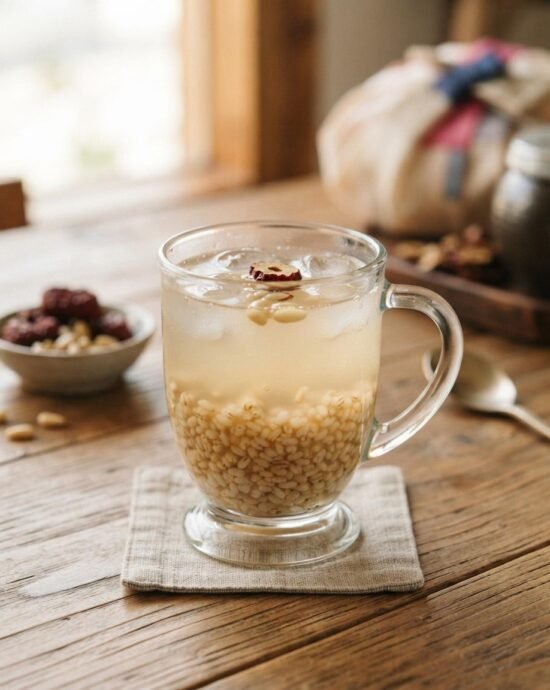
Remove the ginger slices and let the sikhye cool to room temperature before transferring it to the refrigerator to chill thoroughly for at least 2 hours, or ideally overnight. Serve sikhye cold in individual cups or bowls, making sure to include a few floating rice grains in each serving, and garnish with a few pine nuts on top just before serving for a traditional finishing touch.
- Calories:180 kcal9%
- Protein:2 g4%
- Carbohydrates:42 g15%
- Sugar:28 g31%
- Energy:753 kJ9%
- Salt:0.1 g2%
- Fat:1 g1%
What is Sikhye Recipe?
Sikhye is a traditional Korean sweet rice punch made by slowly fermenting cooked rice in a malt barley water, resulting in a naturally sweet, lightly effervescent beverage typically served chilled with a few grains of rice floating on top and a scattering of pine nuts for garnish. The drink’s gentle sweetness comes not from added sugar alone but from an enzymatic process in which amylase enzymes present in the malted barley break down the rice’s starches into simpler sugars over several hours of low, sustained warmth, a technique closely related to the fermentation methods used in traditional Korean brewing. Sikhye holds deep cultural significance in Korea, historically prepared as a special treat during major holidays such as Seollal and Chuseok, as well as after meals featuring spicy or oily foods, since its mild sweetness and light effervescence are traditionally believed to aid digestion. The floating grains of rice that rise to the surface during fermentation are considered a visual marker of a successfully made batch, and their presence in the finished drink, rather than being strained out, is part of the traditional serving style, distinguishing sikhye from clearer, more heavily strained beverages. While once primarily made at home using time-honored techniques passed down through generations, sikhye is now also widely available in canned and bottled form at Korean grocery stores, though many households continue to prepare it fresh, particularly around major holidays, valuing the more delicate, complex sweetness that a homemade batch delivers compared to the mass-produced version.
Ingredient Notes
- Malt Barley Powder (Yeotgireum): This dried, ground malted barley provides the enzymes necessary to convert rice starch into sugar; find it in the baking or traditional ingredients aisle of a Korean grocery store.
- Cooked Short-Grain White Rice: Freshly cooked rice works best, since its starches are more readily broken down by the malt enzymes than rice that has been refrigerated and hardened.
- Fresh Ginger: A few slices added during the final boiling step add a subtle warmth and help balance the drink’s sweetness with a gentle spiciness.
- Sugar: While the malt barley provides natural sweetness on its own, a modest amount of added sugar rounds out the flavor and ensures consistent sweetness batch to batch.
- Pine Nuts: A traditional garnish that adds a subtle richness and visual elegance; toast them lightly for extra flavor if desired.
Ingredient Suggestions
- Persimmon slices: A traditional seasonal addition in some regional variations, adding natural sweetness and fragrance.
- Jujube (Korean dates): Thinly sliced and added as a garnish, jujube contributes a subtle earthy sweetness traditional to festive versions.
- Extra ginger: For those who enjoy a spicier finish, an extra slice or two intensifies the warming ginger flavor.
- A cinnamon stick: Simmered briefly in the final boiling stage, cinnamon adds a warm, aromatic complexity.
- Honey instead of sugar: A more natural sweetener option that adds subtle floral notes to the finished drink.
Helpful Tips & Pro Tips
- If your sikhye tastes flat rather than sweet, the fermentation stage likely was not warm enough or long enough; consistent, gentle warmth around 140°F is essential for proper enzyme activity.
- Do not skip straining the malt barley water, since the gritty sediment left behind can make the final drink cloudy and unpleasantly textured.
- Watch for rice grains floating to the surface as your sign that fermentation is complete; this visual cue is more reliable than relying on time alone.
- Keep the fermentation temperature steady throughout the process, since temperatures that are too high can kill the necessary enzymes before they finish their work.
- Chill sikhye thoroughly before serving, as the drink is traditionally enjoyed ice cold and tastes noticeably better once fully chilled.
How to Serve and Store
Serve sikhye well-chilled in small cups or bowls, with a few floating rice grains and a garnish of pine nuts, traditionally offered as a refreshing drink after a meal or as part of a holiday spread. Store leftover sikhye in an airtight container in the refrigerator for up to 5 days, keeping the rice grains submerged in the liquid to prevent them from drying out. Sikhye can also be frozen for up to 2 months in an airtight container, though the texture of the rice grains may soften slightly upon thawing; thaw in the refrigerator and stir well before serving. Always serve sikhye cold, as its flavor and texture are best enjoyed chilled rather than at room temperature.
Substitutions
- Sugar → Rice syrup or agave syrup — A plant-based sweetener option that still complements the malted rice flavor. (Vegan)
- Malt Barley Powder → Verify your brand does not contain wheat additives — Most pure malted barley products are naturally gluten-free, but always check the label to be sure. (Gluten-Free)
- Pine Nuts → Toasted sesame seeds — A more affordable garnish option that still adds a pleasant nutty finish. (Budget-Friendly)
- Fresh Ginger → A pinch of ground ginger — A convenient substitute when fresh ginger is not on hand.
- Short-Grain Rice → Leftover cooked jasmine rice — Works in a pinch, though the texture and flavor will differ slightly from traditional short-grain rice.
Suggested Recipes
- Bingsu: A shaved ice dessert that pairs naturally with sikhye’s light sweetness for a refreshing dessert course.
- Hotteok: A warm, sweet street snack that balances nicely with a cold glass of sikhye on the side.
- Bibimbap: A savory rice bowl that makes sikhye a fitting, digestion-friendly beverage to serve alongside.
- Galbijjim: A rich, celebratory braised dish often served during the same holidays when sikhye is traditionally prepared.

Jeff Smith
"Cooking is the intersection of history, science, and emotion."
For me, the kitchen has always been a laboratory of culture. With a background deeply rooted in digital strategy and precision, I approach the culinary arts with the same rigor I apply to the digital landscape—analyzing flavors, perfecting techniques, and documenting the nuance that makes Filipino cuisine truly world-class.
Findme Recipe was born from a desire to bridge the gap between traditional heritage and the modern home cook. Whether it is mastering the perfect balance of acidity in a classic Adobo or simplifying complex regional dishes for everyday kitchens, my mission is to preserve our culinary identity through accessible, data-backed, and delicious content.
I am not just building a database; I am cultivating a community where every Filipino kitchen feels empowered, every ingredient is celebrated, and every family heirloom recipe finds a place to thrive.
Join me as we translate the soul of our islands into recipes for the next generation.