
- Step 1. Make the Dough
In a large mixing bowl, whisk together the all-purpose flour, glutinous rice flour, instant yeast, 1 tablespoon of the sugar, and salt. Add the warm milk, warm water, and 2 tablespoons of the vegetable oil, mixing until a soft, slightly sticky dough forms. Knead for 5 minutes by hand or with a stand mixer fitted with a dough hook, until the dough becomes smooth and elastic.
- Step 2. Let the Dough Rise
Shape the dough into a ball and place it in a lightly oiled bowl, turning to coat all sides. Cover with plastic wrap or a damp towel and let rise in a warm place for 1 hour, or until doubled in size. This resting period allows the yeast to develop the dough's signature soft, slightly chewy texture that defines a properly made hotteok.
- Step 3. Make the Filling
While the dough rises, stir together the brown sugar, remaining 2 tablespoons of sugar, ground cinnamon, and chopped peanuts or walnuts in a small bowl until evenly combined. This sweet, spiced filling is what gives hotteok its signature gooey, caramelized center once fried, so mix it thoroughly to ensure the cinnamon and nuts are evenly distributed throughout the sugar.
- Step 4. Shape the Pancakes
Once risen, punch down the dough and divide it into 8 equal portions, rolling each into a smooth ball. Lightly oil your hands to prevent sticking, then flatten each ball into a small disc and place about 1 tablespoon of the filling in the center. Gather the edges of the dough up and around the filling, pinching tightly to seal completely, then gently flatten the filled ball into a thick disc.
- Step 5. Fry the Hotteok
Heat the remaining 2 tablespoons of vegetable oil in a large nonstick skillet over medium heat. Place the filled dough discs seam-side down in the hot pan, working in batches if necessary. Fry for 2 minutes, then use a flat spatula to gently press each pancake down slightly, flattening it further and helping the filling melt evenly. Flip and fry the other side for another 2 to 3 minutes, until both sides are deep golden brown.
- Step 6. Cool Slightly and Serve
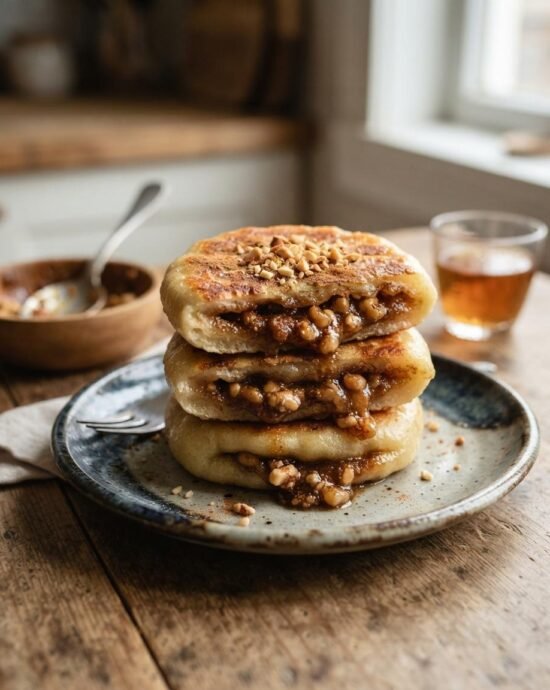
Once both sides are golden and the filling inside has melted into a gooey, syrupy center, transfer the hotteok to a plate lined with paper towels. Let them cool for 2 to 3 minutes before serving, since the molten sugar filling retains heat and can cause a burn if bitten into too soon. Serve warm, ideally fresh off the pan, as hotteok is best enjoyed while the exterior is still slightly crisp and the filling remains soft and gooey.
- Calories:260 kcal13%
- Protein:5 g10%
- Carbohydrates:42 g15%
- Sugar:18 g20%
- Energy:1088 kJ13%
- Salt:0.9 g15%
- Fat:8 g11%
What is Hotteok?
Hotteok is a popular Korean street food consisting of soft, chewy yeasted dough filled with a sweet, gooey mixture of brown sugar, cinnamon, and chopped nuts, then pan-fried until golden and caramelized on the outside. Believed to have arrived in Korea through Chinese immigrants during the nineteenth century, hotteok has since become fully integrated into Korean street food culture, especially beloved as a warming winter snack sold from steaming street carts throughout the colder months in cities across the country. What makes hotteok so distinctive is the dramatic contrast between its crisp, slightly caramelized exterior and its molten, syrupy interior, achieved by encasing a generous pocket of sugar and cinnamon inside soft dough and then pressing it flat during frying, which causes the sugar to melt into a hot, flowing filling. Vendors traditionally use a flat spatula to press each hotteok down in the pan, a satisfying, theatrical technique that also ensures even cooking and helps the filling distribute evenly throughout the pancake. While the classic cinnamon-sugar-and-nut filling remains the most beloved version, modern variations have expanded considerably, including savory versions filled with glass noodles and vegetables, as well as sweet versions incorporating seeds, dried fruit, or even ice cream on the side. Hotteok holds a particularly nostalgic place in Korean food culture, often associated with childhood memories of visiting bustling night markets and street food stalls, and remains one of the most recognizable and beloved Korean street snacks both within Korea and among Korean food enthusiasts worldwide.
Ingredient Notes
- Glutinous Rice Flour: Blending a portion of glutinous rice flour into the dough gives hotteok its signature chewy texture; do not substitute it entirely with all-purpose flour.
- Instant Yeast: This provides the dough’s rise and characteristic soft texture; make sure your yeast is fresh and your liquids are properly warm for the best activation.
- Brown Sugar: The primary filling ingredient, brown sugar melts into a rich, caramel-like syrup once heated inside the dough during frying.
- Ground Cinnamon: Adds warmth and aromatic depth to the sweet filling; use fresh, fragrant cinnamon for the best flavor.
- Chopped Peanuts Or Walnuts: These add texture and a nutty flavor that balances the sweetness of the melted sugar filling; chop them finely so they distribute evenly.
Ingredient Suggestions
- Sunflower or pumpkin seeds: A popular modern addition to the filling that adds extra crunch and nutritional variety.
- A pinch of sea salt: Added to the sugar filling, a small pinch enhances the sweetness with a pleasant salty contrast.
- Shredded coconut: An unconventional but delicious addition that adds texture and a subtle tropical note to the filling.
- Extra cinnamon: For those who love a bolder spice flavor, an extra half teaspoon deepens the filling’s warmth.
- A drizzle of honey: Drizzled over the finished hotteok, honey adds an extra layer of glossy sweetness.
Helpful Tips & Pro Tips
- If your hotteok leaks filling during frying, the dough likely was not sealed tightly enough around the sugar mixture; pinch the edges firmly closed before flattening.
- Let the filling cool slightly in your mind before eating, since the molten sugar center retains significant heat and can easily burn your mouth if bitten into too soon.
- Keep the heat at medium rather than high, since hotteok needs time to cook through without burning the exterior before the filling fully melts.
- Use a flat spatula to press down firmly once the dough hits the pan, which helps distribute the filling evenly and ensures even cooking.
- If your dough feels too sticky to shape, lightly oil your hands rather than adding more flour, which can make the finished pancake dense rather than soft and chewy.
How to Serve and Store
Serve hotteok warm, ideally within minutes of frying, when the exterior is still slightly crisp and the filling remains hot and gooey. Because the appeal of hotteok relies so heavily on this fresh, warm texture, it is best eaten immediately rather than stored; however, leftover cooked hotteok can be kept in an airtight container in the refrigerator for up to 2 days. Reheat in a dry skillet over low heat for a few minutes per side, or in a toaster oven, to help restore some crispness and re-melt the filling; microwaving will leave the exterior soft rather than crisp. Unfilled or filled uncooked hotteok dough also freezes well for up to 1 month; fry directly from frozen, adding a few extra minutes to the cooking time.
Substitutions
- Milk → Any plant-based milk such as soy or oat milk — Works just as well for activating the yeast and creating a soft dough. (Vegan)
- All-Purpose Flour → A 1:1 gluten-free flour blend — Allows those avoiding gluten to enjoy a similar chewy texture, though results may vary slightly by brand. (Gluten-Free)
- Peanuts Or Walnuts → Sunflower seeds — A more affordable and allergy-friendly option that still adds crunch to the filling. (Budget-Friendly)
- Brown Sugar → Coconut sugar — A less refined alternative that still melts into a similar caramel-like filling.
- Glutinous Rice Flour → Extra all-purpose flour — Can be used in a pinch, though the finished texture will be slightly less chewy.
Suggested Recipes
- Bingsu: A shaved ice dessert that offers a cool, refreshing contrast to hotteok’s warm, gooey sweetness.
- Sikhye: A traditional sweet rice punch that makes a light, refreshing beverage pairing alongside warm hotteok.
- Kimbap: A savory rice roll that balances a meal when paired with a sweet hotteok for dessert.
- Tteokbokki: Another beloved Korean street food that pairs naturally with hotteok for a classic street snack spread.

Jeff Smith
"Cooking is the intersection of history, science, and emotion."
For me, the kitchen has always been a laboratory of culture. With a background deeply rooted in digital strategy and precision, I approach the culinary arts with the same rigor I apply to the digital landscape—analyzing flavors, perfecting techniques, and documenting the nuance that makes Filipino cuisine truly world-class.
Findme Recipe was born from a desire to bridge the gap between traditional heritage and the modern home cook. Whether it is mastering the perfect balance of acidity in a classic Adobo or simplifying complex regional dishes for everyday kitchens, my mission is to preserve our culinary identity through accessible, data-backed, and delicious content.
I am not just building a database; I am cultivating a community where every Filipino kitchen feels empowered, every ingredient is celebrated, and every family heirloom recipe finds a place to thrive.
Join me as we translate the soul of our islands into recipes for the next generation.