

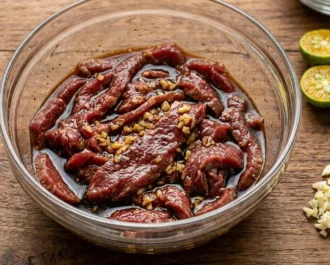
- Marinate the Beef

Slice the beef sirloin or tenderloin thinly against the grain — approximately 5–6mm thick. Against-the-grain slicing is critical for bistek tagalog because the thin slices need to be tender enough to cut with a fork even after brief cooking. In a bowl, combine the soy sauce, calamansi juice, minced garlic, and ground black pepper. Add the beef slices and toss to coat. The calamansi juice does double duty in this marinade — it seasons the beef with fruity acidity and also begins tenderizing the meat through its citric acid content. Allow the beef to marinate for a minimum of 30 minutes at room temperature or up to 2 hours in the refrigerator. Longer marinating produces more deeply flavored beef. The soy-calamansi combination is the flavor signature of bistek tagalog and cannot be approximated with any substitute without changing the dish's fundamental character.
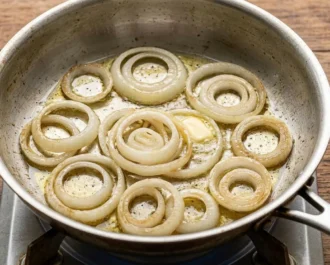
- Caramelize the Onion Rings
The onion rings are as important as the beef in bistek tagalog — they are not merely a garnish but an essential component that provides sweetness, texture, and visual identity. Heat 1 tablespoon of oil in a pan over medium heat and add the onion rings. Cook slowly for 10–12 minutes, stirring occasionally, until the onions soften and begin to caramelize at the edges — they should be tender and lightly golden, not browned or crisped. Some cooks prefer to add onions raw over the finished beef, but the semi-caramelized version adds more depth and a sweeter character that complements the salty-sour beef. Remove the onions from the pan and set aside. Adding a small amount of butter during the onion cooking stage (optional) adds a richness that elevates the onion component significantly and is used in restaurant-style bistek preparations.
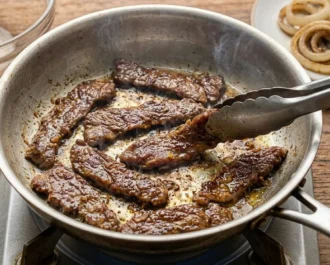
- Sear the Beef Slices
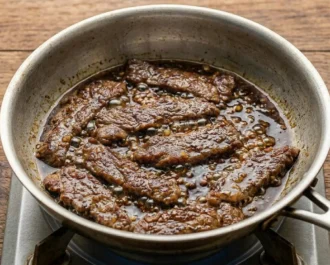
Remove the beef from the marinade, reserving all the marinade liquid. Pat each slice lightly with a paper towel to remove excess surface marinade — this prevents steaming and promotes browning. Heat the remaining oil in the pan over high heat until nearly smoking. Sear the beef slices in a single layer (work in batches) for 60–90 seconds per side until golden brown on the outside. The thin slices cook very quickly — overcooking produces tough, dry bistek. Remove the seared beef immediately after both sides are browned. The goal at this stage is to develop color on the exterior, not to cook the beef all the way through. The brief subsequent braising in the sauce will bring the beef to perfect doneness. Reserve the beef on a warm plate. Do not rinse the pan — the browned fond is essential for the sauce.
- Build the Soy-Calamansi Sauce
In the same pan over medium heat, pour in the reserved marinade and add the water or beef broth. Stir to incorporate all the browned bits from the bottom of the pan — these create enormous flavor depth in the bistek sauce. Bring to a simmer and cook for 3–4 minutes to reduce slightly and cook off any raw garlic note from the marinade. Taste the sauce at this point — it should be salty and sour, with the calamansi acidity clearly present. If too sour, add a pinch of sugar. If too salty, add a small splash of water. Return the seared beef slices to the pan and simmer in the sauce for 3–5 minutes until the beef is cooked through and has absorbed some of the soy-calamansi flavor. The sauce should reduce to a thin but intensely flavored glossy liquid that coats each slice of beef.
- Top with Onions and Serve
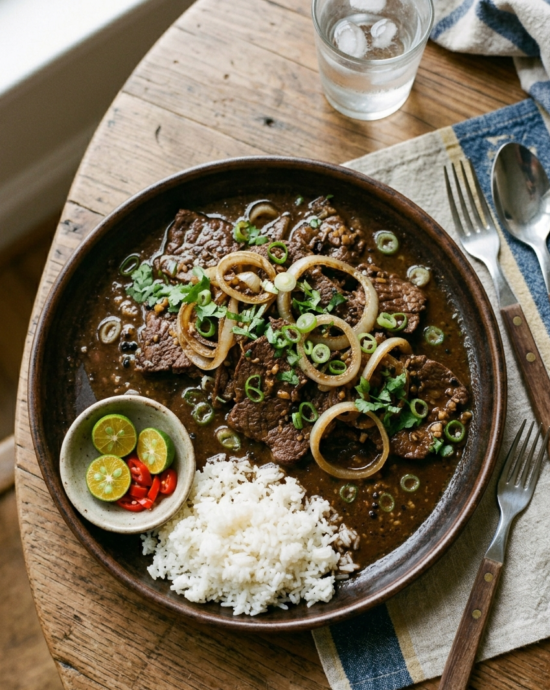
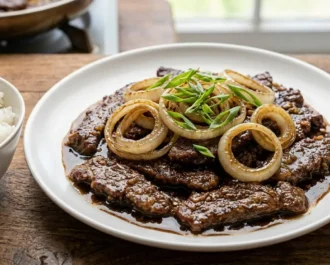
Return the caramelized onion rings to the pan, arranging them over the beef. Turn off the heat and allow the onions to warm through in the residual heat for one minute. The onions should sit visibly on top of the beef slices rather than being stirred in, creating the characteristic layered appearance of bistek tagalog. Transfer carefully to a serving plate, arranging the beef in an overlapping pattern and topping generously with onion rings. Pour all the sauce from the pan over the dish. Garnish with sliced green onions. Serve immediately alongside steamed white rice — the soy-calamansi sauce is extraordinary spooned over rice and is as much a reason to eat bistek tagalog as the beef itself. Bistek tagalog is one of those Filipino dishes that creates an almost irresistible desire to keep spooning sauce over rice long after the beef is finished.
- Calories:330 kcal17%
- Protein:36 g72%
- Carbohydrates:9 g3%
- Sugar:4 g4%
- Fat:16 g21%
- Salt:2.1 g35%
- Energy:1381 kJ17%
Table of Contents
What Is Bistek Tagalog?
Bistek Tagalog is a quintessential Filipino beef dish that beautifully demonstrates the Tagalog kitchen’s mastery of the soy-citrus flavor pairing — one of the most distinctive and beloved flavor combinations in Philippine cooking. A corruption of the English word beefsteak, bistek tagalog is the Philippines’ interpretation of the Western beef steak concept, thoroughly transformed by Filipino ingredients and cooking philosophy into something completely its own.
The dish centers on thinly sliced beef braised in a sauce of soy sauce and calamansi juice — the small, intensely aromatic Filipino citrus that provides a tartness and fragrance distinct from lemon or lime. The combination is simple but produces a sauce of extraordinary deliciousness: salty, sour, deeply savory, and suffused with garlic. When spooned over rice, this sauce is arguably more irresistible than the beef itself.
The onion rings are bistek tagalog’s other defining element — sweet, soft, slightly caramelized rings that are draped generously over the beef, providing textural contrast and a sweetness that balances the acidic, salty sauce. The visual presentation of beef slices covered with onion rings in a glossy dark sauce is one of the most instantly recognizable images in Filipino home cooking.
Bistek tagalog is considered everyday Filipino food — accessible, quick to prepare, and deeply satisfying. It appears regularly on family dinner tables, in canteen menus, and in the rotation of every Filipino home cook. Yet its simplicity belies a sophisticated balance of flavors that has made it one of the most enduring and universally loved dishes in the national culinary repertoire.
Ingredient Notes
- Beef Sirloin: The cut should be tender enough for thin slicing and quick cooking. Sirloin offers excellent flavor and value. Tenderloin is the most luxurious option. For budget cooking, beef round sliced very thin also works well when marinated overnight.
- Calamansi Juice: Calamansi is the essential citrus of bistek tagalog — its combination of acidity, slight bitterness, and floral sweetness is irreplaceable. Freshly squeezed is far superior to bottled. When calamansi is unavailable, a combination of lemon and lime juice is the best approximation.
- Soy Sauce: Regular Filipino-style soy sauce (Silver Swan, Datu Puti) is the standard for bistek tagalog. The saltiness level varies by brand — taste and adjust. Do not use sweet soy sauce (kecap manis) as it changes the flavor profile entirely.
- Onions: White or yellow onions produce the best caramelization. Slice into medium rings — thin rings disappear in the sauce, thick rings remain raw in the center. Medium rings caramelize beautifully while maintaining some texture.
Ingredient Suggestions
- Mushrooms (Button or Oyster): Sautéed and added alongside the beef for additional texture and earthy depth.
- Bell Pepper Strips: Red and green pepper strips add color and a sweet crunch that contrasts the salty sauce.
- Extra Calamansi (at the table): Serve a bowl of freshly halved calamansi for those who prefer a more aggressively sour bistek.
- Butter (1 tbsp to the sauce): Adding butter when the sauce is reduced creates a silkier, richer sauce reminiscent of French beurre blanc.
Helpful Tips & Pro Tips
- Never Overcook the Beef: Bistek tagalog uses tender cuts that should be cooked quickly. Total cooking time for each slice should not exceed 3–4 minutes. Overcooked beef becomes tough and loses the delicate quality that makes bistek special.
- Balance the Soy and Calamansi: The sauce should be distinctly sour and salty in equal measure. Taste before serving and adjust — if too salty, add calamansi juice; if too sour, add a pinch of sugar. The balance is what separates excellent bistek from ordinary.
- Marinate Overnight for Best Results: While 30 minutes produces acceptable bistek, overnight marinating in the refrigerator produces beef that is deeply flavored throughout rather than just on the surface.
- Serve the Sauce Generously: The soy-calamansi sauce is the heart of bistek tagalog. Do not reduce it too aggressively — there should be plenty of sauce to spoon over rice. This generous sauce is what makes bistek tagalog so satisfying as a rice companion.
How to Serve and Store
Bistek tagalog stores well in an airtight container in the refrigerator for up to 3 days. The sauce will concentrate as it sits and may need a splash of water when reheating. Reheat over medium heat on the stovetop, adding the onions back in the final minute if stored separately. The beef may toughen slightly upon reheating — reheat just until warmed through, not until hot throughout. Freeze cooked bistek for up to 1 month; the sauce holds well but the beef may soften in texture after thawing. Thaw overnight before reheating.
Substitutions
- Beef Sirloin → Chicken breast (thin-sliced) — produces chicken bistek; reduce cooking time significantly.
- Calamansi Juice → Lemon juice + a small amount of orange juice — approximates calamansi’s tartness with added sweetness.
- Soy Sauce → Coconut aminos (increase quantity by 25%) — gluten-free option with slightly sweeter profile.
- Cooking Oil → Butter — adds richness and a more indulgent sauce character throughout.
- White Onions → Shallots — smaller rings but more intense sweetness; use double the quantity.
Suggested Recipes
- Beef Tapa: A sweet-cured beef preparation that shares the soy-citrus flavor family but uses a completely different cooking method.
- Beef Salpicao: A quick-seared garlic beef dish in the same fast-cooking, tender-cut category as bistek tagalog.
- Beef Igado: Another soy-vinegar based Filipino beef dish that uses organ meats for additional complexity.