
- Step 1: Source and Prepare Sashimi-Grade Fish
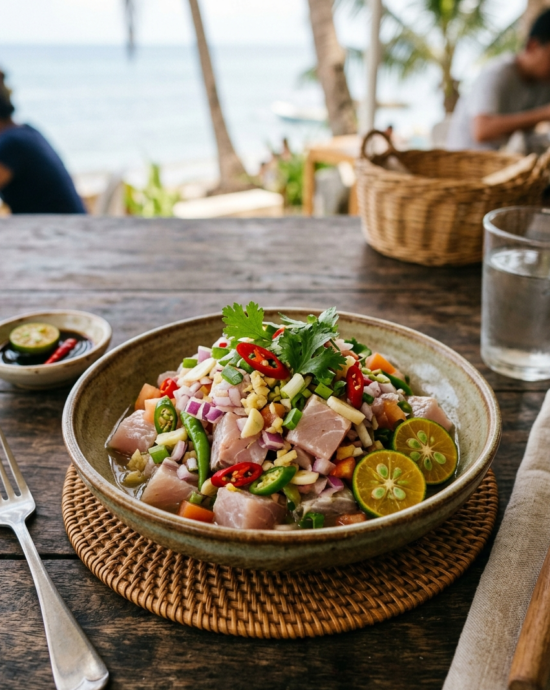
The quality of fish is the single most critical factor in kinilaw. Because the fish is consumed raw (or near-raw after acid marination), you must use only the freshest sashimi-grade tuna, tanigue (wahoo or kingfish), or other suitable firm white-fleshed fish. Purchase from a trusted fishmonger or Japanese grocery that supplies sashimi fish. The fish should smell of clean ocean, not fishy or ammonia-like, and the flesh should be firm, vibrantly colored, and glossy. Chill the fish thoroughly in the refrigerator until just before preparation. Using a very sharp knife, remove any skin, dark blood lines, and sinew from the flesh. Cut the fish into bite-sized cubes of approximately two centimeters. Consistent cube sizing ensures even acid marination throughout. Keep the cut fish refrigerated on ice while you prepare the other components.
- Step 2: The First Vinegar Wash (Hugasan)
This step is unique to Filipino kinilaw and sets it apart from other raw fish preparations worldwide. Place the cut fish cubes into a non-reactive bowl (glass or ceramic). Pour approximately half of the vinegar directly over the fish. Using clean hands or a spoon, gently toss the fish in the vinegar for thirty seconds to one minute, then immediately drain and discard this first vinegar wash. This technique — called hugasan or washing — serves the vital purpose of removing surface impurities, rinsing away any blood or fishy odor compounds from the cut surfaces, and beginning the acid-denaturing process on the exterior of the fish. The hugasan makes the final kinilaw cleaner, brighter in flavor, and significantly less fishy-tasting. Never skip this step. After draining, the fish is now ready for the final flavor marinade.
- Step 3: Create the Kinilaw Marinade
In a clean bowl, combine the remaining vinegar, fresh calamansi juice, minced ginger, and minced garlic. Stir to combine. The two-acid combination of vinegar and calamansi is characteristic of Filipino kinilaw — the vinegar provides structural acid for denaturing the fish proteins, while the calamansi contributes a bright, citrusy fragrance and flavor that vinegar alone cannot achieve. Taste the marinade: it should be sharp and tangy with a fragrant citrus note and ginger warmth. Add half the sliced siling labuyo for heat — adjust the quantity based on your chili tolerance. The marinade should not be subtle; this is a bold, assertive dish where the acid is the hero. Reserve the remaining chili for garnishing at the end, which allows individual diners to control their own heat level. Proper seasoning of the marinade now ensures a well-flavored finished kinilaw.
- Step 4: Marinate the Fish
Add the washed fish cubes to the prepared marinade. Add the finely diced red onion and season with salt and ground black pepper. Gently fold everything together with a spoon, being careful not to break the fish cubes apart. The acid in the marinade will begin denaturing the exterior proteins of the fish almost immediately — you will see the fish turning from translucent to opaque on the outside, mimicking the visual effect of cooking. Cover the bowl and refrigerate for ten to fifteen minutes. This is the critical timing window for traditional Filipino kinilaw: the fish should be acid-cured on the outside but remain tender and lightly translucent at the center. Unlike fully cooked ceviche (which is marinated thirty minutes to an hour), Filipino kinilaw values a partially cured texture that preserves the fish's natural sweetness and tender bite. Do not over-marinate or the fish will become tough.
- Step 5: Add Coconut Cream and Finish
Remove the marinating fish from the refrigerator. Pour the coconut cream (kakang gata) over the fish and fold it gently into the marinade. The coconut cream serves multiple roles in the kinilaw: it tempers and mellow the sharpness of the acid, introduces a rich, subtly sweet creaminess that balances the vinegar and calamansi, and coats every cube of fish with a velvety richness that makes the dish deeply satisfying. This coconut cream addition is what distinguishes the Visayan and Mindanaoan styles of kinilaw from simpler Northern versions. Taste the finished kinilaw and adjust seasoning — add more salt, calamansi, or a pinch of sugar if the balance feels off. Fold in the sliced spring onions and, if using, the fresh cilantro or wansoy. The kinilaw should smell vibrant and fresh, with the coconut cream's sweetness framing the assertive acid.
- Step 6: Plate and Serve
Transfer the finished kinilaw into individual serving bowls or a wide, shallow serving dish. Garnish with the reserved sliced siling labuyo on top for color and a visual indication of heat level. Scatter additional spring onion slices and a few fresh calamansi halves on the side for guests who want extra citrus. Fish kinilaw is best served immediately after preparation while the fish is at its freshest and the coconut cream is at its creamiest — ideally within fifteen minutes of completing the final fold. Serve with saltine crackers, steamed rice, or sliced boiled cassava on the side. In Visayan and Mindanaoan tradition, kinilaw is often enjoyed as a pulutan — a snack or appetizer enjoyed alongside cold beer or lambanog, making it a beloved social dish across the Philippines.
- Calories:180 kcal9%
- Protein:24 g48%
- Carbohydrates:4 g1%
- Sugar:2 g2%
- Fat:7 g9%
Table of Contents
What Is Fish Kinilaw?
Fish Kinilaw is a traditional Filipino raw fish dish in which fresh fish is cured in vinegar and calamansi juice, then combined with ginger, garlic, onion, chili, and coconut cream to create a vibrant, acid-forward appetizer often likened to ceviche. It is considered one of the oldest pre-Hispanic food preparations in the Philippines, with historical records and indigenous oral traditions dating the technique of kinilaw back hundreds of years before Spanish colonization. The word kinilaw derives from the Visayan root word kilaw, meaning to eat raw, reflecting the dish’s identity as a preparation that honors the natural flavor of the freshest seafood without the use of fire. Kinilaw is deeply embedded in the culinary cultures of the Visayas and Mindanao, where it is especially prevalent in coastal communities with direct access to the ocean’s daily catch. In Cebu, Iloilo, Davao, and Zamboanga, kinilaw is a staple offering at family gatherings, fiestas, and informal drinking sessions. Popular fish choices include fresh tuna, tanigue (wahoo or kingfish), lapu-lapu (grouper), and sword fish, all prized for their firm flesh that holds its shape during acid curing without becoming mushy. The flavor profile is a dynamic interplay of sharp acidity from the calamansi and vinegar, aromatic heat from the ginger and chili, and cooling richness from the coconut cream — creating a dish that is simultaneously refreshing and warming. Unlike Latin American ceviche, Filipino kinilaw is typically shorter-marinated to preserve the fish’s raw, tender interior, valued for the contrast between the acid-opaque exterior and the slightly translucent, sweet center of each cube.
Ingredient Notes
- Sashimi-Grade Tuna or Tanigue: Freshness is non-negotiable for kinilaw. Tuna should be deep red with no brown oxidation, and tanigue should be pearlescent white. Buy only from trusted suppliers who handle sashimi-quality fish and consume the same day of purchase.
- Calamansi Juice: Fresh-squeezed calamansi is irreplaceable. It contributes a uniquely Filipino citrus brightness that bottled juice and lime cannot replicate. Squeeze just before use for maximum freshness.
- Coconut Cream (Kakang Gata): The first press of grated coconut yields kakang gata — thick, rich, and naturally sweet. This is different from coconut milk. Use freshly pressed or high-fat canned versions. Avoid low-fat coconut milk, which is too thin.
- Ginger: Fresh ginger is essential. Finely mince it to release maximum aromatic oils. Ginger in kinilaw provides heat and fragrance that anchors all the acidic flavors.
- White Cane Vinegar or Coconut Vinegar: The acid medium for curing the fish. Coconut vinegar (sukang tuba or pangasi) is the regional preference in the Visayas and adds distinctive earthy character.
Ingredient Suggestions
- Green mango, julienned: Adding thin strips of green mango introduces crunchy texture and a sour-sweet fruitiness that complements the calamansi and coconut beautifully.
- Seaweed (lato or ar-arosep): Fresh sea grapes stirred into the finished kinilaw add oceanic salinity, satisfying pop-texture, and a deeply Filipino coastal character.
- Toasted desiccated coconut: A tablespoon sprinkled over the finished kinilaw adds crunch and a nutty caramel depth that pairs wonderfully with the fresh coconut cream.
- Cucumber, finely diced: Cucumber cubes add refreshing crunch and mild flavor that stretches the dish while cooling down the chili heat.
- Bagoong (shrimp paste): A very small amount stirred in adds deep umami and fermented complexity — a technique used in some Visayan kinilaw traditions.
Helpful Tips & Pro Tips
- Never skip the vinegar wash (hugasan). This initial rinse removes fishy compounds from cut surfaces, resulting in a cleaner, brighter-tasting kinilaw. Skipping it is the most common reason for an overly ‘fishy’ result.
- Keep everything cold throughout. Use a bowl set over ice while preparing, and refrigerate the fish immediately at every stage. Temperature control is a food safety imperative with raw fish preparations.
- Why is my kinilaw rubbery or tough? Over-marination is the cause. Filipino kinilaw should only marinate for 10–15 minutes maximum. Longer marination fully denatures and toughens the fish proteins, producing a texture closer to fully cooked fish.
- Use a sharp knife for clean cuts. A sharp knife severs the fish fibers cleanly, producing cubes with smooth cut surfaces that absorb the acid marinade evenly. Serrated or dull knives tear the flesh and increase fishy flavor compounds.
- Taste and adjust the acid-sweet balance last. After adding coconut cream, the dish always tastes more mellow. Adjust with calamansi and salt just before serving to ensure the bright, assertive flavor of kinilaw at its best.
How to Serve and Store
Fish kinilaw must be served immediately after preparation — ideally within 15–20 minutes of completing the final fold with coconut cream. As a raw fish dish, it does not store well and should not be consumed more than 2 hours after preparation. Transfer any leftovers to a sealed container and refrigerate, consuming within the same day. Do not freeze kinilaw, as freezing and thawing destroys the texture of the acid-cured fish beyond recovery. Serve in shallow bowls or on banana leaves for a traditional presentation. Accompany with saltine crackers, boiled kamote (sweet potato), steamed rice, or as a pulutan alongside cold drinks. For parties, prepare the components (washed fish, marinade, aromatics) separately in advance and combine only at serving time for freshest results.
Substitutions
- Fresh tuna → Shrimp or squid (kinilaw na hipon/pusit): Both work beautifully with the same acid-curing technique and are traditional kinilaw variations in their own right.
- Calamansi → Lime or lemon: Fresh lime or lemon juice is the closest substitute in terms of acidity and citrus fragrance — use equal quantities of fresh juice.
- Coconut cream → Thick coconut milk: Full-fat canned coconut milk is an acceptable substitute; add slightly less as it is thinner and may dilute the marinade.
- White vinegar → Sukang iloko (sugarcane vinegar): A regional northern Philippine vinegar with a slightly earthier, more complex character that adds depth to the kinilaw.
- Bird’s eye chili → Jalapeño (milder option): For those who prefer less heat, thinly sliced jalapeño provides manageable warmth while maintaining the chili element.
Suggested Recipes
- Grilled Tanigue with Calamansi Butter: For those who love tanigue but prefer it cooked, this simple grilled preparation celebrates the same fish with butter and citrus.
- Sinuglaw: A Davao specialty that combines kinilaw with grilled pork belly (sinugba) — the combination of raw cured fish and smoky pork is extraordinary.
- Coconut Crab Salad (Ensaladang Alimango): Another acid-dressed seafood dish featuring coconut cream that pairs well with kinilaw at a seafood feast.
- Grilled Squid (Inihaw na Pusit): Classically served alongside kinilaw at Filipino coastal gatherings, providing a satisfying contrast of smoky cooked seafood.
Frequently Asked Questions

Jeff Smith
"Cooking is the intersection of history, science, and emotion."
For me, the kitchen has always been a laboratory of culture. With a background deeply rooted in digital strategy and precision, I approach the culinary arts with the same rigor I apply to the digital landscape—analyzing flavors, perfecting techniques, and documenting the nuance that makes Filipino cuisine truly world-class.
Findme Recipe was born from a desire to bridge the gap between traditional heritage and the modern home cook. Whether it is mastering the perfect balance of acidity in a classic Adobo or simplifying complex regional dishes for everyday kitchens, my mission is to preserve our culinary identity through accessible, data-backed, and delicious content.
I am not just building a database; I am cultivating a community where every Filipino kitchen feels empowered, every ingredient is celebrated, and every family heirloom recipe finds a place to thrive.
Join me as we translate the soul of our islands into recipes for the next generation.