
- Toast and Bloom the Spices

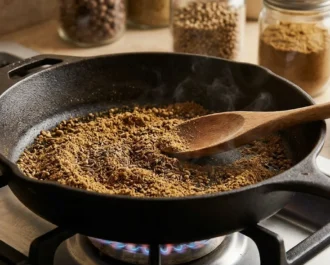
The foundation of an excellent kulma is properly developed spices. In a dry skillet over medium heat, toast the ground coriander, cumin, and cardamom for 2–3 minutes until fragrant and slightly darker in color — this drives off any raw, dusty note from the ground spices and activates the essential oils. Watch carefully as ground spices burn quickly. Remove from heat and set aside. In a large heavy pot, heat cooking oil over medium-high heat. Add the sliced onions and cook slowly for 8–10 minutes, stirring frequently, until they caramelize to a deep golden-brown — this long-cooked onion forms the sweet, rich base of kulma's gravy. Add the grated ginger and minced garlic, cooking for 2 more minutes. Add all the toasted ground spices, turmeric, cinnamon, and cloves, stirring constantly for 1–2 minutes to bloom them in the oil and onions.
- Brown the Beef with Aromatics
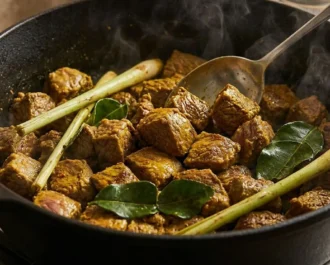
Add the beef chuck cubes to the spiced onion base, turning each piece to coat thoroughly in the aromatic mixture. Increase heat to high and sear the beef for 4–5 minutes, stirring frequently, until the exterior of each piece takes on color from the turmeric and spices. The beef does not need to develop a deep Maillard crust here — the goal is to seal the surface and begin integrating the spice flavors into the meat. Add the bruised lemongrass stalks and kaffir lime leaves, pressing them into the beef and aromatics. The lemongrass and lime leaves provide the citrusy, herbaceous notes that give Mindanao-style kulma its distinctive Southeast Asian character, distinguishing it from purely Middle Eastern-influenced preparations. Stir everything together until the beef is well coated and the aromatics are evenly distributed throughout the pot.
- Braise in Coconut Milk
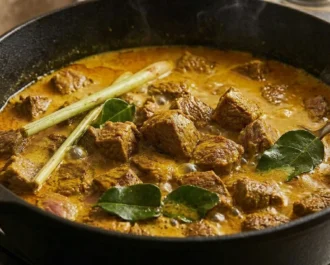
Pour the coconut milk over the beef and stir to combine. Add the fish sauce and a pinch of salt. Bring to a gentle boil over medium heat, stirring to prevent the coconut milk from separating. Reduce heat to low, cover, and simmer for 45–60 minutes, stirring every 15 minutes. The coconut milk will gradually reduce and concentrate, and the beef will become tender as it absorbs the fragrant liquid. After 30 minutes, the sauce will take on a beautiful golden-orange color from the turmeric and the developing spices. If the liquid reduces too much before the beef is tender, add small amounts of water or more coconut milk. The slow braising in coconut milk is what distinguishes kulma from drier curries — the beef should be tender and surrounded by a fragrant, slightly thick sauce before the final enrichment stage.
- Add Coconut Cream for Final Enrichment
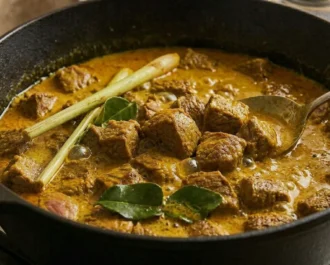
Once the beef is tender and the coconut milk has reduced to a thick sauce, pour in the thick coconut cream. Stir gently to incorporate. The coconut cream enriches the sauce significantly, adding a velvety, luxurious texture and a pronounced coconut sweetness that balances the complex spice profile. Simmer uncovered over medium-low heat for 10–15 minutes, stirring regularly, until the coconut cream reduces and the sauce reaches a thick, creamy consistency that coats the beef generously. Taste and adjust seasoning — kulma should be fragrant and multi-layered in its spice character, with a creamy coconut sweetness underpinning the turmeric, cumin, and ginger. The sauce should be thick enough that when you tilt the pot, it moves slowly. Remove the lemongrass stalks and kaffir lime leaves before serving.
- Final Seasoning and Serving
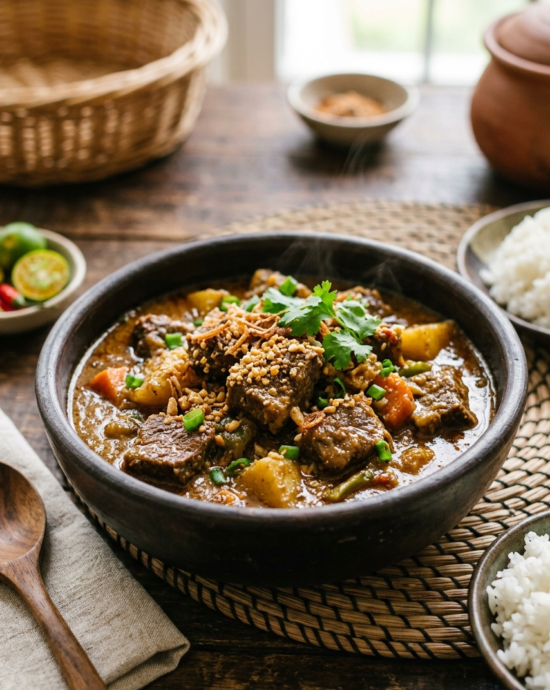
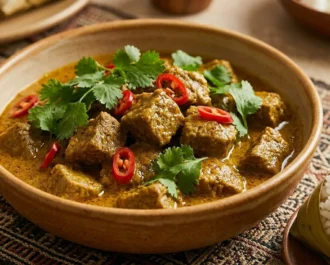
Taste the kulma one final time and make any necessary adjustments to salt, fish sauce, or spice level. The finished dish should have a beautiful golden-turmeric color, a thick and luxurious coconut cream gravy, and deeply tender beef that has absorbed all the warming Mindanaoan spices. Remove all whole aromatics. Transfer to a serving bowl and garnish generously with fresh coriander leaves for a burst of herbal freshness that lifts the rich, warm dish. Serve alongside steamed white rice or, for a more authentic Mindanao presentation, serve with puso (rice cooked in woven coconut palm leaves) or sinanglay na bigas. Kulma is also excellent with warm pita or Filipino pandesal for scooping up the thick, fragrant sauce. This dish reflects the diverse, multicultural culinary heritage of Muslim Mindanao.
- Calories:490 kcal25%
- Protein:40 g80%
- Carbohydrates:10 g3%
- Sugar:3 g3%
- Fat:32 g41%
- Salt:1.1 g18%
- Energy:2050 kJ25%
Table of Contents
What Is Beef Kulma?
Beef Kulma is a richly spiced Filipino Muslim beef curry originating from the Bangsamoro region of Mindanao, particularly associated with the Maranao people of Lanao del Sur and Lake Lanao and the Tausug people of the Sulu Archipelago. It represents the unique intersection of Southeast Asian and South Asian culinary influences that define the distinctive cooking traditions of Muslim Mindanao.
Kulma — also spelled kolma or kurma — is the Filipino Muslim adaptation of the korma, a cooking technique of South Asian origin that refers to braising meat in a yogurt or nut-based sauce. In the Filipino Muslim version, coconut cream replaces yogurt as the braising medium, reflecting the abundant coconut resources of Mindanao and the Southeast Asian preference for coconut-based cooking. The result is a dish that is unmistakably related to Indian korma but has evolved into something distinctly Filipino in character.
The spice profile of kulma is complex and aromatic — turmeric, coriander, cumin, cardamom, cloves, and cinnamon are combined with fresh aromatics such as ginger, garlic, lemongrass, and kaffir lime leaves to create a layered, warming fragrance. This combination of dried spices with fresh Southeast Asian aromatics is characteristic of Mindanaoan Muslim cooking and reflects the region’s historical trade relationships with both the Indian subcontinent and the Malay world.
Today, beef kulma is served at Maranao and Tausug celebrations, weddings, and the breaking-of-fast meals during Ramadan. It represents the sophisticated spice-trade heritage of Mindanao and is one of the most compelling dishes in the full spectrum of Filipino regional cuisine.
Ingredient Notes
- Beef Chuck: Well-marbled chuck absorbs the coconut curry gravy beautifully during braising. Cut into 2-inch cubes for even cooking and substantial, satisfying pieces in the finished dish.
- Thick Coconut Cream: Use the thickest coconut cream available for the richest sauce. The first pressing of fresh coconut produces the best kulma gravy. Canned coconut cream from Thai or Filipino brands is an excellent substitute.
- Kaffir Lime Leaves: These intensely aromatic leaves add a distinctive citrusy floral note that is characteristic of Southeast Asian curry cooking. Find them fresh or frozen at Asian grocery stores. Dried leaves are a distant second in quality.
- Kulma Spice Paste: Pre-made kulma paste is available at Mindanaoan specialty stores and some Filipino groceries. Making your own from scratch by toasting and grinding whole spices produces the most vibrant result.
Ingredient Suggestions
- Potatoes or Sweet Potatoes: Cubed and added 30 minutes before serving, they absorb the kulma sauce beautifully and add starchy heartiness.
- Whole Dried Chilies: Added with the lemongrass for a gentle background heat without sharpness.
- Toasted Cashews: Stirred in at the end for a South Asian korma-inspired nuttiness.
- Frozen Green Peas: Added in the final 5 minutes for color, sweetness, and a modern touch.
Helpful Tips & Pro Tips
- Toast Your Spices: Pre-toasting ground spices in a dry pan for 2–3 minutes makes a significant and noticeable difference in the depth and complexity of the kulma sauce. This step takes less than 5 minutes and is worth every second.
- Caramelize the Onions Properly: The long-cooked, deeply golden onions are the flavor backbone of kulma’s gravy. Rushing this step — cooking onions for only 3–4 minutes — produces a much less complex, less sweet sauce. Give them a full 10 minutes.
- Prevent Coconut Cream from Curdling: Never boil coconut cream at high heat. Always add it over medium-low heat and stir frequently. If the cream begins to separate, reduce heat immediately and stir briskly to re-emulsify.
- Rest Before Serving: Allow kulma to rest off the heat for 10 minutes before serving. This allows the spices to settle and the sauce to thicken further, and the flavors deepen noticeably during this resting period.
How to Serve and Store
Beef Kulma stores exceptionally well and improves overnight as the spices continue to develop. Store in an airtight container in the refrigerator for up to 4 days. The coconut cream sauce will thicken considerably when cold; add a splash of coconut milk when reheating over low heat, stirring gently to restore consistency. Kulma can be frozen for up to 2 months in airtight containers. Thaw overnight in the refrigerator. Do not microwave directly from frozen as the coconut cream may separate. Reheat on the stovetop over low heat for best results.
Substitutions
- Beef Chuck → Lamb shoulder — a widely used alternative in Muslim-Filipino cooking; produces an equally rich result.
- Coconut Cream → Full-fat Greek yogurt — produces a more Indian korma-style sauce; do not boil after adding.
- Fish Sauce → Salt only — appropriate for those following halal dietary practices strictly or avoiding fermented products.
- Kaffir Lime Leaves → Lime zest (1 tsp) — provides similar citrus aroma without the exact floral note.
- Fresh Ginger → Ground ginger (1/2 tsp) — convenient substitute; use half the quantity as ground is more concentrated.
Suggested Recipes
- Beef Caldereta: A Spanish-influenced Filipino beef stew providing an interesting contrast of cultural influences.
- Chicken Piaparan: Another Maranao dish using similar spice profiles with coconut milk and lemongrass.
- Beef Salpicao: A quick, garlic-forward beef dish that contrasts kulma’s slow, spiced complexity.