
- Step 1: Sauté the Aromatics
Heat the cooking oil in a large, wide pot or Dutch oven over medium heat. Add the julienned ginger first and stir for 1 to 2 minutes until the sharp, warm fragrance of the ginger blooms brilliantly in the hot oil. Add the sliced onions and cook, stirring occasionally, for 3 minutes until softened and lightly translucent. Add the crushed garlic and stir for 1 minute more until golden and deeply fragrant. Add the bruised and knotted lemongrass stalks, pressing them into the aromatics and stirring for 1 additional minute until their citrusy, floral essential oils begin releasing into the oil. This aromatic base of ginger, onion, garlic, and lemongrass — all cooked together in oil before any liquid is added — is what gives halang-halang its intensely fragrant, deeply layered character that distinguishes it from any other coconut chicken dish.
- Step 2: Add the Chicken and Season
Increase the heat to medium-high and add the chicken pieces directly to the aromatic base. Season the chicken with fish sauce, tossing every piece to coat it thoroughly. Cook the chicken for 3 to 4 minutes, turning occasionally, until each piece is lightly browned on the outside and the fish sauce has caramelized slightly against the chicken surface. This browning step is important — it develops a richer, more complex base flavor for the coconut milk sauce that will be added later. The fish sauce caramelizes into a deeply savory, slightly sticky coating on the chicken that infuses the entire dish with umami depth. Add the sliced bird's eye chilies and finger chilies at this stage, stirring them through the chicken so their heat and fragrance begin releasing into the oil and chicken fat.
- Step 3: Add Broth and Simmer
Pour in the chicken broth or water, stirring to deglaze any caramelized bits from the bottom of the pot. Bring the liquid to a gentle boil over medium-high heat, then reduce to a steady simmer over medium-low heat. Cover the pot loosely and allow the chicken to cook in the broth for 15 to 18 minutes, turning the pieces once at the halfway mark, until the chicken is nearly — but not fully — cooked through. The broth at this stage will have absorbed the ginger, lemongrass, and chili aromatics, developing into a beautifully fragrant, clear base that will combine with the coconut milk in the next step. Taste the broth and season with salt and white pepper. The heat level should already be noticeable and pleasantly building from the chilies simmering in the liquid.
- Step 4: Pour in the Coconut Milk
Once the chicken is nearly cooked, pour in the coconut milk in a slow, steady stream while stirring gently to incorporate it evenly into the spiced broth. The coconut milk transforms the sauce immediately — the clear, spiced broth becomes a creamy, ivory-colored liquid of beautiful complexity, and the heat of the chilies becomes simultaneously more pronounced and more pleasantly rounded as the coconut fat wraps around each spice molecule. Increase the heat slightly to bring the coconut milk to a gentle simmer — never a rolling boil, which will cause curdling. Allow the chicken to finish cooking in the coconut milk sauce for an additional 8 to 10 minutes, stirring occasionally. The sauce will thicken slightly and deepen in color as it reduces, and the entire kitchen will be filled with an intoxicating aroma of coconut, lemongrass, ginger, and chili.
- Step 5: Add Coconut Cream and Adjust Heat
Pour in the coconut cream (kakang gata) and stir gently to incorporate it into the sauce. Coconut cream is thicker, richer, and higher in fat than regular coconut milk, and its addition transforms the sauce into something luxuriously silky and deeply satisfying. Simmer for 3 to 4 more minutes, stirring gently and frequently, until the coconut cream is fully integrated and the sauce has reached a rich, coating consistency. Taste the dish carefully at this stage — not just for saltiness but specifically for the balance of heat and creaminess. If the dish is not spicy enough, add more sliced bird's eye chilies now and simmer for 2 additional minutes. If it is too spicy, a small splash more of coconut cream will temper the heat beautifully without changing the flavor profile significantly.
- Step 6: Add the Greens and Serve
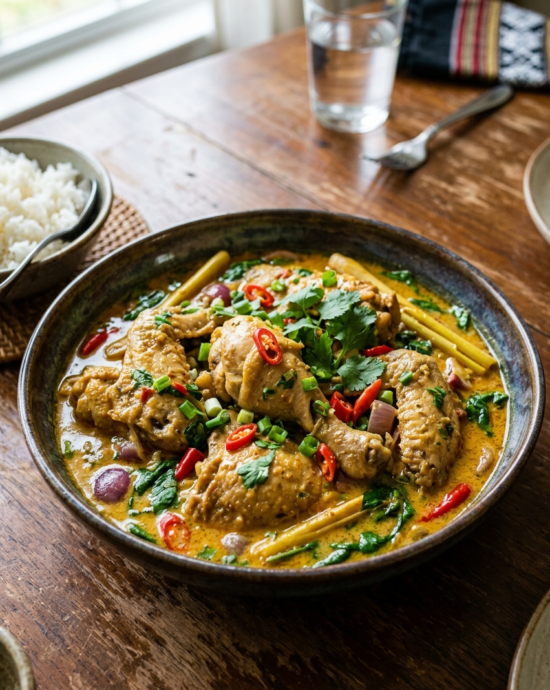
Add the malunggay leaves or spinach to the pot and stir them gently into the sauce in the final minute of cooking, allowing them to wilt just until brilliantly green and tender. Malunggay's slightly earthy, clean flavor provides a beautiful counterpoint to the richness of the coconut cream and the intensity of the chilies. Remove and discard the lemongrass stalks before serving. Taste the finished dish one final time and adjust the seasoning with fish sauce, salt, or additional chili as needed. Ladle the halang-halang generously into deep bowls over steaming white rice, ensuring each bowl receives a beautiful portion of chicken, plenty of the rich, spicy coconut sauce, and a generous scatter of the wilted greens for color and freshness.
- Calories:350 kcal18%
- Energy:1,464 kj18%
- Protein:26 g52%
- Carbohydrates:10 g4%
- Sugar:3 g3%
- Salt:1.0 g17%
- Fat:22 g28%
Table of Contents
What Is Chicken Halang-Halang?
Chicken halang-halang is a Visayan Filipino dish of chicken slow-simmered in spiced coconut milk with bird’s eye chilies, ginger, and lemongrass — a boldly flavored, vibrantly spicy coconut stew that represents the fiery culinary heritage of the Cebu and Central Visayas region of the Philippines. The name halang-halang comes directly from the Cebuano word halang, meaning “spicy” or “hot” — a doubling of the adjective that conveys, with characteristic Filipino expressiveness, that this dish is not merely spicy but emphatically, pleasurably, memorably spicy. It is often described as the Visayan answer to the Bicolano Bicol Express — both dishes build their identity on the thrilling combination of coconut milk and bold chili heat, creating sauces that are simultaneously rich, creamy, and intensely spiced.
What distinguishes halang-halang from other Filipino coconut chicken dishes is the deliberate, unapologetic use of bird’s eye chilies (siling labuyo) as a central, dominant flavor rather than a background accent. In many coconut chicken dishes, chili plays a supporting role — in halang-halang, it is a co-lead performer alongside lemongrass and ginger. The result is a dish where the creamy richness of the coconut milk and the fierce, building heat of the labuyo exist in a dynamic, exciting tension throughout every bite.
Halang-halang is deeply associated with the communal eating culture of the Visayas — it is the kind of dish that prompts laughter, sweating, and the constant reaching for more rice. It is beloved at family gatherings, carinderias, and home kitchens across Cebu, Bohol, and the surrounding islands. For adventurous eaters and lovers of spicy food, halang-halang is one of the most thrillingly delicious discoveries in the entire Filipino culinary canon.
Ingredient Notes
- Bird’s Eye Chilies (Siling Labuyo): These tiny, fiercely hot chilies are the defining ingredient of halang-halang — without them, the dish simply becomes coconut chicken. The quantity determines the intensity of the heat. Start with 3 for moderate spice and increase to 5 or more for an authentic Cebuano level of heat. Look for firm, bright red or green labuyo; soft, wrinkled ones have lost much of their potency.
- Coconut Milk and Coconut Cream: Using both coconut milk and coconut cream creates a sauce with layered richness — the coconut milk builds the base while the cream, added last, creates the silky, coating finish. Both should be full-fat for the most authentic, indulgent result. Avoid light or reduced-fat versions, which produce a thin, watery sauce.
- Lemongrass (Tanglad): Lemongrass in halang-halang provides the citrusy, floral backbone that prevents the dish from tasting one-dimensionally spicy. Bruise the stalks firmly before adding them to maximize the release of their volatile aromatic oils. Always remove before serving — the stalks are fibrous and not intended to be eaten.
- Ginger: Fresh ginger adds a warming spiciness that complements and deepens the chili heat rather than competing with it. Julienned ginger in halang-halang releases its flavor more gradually than minced, building heat gently throughout the simmer rather than delivering it all at once.
- Fish Sauce (Patis): The primary seasoning that provides deep, rounded saltiness and umami. In a dish as boldly flavored as halang-halang, quality patis is essential — its complex, fermented depth provides an important counterbalance to the chili heat and coconut richness.
Ingredient Suggestions
- Lemon basil (sangig) — The traditional Visayan herb stirred in at the very end; its sweet, anise-like fragrance provides a cooling, herbaceous counterpoint to the chili heat.
- Shrimp paste (bagoong) — A small teaspoon stirred into the braising base adds deeply funky, fermented umami depth that amplifies the coconut sauce beautifully.
- Eggplant — Quartered and added with the coconut milk, eggplant absorbs the spicy coconut sauce spectacularly, becoming silky, rich, and deeply flavorful.
- Sitaw (yard-long beans) — Cut into 2-inch pieces and added 5 minutes before serving, they provide a pleasant vegetal crunch in the rich, spicy sauce.
- Pork belly strips — Sliced and browned alongside the chicken, pork belly adds another layer of richness and renders its fat into the coconut sauce for extraordinary depth.
Helpful Tips & Pro Tips
- Control the heat with the number of chilies, not by removing them. Bird’s eye chilies release more heat the longer they cook. For precise spice control, add half the chilies at the beginning of cooking and taste, then add more toward the end if you want more heat. Removing already-cooked chilies from the finished sauce is difficult and doesn’t effectively reduce heat.
- Never boil coconut milk aggressively. A rolling boil causes coconut milk to curdle and the oil to separate from the milk, producing a broken, unappetizing sauce. Always maintain a gentle, controlled simmer — small, lazy bubbles at the edges of the pan, not a vigorous, churning boil.
- Why is my halang-halang sauce too thin? A thin sauce is almost always the result of coconut milk being too diluted or the simmer not being long enough. Ensure you are using full-fat coconut milk and coconut cream, and simmer uncovered for the final 5 minutes to allow the sauce to reduce and concentrate properly.
- Let the lemongrass do its job. The lemongrass stalks need to simmer in the liquid for at least 15 minutes to release their full aromatic complexity into the sauce. Adding them too late in the cooking process produces a less fragrant, less complex result. Add them with the broth, not with the coconut milk.
- More rice is non-negotiable. Halang-halang’s spicy, rich coconut sauce is designed to be eaten with generous amounts of steaming white rice. Prepare extra rice — it is the essential cooling, neutral companion that makes the dish’s intense flavors not just bearable but deeply pleasurable.
How to Serve and Store
Serve chicken halang-halang immediately and piping hot, ladled generously over steaming white rice in deep bowls. The dish’s fiery, coconut-rich sauce is best experienced at full heat — it thickens and becomes less saucy as it cools. For a complete Cebuano spread, pair with ensaladang talong (grilled eggplant salad) and cold, fresh cucumber slices to cool the palate between bites.
Store leftover halang-halang in an airtight container in the refrigerator for up to 3 days. The coconut sauce thickens considerably upon chilling — reheat gently on the stovetop over low heat, stirring frequently and adding a small splash of coconut milk or water to restore the sauce to its original consistency. Do not freeze halang-halang; the coconut milk sauce separates upon thawing and does not return to its original silky texture. For best results, make fresh and enjoy within 3 days.
Substitutions
- Bird’s eye chilies → Serrano or Thai chilies — A widely available substitute with comparable heat levels; use the same quantity or adjust to taste.
- Coconut milk → Light coconut milk + 2 tbsp coconut cream — A lower-fat option that still produces a relatively creamy sauce.
- Chicken → Pork belly cubes — A richer, more indulgent protein choice that renders its fat into the coconut sauce for extraordinary depth.
- Fish sauce → Soy sauce — A gluten-free, soy-based seasoning substitute that works well; use slightly less as soy sauce can be more assertive than patis.
- Lemongrass → Kaffir lime leaves (3–4 leaves) — Provides a similarly citrusy, floral aromatic top note when fresh tanglad is unavailable.
- Malunggay → Spinach or watercress — Both make excellent, widely available substitutes; add in the final 60 seconds to prevent overcooking.
Suggested Recipes
- Chicken Adobo sa Gata — Shares the same gata-forward richness as halang-halang but with adobo’s vinegar-soy flavor profile and without the fierce chili heat.
- Bicol Express — The Bicolano equivalent of halang-halang — pork slow-cooked in coconut milk with bird’s eye chilies; equally fiery, equally addictive.
- Chicken Binakol — Another Visayan coconut-based chicken dish, this one using fresh coconut water rather than milk for a delicate, clear broth experience.
- Laing — Dried taro leaves braised in coconut milk with shrimp paste; shares halang-halang’s gata-and-chili flavor philosophy in a vegetarian format.
Frequently Asked Questions

Jeff Smith
"Cooking is the intersection of history, science, and emotion."
For me, the kitchen has always been a laboratory of culture. With a background deeply rooted in digital strategy and precision, I approach the culinary arts with the same rigor I apply to the digital landscape—analyzing flavors, perfecting techniques, and documenting the nuance that makes Filipino cuisine truly world-class.
Findme Recipe was born from a desire to bridge the gap between traditional heritage and the modern home cook. Whether it is mastering the perfect balance of acidity in a classic Adobo or simplifying complex regional dishes for everyday kitchens, my mission is to preserve our culinary identity through accessible, data-backed, and delicious content.
I am not just building a database; I am cultivating a community where every Filipino kitchen feels empowered, every ingredient is celebrated, and every family heirloom recipe finds a place to thrive.
Join me as we translate the soul of our islands into recipes for the next generation.