
- Searing and Braising the Beef

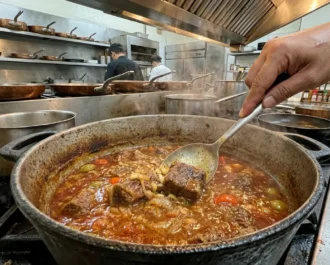
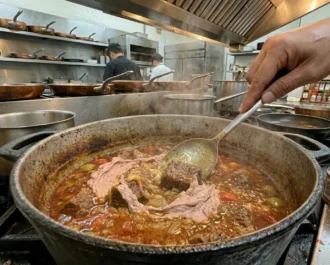
Heat oil in a large pot and sear the beef cubes until browned on all sides. Add the garlic and onions, sautéing until fragrant. Pour in the tomato sauce and beef broth, then bring to a boil. Lower the heat to a simmer and cover the pot, allowing the beef to cook for about ninety minutes or until tender. This slow braising is essential for breaking down the tough fibers of the brisket. As the beef cooks, the tomato sauce will mellow and deepen in flavor. Ensure you maintain a consistent low heat to keep the meat succulent. This foundational stage creates a rich, savory base that will eventually be transformed into the complex, multi-layered sauce that characterizes a professional-grade Filipino Caldereta.
- The Creamy Liver Transformation
Once the beef is tender, stir in the liver spread. This is the "secret" ingredient that gives Caldereta its signature rich, earthy, and slightly grainy texture. The liver spread acts as a natural thickener and provides a deep umami flavor that differentiates this dish from a standard tomato stew. Stir thoroughly to ensure the spread is completely integrated into the sauce. At this stage, the sauce will turn a darker, richer red and become noticeably thicker. The interaction between the acidic tomato and the creamy liver creates a sophisticated flavor profile that is both hearty and indulgent. This stage is crucial for achieving the authentic mouthfeel and depth of flavor that Filipinos expect from a celebratory Caldereta.
- Adding Heat and Cheese
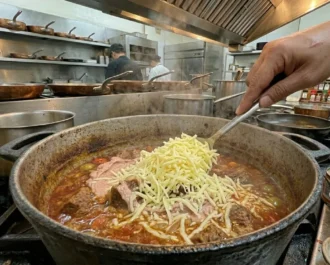
Incorporate the minced bird's eye chilies and the grated cheese into the pot. The chilies provide a slow, creeping heat that cuts through the richness of the meat and liver, while the cheese melts into the sauce, adding a savory, creamy finish and a subtle salty kick. Stir until the cheese is completely melted and the sauce is glossy. This combination of spice and dairy is a hallmark of the Filipino adaptation of this Spanish classic, creating a flavor profile that is bold, festive, and incredibly addictive. The cheese also helps to further thicken the sauce, ensuring it clings perfectly to every piece of beef and vegetable. Adjust the number of chilies based on your preferred spice level.
- Incorporating Fried Vegetables
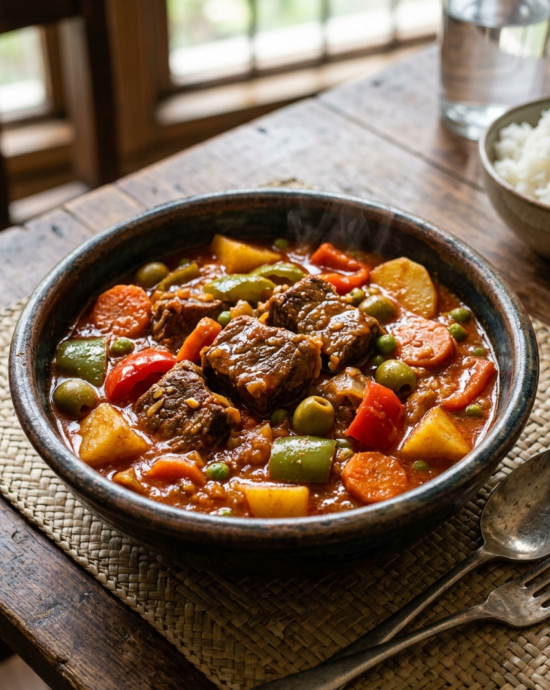
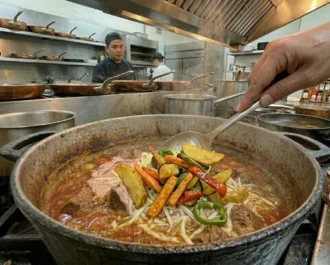
Add the pre-fried potatoes and carrots to the pot, along with the sliced red bell peppers and green olives. Using fried vegetables is a professional food styling tip; it ensures they hold their shape and provides a better texture compared to boiling them directly in the sauce. The bell peppers add a fresh, sweet crunch, while the olives provide a sophisticated, salty contrast. Simmer for another ten minutes to allow the vegetables to absorb the rich flavors of the sauce. This stage brings a vibrant mix of colors and textures to the dish, making it visually appealing and nutritionally balanced. The variety of ingredients ensures that every spoonful offers a new and interesting flavor combination for the diner.
- The Final Reduction and Service
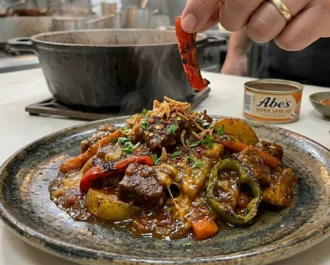
Continue to simmer the Caldereta uncovered for a few more minutes until the sauce has reduced to your desired thickness. The final result should be a rich, heavy, and oily sauce that is packed with flavor. Taste and adjust the seasoning with salt and pepper if necessary. Serve the Beef Caldereta hot in a large bowl, garnished with a little more grated cheese if desired. This dish is the ultimate "appetite booster" and is best enjoyed with a generous serving of steamed white rice. The combination of tender beef, spicy-creamy sauce, and hearty vegetables makes it a perfect centerpiece for town fiestas, Christmas dinners, or any special occasion where a grand, flavorful meal is required.
- Calories:450 kcal23%
- Energy:1,883 kj23%
- Protein:30 g60%
- Carbohydrates:18 g7%
- Sugar:6 g7%
- Salt:1.4 g23%
- Fat:26 g33%
Table of Contents
What Is Beef Caldereta?
Beef Caldereta is the “king” of Filipino festive stews, a Spanish-influenced braised beef dish slow-cooked in a rich tomato-based sauce enlivened with liver spread, melted cheese, and fiery chilies, producing one of the most indulgent and celebratory meals in the Philippine culinary canon. The name comes from the Spanish word caldera, meaning cauldron, reflecting its history as a slow-cooked communal meal traditionally prepared in large pots for gatherings and feasts. While the Spanish version often uses lamb, Filipinos preferred the robust flavor of beef or goat (Kalderetang Kambing), and over centuries the dish has been thoroughly Filipinized into a regional masterpiece that bears only a distant resemblance to its colonial ancestor.
The flavor profile of Beef Caldereta is bold and indulgent, characterized by the rich umami of liver spread, the sharp festive heat of chilies, the creamy richness of grated cheese, and the deep savory tang of tomato sauce simmered down to a velvety glaze. Beef chuck or shank is the traditional cut of choice because its abundant connective tissue breaks down during slow braising into melt-in-the-mouth tenderness, while the marrow and gelatin enrich the sauce with body and depth. Regional variations abound — some versions in Batangas and Quezon lean heavier on coconut milk for added creaminess, while Bicolano renditions ramp up the chili heat dramatically, and certain Visayan recipes incorporate green olives and pickles for a sharper Spanish-style brininess.
The dish is also closely related to other Filipino tomato-based stews like Mechado, Afritada, and Estofado, sharing DNA with the broader family of Spanish-influenced guisados that form the backbone of Filipino cuisine. Beef Caldereta is typically reserved for handaan (celebrations), appearing at Christmas Noche Buena, town fiestas, weddings, and milestone birthdays as the dish that anchors the entire table. Its slow-cooked nature makes it ideal for batch cooking and meal prep, as the flavors deepen overnight into something even more complex than the day it was made. It is undeniably a must-try for anyone exploring the celebratory, sophisticated side of Filipino home cooking.
Ingredient Notes
- Beef Chuck or Shank: The best cut for Beef Caldereta is beef chuck or shank because of its rich connective tissue and marbling, which break down slowly during braising to produce an incredibly tender, succulent texture and a deeply gelatinous sauce. Look for beef with bright red color and firm, fine-grained flesh — avoid cuts that appear brown, dry, or have an off-putting smell.
- Liver Spread: This is the secret ingredient that gives Caldereta its signature depth and slight earthy richness, setting it apart from every other Filipino tomato stew. Reno Liver Spread is the iconic Filipino brand of choice; choose a smooth, well-blended variety without overpowering preservatives so you can control the final flavor of your stew.
- Tomato Sauce and Tomato Paste: The combination of tomato sauce and tomato paste provides both body and concentrated umami depth to the braising liquid. Choose a good-quality pure tomato product without added sugar or seasonings so you can control the balance of the dish completely.
- Bell Peppers (Red and Green): Bell peppers add sweetness, color contrast, and a fresh vegetal note that brightens the heaviness of the stew. Use both red and green for visual appeal and a fuller flavor profile; add them in the last 10 minutes of cooking to preserve their texture and bite.
- Siling Labuyo or Red Chilies: Filipino bird’s eye chilies (siling labuyo) deliver the sharp festive heat that defines Caldereta. The best chilies should be firm, glossy, and deeply red — adjust the quantity to your tolerance, but never skip them entirely as the heat is essential to the dish’s character.
- Cheddar Cheese: Grated cheddar cheese melted into the sauce at the end of cooking adds a creamy, slightly tangy richness that rounds out the entire dish. Eden or Magnolia processed cheese (queso de bola during the holidays) is the classic Filipino choice — opt for a sharp variety for the boldest flavor.
Ingredient Suggestions
- Green Olives: Adds a salty, briny note that cuts through the richness of the stew — a classic Spanish-influenced addition that elevates the dish considerably.
- Green Peas: Stirred in during the final minutes of cooking, green peas add color, sweetness, and a soft textural contrast to the tender beef.
- Quartered Potatoes and Carrots: Adds hearty substance and helps stretch the dish for larger gatherings — a classic addition in many Filipino households for fiestas and Noche Buena.
- Hot Dogs or Vienna Sausages: A nostalgic Filipino party touch that adds smoky-sweet flavor and is especially loved by children at family celebrations.
- Coconut Milk: A splash of coconut milk near the end of cooking transforms the stew into the creamier Bicolano-style version, mellowing the heat and adding tropical richness.
- Pickle Relish: A spoonful of sweet pickle relish adds tang and complexity, a quiet hack used by lola-generation cooks to balance the richness of the sauce.
Helpful Tips & Pro Tips
- Always Brown the Beef First: Skipping the browning step is the most common reason Beef Caldereta ends up tasting flat and one-dimensional. Proper browning creates the Maillard reaction, which generates hundreds of complex flavor compounds that no amount of additional seasoning can replicate. Always sear in batches over medium-high heat and never crowd the pan.
- Add the Liver Spread at the Right Time: The liver spread should be stirred in during the last 15 to 20 minutes of cooking, not at the start. Adding it too early causes it to break down and lose its signature creaminess, while adding it too late prevents it from fully integrating into the sauce. Timing is everything for that velvety finish.
- Why Is My Caldereta Tough? If your beef is tough after cooking, it simply hasn’t braised long enough. Beef chuck and shank contain significant collagen that requires prolonged exposure to low, moist heat to break down into gelatin. Extend braising time in 20-minute increments until the meat yields easily to a fork.
- Bloom the Tomato Paste: Sauté the tomato paste in oil for a minute or two after the aromatics until it darkens slightly and smells deeply roasted. This crucial step removes the raw tinned-tomato taste and unlocks a richer, more concentrated tomato flavor in the final sauce.
- Rest Before Serving: Always allow the finished stew to rest off the heat for 10 to 15 minutes before plating. Resting allows the proteins to relax and reabsorb juices, producing noticeably juicier, more tender bites of beef and a more cohesive sauce with every serving.
How to Serve and Store
Beef Caldereta is best served hot directly from the pot alongside generous portions of steamed white rice, which soaks up the rich, glossy red-orange sauce beautifully. For a more festive handaan presentation, transfer to a wide ceramic serving dish and garnish with extra grated cheese and sliced red chilies on top. The dish pairs wonderfully with a side of pickled papaya (atsara), warm pandesal for sopping up the sauce, and an ice-cold bottle of beer or a glass of red wine for the adults at the table.
Leftover Beef Caldereta keeps exceptionally well. Store in an airtight container in the refrigerator for up to 3 to 4 days — the flavors deepen and improve significantly overnight, making it an excellent make-ahead dish for fiestas and Noche Buena. For longer storage, freeze in portioned containers for up to 2 months. Thaw overnight in the refrigerator before reheating. Reheat gently on the stovetop over low heat with a splash of beef broth or water to loosen the sauce, or microwave covered on medium power until heated through.
Substitutions
- Beef Chuck → Goat Meat (Kalderetang Kambing): The traditional regional version uses goat meat for a gamier, more festive flavor profile beloved in Batangas and Northern Luzon provinces.
- Liver Spread → Chicken Liver Pâté (Premium Upgrade): For a more refined gastropub-style version, substitute homemade chicken liver pâté in place of canned liver spread for cleaner, more nuanced umami depth.
- Cheddar Cheese → Queso de Bola (Festive Holiday Version): Edam cheese (queso de bola) gives a richer, slightly nuttier finish and is the traditional choice for Christmas and New Year Noche Buena Caldereta.
- Tomato Sauce → Canned Crushed Tomatoes: Crushed canned tomatoes work perfectly as a one-to-one substitute and produce a chunkier, more rustic stew texture that many home cooks prefer.
- Beef → Beef Shank with Bone-In (Deeper Flavor): Bone-in beef shank delivers significantly more body and gelatin to the sauce thanks to the marrow, producing a noticeably richer final stew.
- Siling Labuyo → Jalapeños or Serranos (Pantry Alternative): If labuyo is unavailable, jalapeños or serrano chilies provide a similar heat profile, though slightly less sharp; adjust the quantity to match your tolerance.
- Beef → Jackfruit or Mushrooms (Vegan): For a plant-based version, use unripe jackfruit or king oyster mushrooms in place of beef; both absorb the braising liquid well and produce a satisfying, meaty texture.
Suggested Recipes
- Kalderetang Kambing: The goat meat version of Caldereta, traditionally served during fiestas in Northern Luzon and prized for its gamier flavor and deeper sauce.
- Mechado: A classic Filipino tomato-soy braised beef dish finished with potatoes and carrots, sharing Caldereta’s tomato base but without the liver spread and chili heat.
- Afritadang Manok: This tomato-based Filipino chicken stew shares the same Spanish-influenced guisado technique and features bell peppers, potatoes, and peas in a bright tomato sauce.
- Estofadong Baboy: A Filipino braised pork dish in a tangy tomato-soy-vinegar sauce, another member of the same Spanish-influenced guisado family as Caldereta.