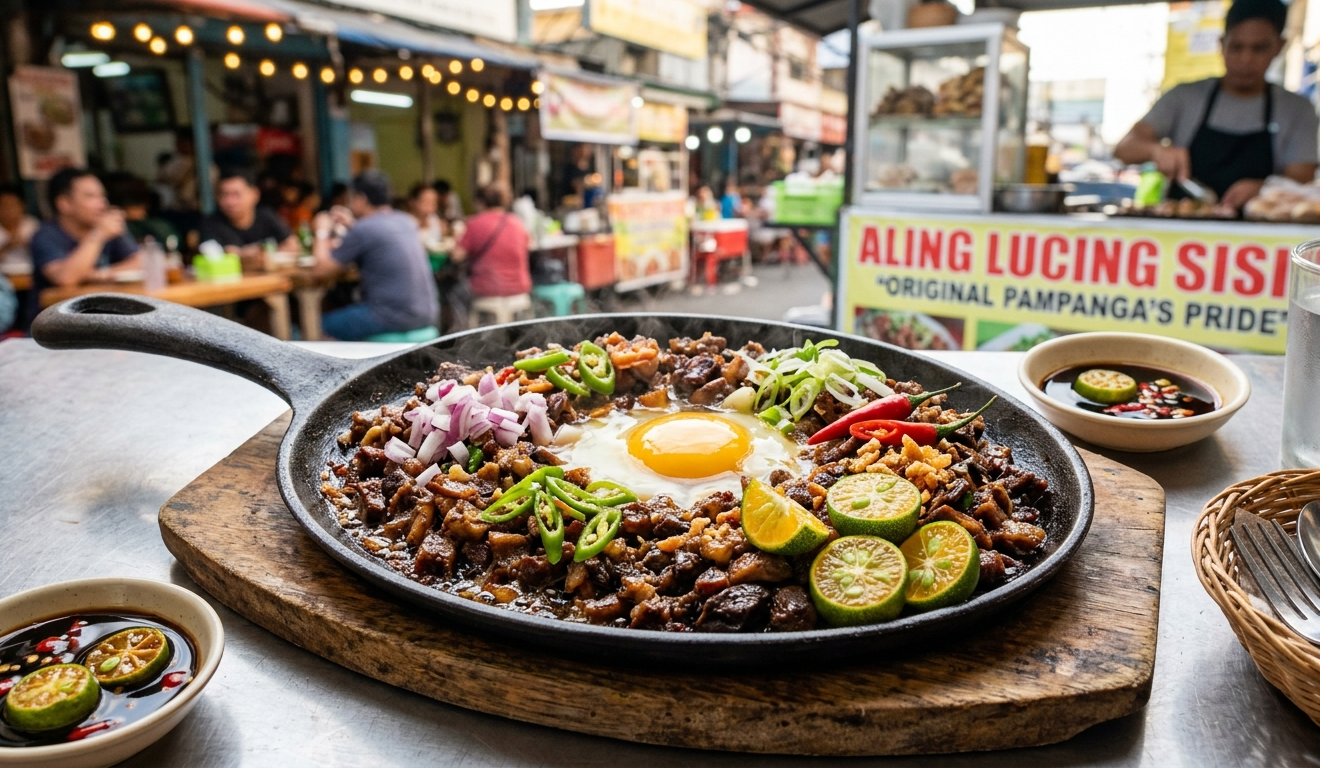
Picture a sizzling cast-iron plate arriving at the table, smoke rising, fat still popping, a raw egg sliding off the side as the server sets it down. The smell hits you — smoky, garlicky, acidic, intensely porky. You stir the egg into the hot mixture, squeeze calamansi over the top, and the sound of the sizzle actually changes as the cool juice hits the pan.
Sisig is one of the most viscerally satisfying dishes in Filipino cuisine — and the dish that made Pampanga’s culinary reputation global. It is a triumph of resourcefulness — built from parts of the pig others discarded — transformed through technique into something extraordinary.
The Origins of Sisig
The word sisig predates the dish as most people know it. In early Kapampangan, sisig referred to a method of preparing sour, acidic food — originally fruits like green mango prepared with salt and vinegar as a palate cleanser. A 1732 Filipino dictionary documents sisig as an acidic vegetable preparation. The souring principle — vinegar or calamansi — is the thread running from the original meaning to the modern dish.
The transformation into the pork-based sizzling dish the world knows today is credited almost entirely to Lucia ‘Aling Lucing’ Cunanan from Angeles City, Pampanga. In the late 1970s and early 1980s, she began serving chopped pork face — head, snout, ears, cheeks — boiled, grilled over charcoal, then finely chopped and dressed with calamansi, onions, chili, and vinegar.
Aling Lucing’s sisig was served at her open-air restaurant on Fields Avenue, near Clark Air Base. It quickly became a pulutan phenomenon. She was declared the ‘Sisig Queen of the Philippines.’ She passed away in 2008, but her family continues to operate the original restaurant.
How Sisig Evolved
Aling Lucing’s original was pure offal — pork face, ear, and snout — without mayonnaise, egg, or sizzling plate. Key transformations:
The sizzling plate: A restaurant presentation innovation, not traditional — but now universally adopted.
Mayonnaise: Controversial among traditionalists — never in Aling Lucing’s version. Adds creaminess and moderates acidity for broader palates. Many Pampangan purists consider it an abomination.
The raw egg: Another restaurant innovation — cracked on top, stirred at the table. Creates richness and ritual.
Alternative proteins: As sisig spread, cooks applied the technique to bangus, tofu, chicken, and squid.
Cultural Significance
Sisig is first and foremost pulutan — food for drinking. In Filipino culture, pulutan occupies a specific social space: food consumed during a tagay (communal drinking session). Sisig’s combination of fat, acid, salt, and heat makes it the archetypal pulutan.
Beyond pulutan, sisig represents Kapampangan philosophy: the creative use of every part of the animal, finding flavor and dignity in parts other culinary traditions discard. No dish has done more to introduce Filipino food to international audiences — Filipino restaurants from Los Angeles to London lead with sisig on their menus.
Every Major Sisig Variation
Traditional Kapampangan Sisig
Chopped pig face (maskara), ears, and snout — boiled, grilled over charcoal, finely chopped and dressed with calamansi, onion, chili, salt, and pepper. No mayonnaise. No egg. No sizzling plate. Pure, acidic, intensely flavored. This is what sisig is at its origin.
Manila-Style Sisig
Pork belly (sometimes mixed with pig face), chopped and grilled, on a sizzling plate with mayonnaise and a cracked raw egg. Richer, creamier, more accessible. This version made sisig nationally and internationally famous.
Bangus Sisig
Deep-fried milkfish flaked and chopped — dressed with onions, calamansi, chili, and mayonnaise. The crispy skin adds texture in place of charred pork bits. Lighter than pork sisig but equally addictive.
Tofu Sisig
Crispy fried tofu, chopped and dressed with the same calamansi-onion-chili treatment. An excellent vegetarian option that absorbs the acidic dressing beautifully.
Squid Sisig (Pusit Sisig)
Grilled squid, chopped, and dressed. The ink sacs burst during grilling and add intense oceanic depth. A regional specialty in coastal provinces.
How to Make Sisig at Home (Manila-Style)
Ingredients (serves 4 as pulutan)
- 500g pork belly (or mix with pig ears for more traditional flavor)
- 1 head garlic, bay leaves, peppercorns, salt (for boiling)
- 3 tbsp calamansi juice + 2 tbsp soy sauce
- 1 medium white onion, finely diced
- 3–4 siling labuyo (bird’s eye chili), minced
- 2 tbsp mayonnaise (optional) + 2 raw eggs
- Salt and pepper to taste, oil for frying, 1 tsp butter
Method
- Boil the pork. Place in a pot, cover with water, add aromatics. Simmer 45–50 minutes until tender. Remove and cool completely.
- Grill or broil. Grill over charcoal (or under a hot broiler) until deeply charred. The char provides the smoky complexity that defines sisig. Chop finely.
- Dress the pork. Combine with calamansi, soy sauce, diced onion, chili, salt, and pepper. Add mayonnaise if using. Taste — it should be assertively sour and savory.
- Serve sizzling. Heat a cast-iron pan until screaming hot. Add butter — it should smoke immediately. Add sisig, press flat, top with cracked egg. Bring to the table while still sizzling. Stir the egg in and eat immediately.
Sisig Today
Sisig now appears on menus in New York, London, Dubai, Sydney, and Tokyo. It has been served at James Beard Foundation events and profiled as a flagship of the global Filipino food moment. Angeles City declares an annual Sisig Festival celebrating the dish and Aling Lucing’s legacy.
Frequently Asked Questions

Jeff Smith
"Cooking is the intersection of history, science, and emotion."
For me, the kitchen has always been a laboratory of culture. With a background deeply rooted in digital strategy and precision, I approach the culinary arts with the same rigor I apply to the digital landscape—analyzing flavors, perfecting techniques, and documenting the nuance that makes Filipino cuisine truly world-class.
Findme Recipe was born from a desire to bridge the gap between traditional heritage and the modern home cook. Whether it is mastering the perfect balance of acidity in a classic Adobo or simplifying complex regional dishes for everyday kitchens, my mission is to preserve our culinary identity through accessible, data-backed, and delicious content.
I am not just building a database; I am cultivating a community where every Filipino kitchen feels empowered, every ingredient is celebrated, and every family heirloom recipe finds a place to thrive.
Join me as we translate the soul of our islands into recipes for the next generation.