
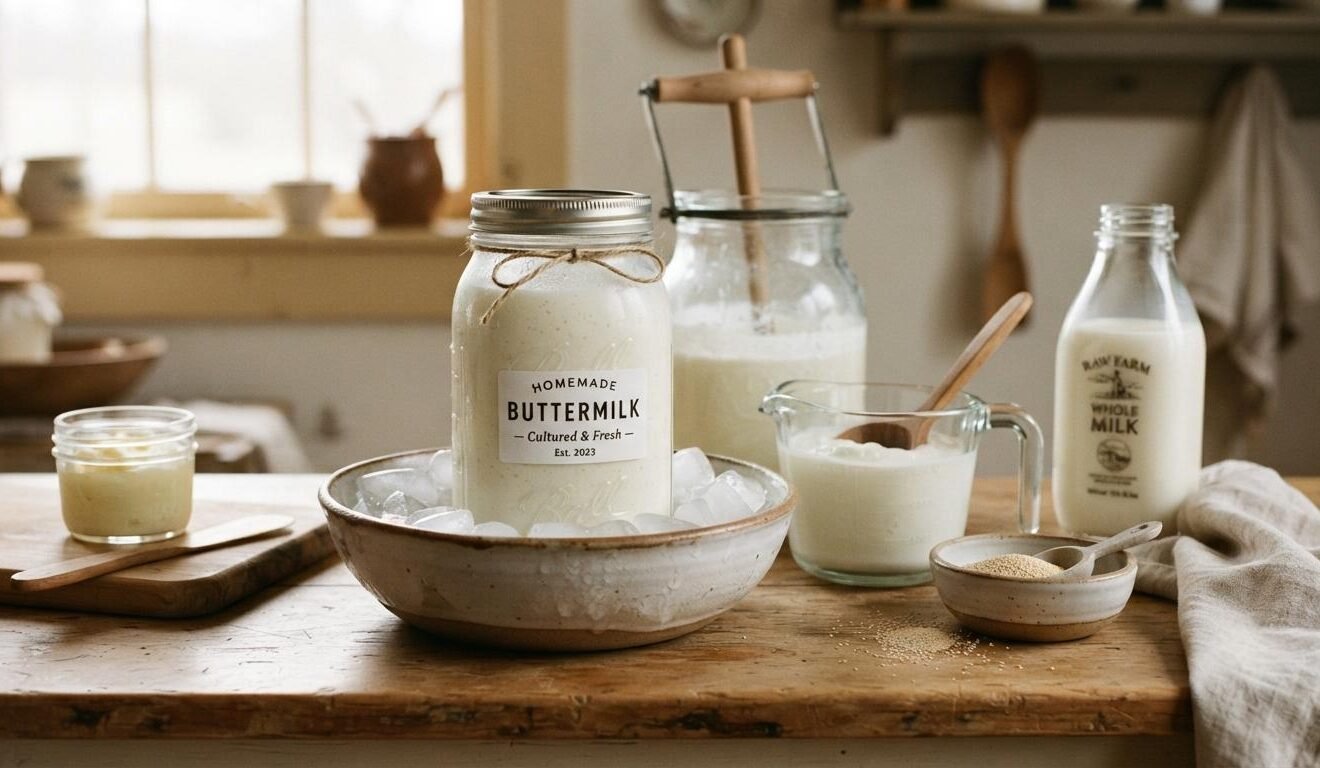
There’s nothing more frustrating than getting halfway through a pancake or biscuit recipe and realizing you don’t have buttermilk, especially since most people don’t keep it stocked in the fridge for everyday use. Good news: you don’t need to run to the store, because real buttermilk is easy to fake with two ingredients you almost certainly already have — milk and something acidic.
Learning how to make buttermilk this way takes about five minutes and works in nearly every recipe that calls for the real thing, from fried chicken marinades to fluffy biscuits. It’s one of those kitchen tricks that, once you know it, makes you wonder why you ever bought a whole carton of buttermilk just to use two tablespoons and let the rest go bad. Here’s exactly how to do it, plus a few details that make the difference between an okay substitute and one that works just as well as store-bought.
What Buttermilk Actually Is (and Why This Trick Works)
Traditional buttermilk is the tangy liquid left over from churning butter, though most store-bought buttermilk today is cultured milk — regular milk fermented with specific bacteria that thicken it and give it that distinct sour tang. What actually matters for baking and cooking is the acidity, which reacts with baking soda to help baked goods rise and tenderizes proteins in marinades.
That’s why a simple milk-and-acid mixture works so well as a substitute. You’re recreating the acidity that makes buttermilk useful in recipes, even without the fermentation process or the specific bacterial culture that gives real buttermilk its thicker texture.
The Basic Formula: Milk Plus Acid
For every cup of buttermilk a recipe calls for, add one tablespoon of white vinegar or fresh lemon juice to a measuring cup, then fill the rest of the cup with regular milk. Whole milk gives you the closest texture to real buttermilk, though 2% works fine too — just avoid skim milk if you can, since it curdles less dramatically and the result feels thinner.
Stir it gently and let it sit at room temperature for 5 to 10 minutes. You’ll see the milk start to curdle slightly and thicken as the acid reacts with the proteins, which is exactly what you want — that’s the same reaction that gives real buttermilk its tang and body. Don’t worry if it looks a little more separated than store-bought buttermilk; that visual difference doesn’t affect how it performs in a recipe.
Lemon Juice vs. Vinegar: Which Should You Use?
Both work equally well from a chemistry standpoint, so the choice mostly comes down to what you have and what flavor note fits your recipe. White vinegar is essentially flavorless once mixed into a recipe, making it the safer default for savory dishes like biscuits or fried chicken marinade.
Lemon juice adds a very faint citrus note, which can actually complement recipes like lemon poppyseed muffins or a citrus-forward cake, but it’s subtle enough not to clash with most other baked goods either. Apple cider vinegar can work in a pinch too, though its slightly stronger flavor is worth keeping in mind for delicate recipes.
Dairy-Free Buttermilk Substitutes
The same trick works with plant-based milks if you need a dairy-free version. Unsweetened soy milk curdles the most similarly to dairy milk because of its protein content, making it the best dairy-free option for this method. Add the same ratio — one tablespoon of vinegar or lemon juice per cup of soy milk.
Almond and oat milk will also curdle slightly with added acid, though the effect is less pronounced since they contain less protein than soy milk. They still work fine for most baking applications, even if the curdling isn’t quite as visible as it is with dairy or soy milk.
Using Your Homemade Buttermilk
Use this substitute exactly as you would real buttermilk — in pancakes, biscuits, cornbread, or as a base for a fried chicken marinade. It won’t be quite as thick as cultured buttermilk from the store, but the acidity level, which is what matters most for baking chemistry, is essentially the same.
Make it fresh right before you need it rather than storing it, since the texture and flavor are best used within the hour. If you regularly find yourself out of buttermilk, this two-ingredient trick is worth memorizing — it’s saved more than one recipe on a Sunday morning when the grocery store wasn’t an option.
Other Handy Substitutes Worth Knowing
Plain yogurt or sour cream thinned out with a little water or milk makes another solid buttermilk stand-in, and it’s especially useful if you’re already out of both regular milk and an acid. Mix roughly three-quarters yogurt with one-quarter water to approximate buttermilk’s thinner consistency.
Cream of tartar dissolved into milk is a lesser-known option too, using about one and three-quarter teaspoons per cup of milk. It works through a similar acidic reaction, though vinegar and lemon juice tend to be easier to keep on hand and simpler to measure out on short notice. Whichever version you use, give it the same 5 to 10 minutes to sit before adding it to your recipe, since that resting time is what allows the acid to actually do its work.
When You Should Just Buy the Real Thing Instead
This substitute works well for most baking and marinating purposes, but it’s not a perfect match for every use. Recipes where buttermilk is the star of the show — like a buttermilk-based ranch dressing or a chilled buttermilk soup — rely on its distinct tang and thicker, creamier body in a way the substitute can’t fully replicate.
For everyday baking, though, the difference is negligible, and most people genuinely can’t tell in a finished batch of biscuits or pancakes. Save the real, cultured buttermilk for recipes where it’s the featured ingredient, and lean on the quick substitute for everything else — it’s a trade worth making for the convenience alone, especially on a morning when you’re already halfway through mixing batter.