
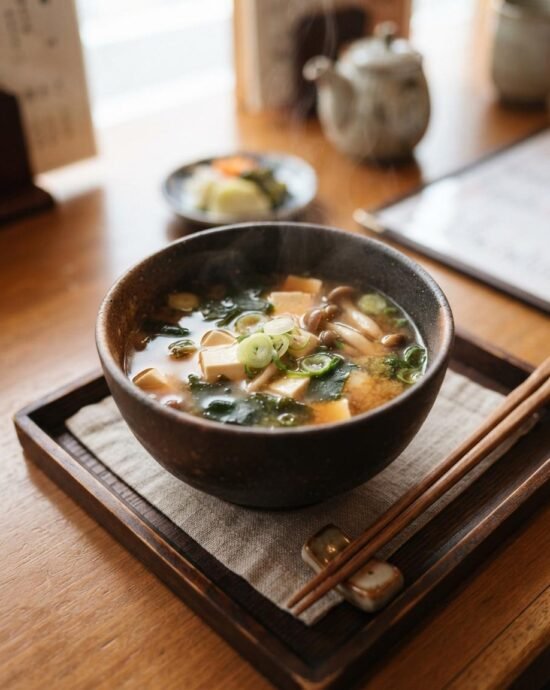

- Step 1. Rehydrate the Seaweed
Place the dried wakame seaweed in a small bowl and cover with cold water. Let it soak for 5 minutes, until it softens and expands considerably in size. Drain well and set aside; this brief soaking step is necessary since dried wakame is quite tough and needs time to rehydrate into a tender, pleasant texture before being added to the soup.
- Step 2. Heat the Dashi Stock
Pour the dashi stock into a medium pot and warm it gently over medium heat until it is hot but not boiling. Miso soup should never be allowed to reach a vigorous boil at any point during cooking, since high heat destroys the delicate beneficial enzymes and subtle flavor of the fermented miso paste that will be added shortly.
- Step 3. Add the Tofu
Gently add the cubed tofu to the warm dashi stock, being careful not to break the pieces apart. Let the tofu warm through gently for 2 to 3 minutes, keeping the heat low throughout this step so the delicate cubes stay intact rather than crumbling into the broth.
- Step 4. Dissolve the Miso
Scoop the miso paste into a small fine mesh strainer or a ladle, then lower it partially into the warm dashi stock. Use a spoon or chopstick to press and stir the miso through the strainer directly into the liquid, which helps it dissolve smoothly without leaving any undissolved clumps floating in the finished soup.
- Step 5. Add the Seaweed
Once the miso is fully dissolved into the broth, stir in the softened, drained wakame seaweed. Warm everything together for another minute, keeping the heat gentle throughout, since the soup only needs to be heated through rather than simmered vigorously at this stage.
- Step 6. Garnish and Serve
Ladle the hot miso soup into individual bowls, distributing the tofu and seaweed evenly among each serving. Garnish with the thinly sliced green onions just before serving, and enjoy immediately while hot, alongside rice or as a starter to a larger Japanese meal.
- Calories:70 kcal4%
- Protein:6 g12%
- Carbohydrates:4 g1%
- Sugar:1 g1%
- Energy:293 kJ4%
- Salt:1.2 g20%
- Fat:3 g4%
What is Miso Soup?
Miso soup is a simple, deeply comforting Japanese soup made by dissolving fermented miso paste into a savory dashi stock, typically finished with soft cubes of tofu, tender wakame seaweed, and a scattering of sliced green onion. Considered one of the most fundamental and universally present dishes in Japanese cuisine, miso soup is traditionally served as part of nearly every meal throughout the day, from breakfast alongside rice and grilled fish to dinner as an accompaniment to a wide variety of main dishes. The soup's defining ingredient, miso, is a fermented soybean paste with a history in Japan stretching back well over a thousand years, made through a slow fermentation process involving soybeans, salt, and koji, a specific mold culture also used in producing sake and soy sauce, resulting in a paste with deep, complex umami flavor and considerable variation depending on the type of miso used, whether the lighter, sweeter white shiro miso or the darker, more intensely fermented red aka miso. What distinguishes properly made miso soup from a merely adequate version is careful attention to temperature, since the miso paste must never be allowed to boil, as excessive heat destroys many of its beneficial live cultures and subtle, delicate flavor notes. Though remarkably simple in its basic form, miso soup allows for considerable regional and personal variation in its accompanying ingredients, ranging from clams and root vegetables to mushrooms and leafy greens. Deeply woven into the rhythm of daily Japanese life, miso soup remains a quiet, comforting constant across the country's diverse culinary landscape.
Ingredient Notes
- Miso Paste: Look for a miso variety suited to your taste, ranging from mild, sweet white miso to bolder, saltier red miso; always dissolve it gently without boiling to preserve its delicate flavor.
- Dashi Stock: This savory kombu and bonito-based stock forms the essential base of the soup; instant dashi powder dissolved in hot water is a convenient shortcut for home cooks.
- Soft Or Silken Tofu: A more delicate tofu variety is traditional for miso soup, offering a smooth, custardy contrast to the savory broth; handle it gently to keep the cubes intact.
- Dried Wakame Seaweed: This mineral-rich seaweed expands significantly once rehydrated; a small amount goes a long way, so measure carefully to avoid overwhelming the soup.
- Green Onions: Freshly sliced and added just before serving, green onion provides a sharp, bright finishing note that balances the rich, savory broth.
Ingredient Suggestions
- Enoki or shiitake mushrooms: A handful added along with the tofu introduces an extra earthy, umami-rich dimension to the soup.
- Clams: A traditional and beloved variation called asari miso soup, where clams add a briny sweetness to the broth.
- Daikon radish, thinly sliced: A mild, slightly sweet vegetable addition that becomes tender in the warm broth.
- Extra wakame seaweed: For those who love the mineral, oceanic flavor of seaweed, an extra spoonful enhances that character.
- A drizzle of sesame oil: A small amount added just before serving lends a subtle, nutty richness to the finished soup.
Helpful Tips & Pro Tips
- If your miso soup tastes flat or overly salty, the miso amount likely was not adjusted to the specific type used; different miso varieties range considerably in salt and flavor intensity, so taste and adjust gradually.
- Never let the soup reach a full boil after adding the miso paste, since high heat destroys its beneficial enzymes and subtle, delicate flavor.
- Dissolve the miso paste through a fine mesh strainer directly into the broth to avoid any undissolved lumps in the finished soup.
- Add delicate ingredients like tofu and seaweed only once the dashi is warm rather than at the very start of cooking, since they need only gentle, brief heating.
- Serve miso soup immediately after preparing, since it is meant to be enjoyed fresh and piping hot rather than reheated repeatedly.
How to Serve and Store
Serve miso soup hot, immediately after preparing, as a comforting starter or side dish alongside rice and other elements of a Japanese meal. Leftover miso soup can be stored in an airtight container in the refrigerator for up to 2 days, though it is best to store the broth separately from delicate ingredients like tofu when possible, since they can become watery upon reheating. Reheat gently on the stovetop over low heat, being careful never to let the soup come to a full boil, which would compromise the miso's delicate flavor and beneficial properties. Miso soup does not freeze well due to the tofu's texture breaking down significantly once thawed.
Substitutions
- Dashi Stock → Kombu-only vegetable dashi — A fully plant-based broth option that still provides savory depth without bonito flakes. (Vegan)
- Miso Paste → Verify your chosen brand is labeled gluten-free — Some miso varieties contain barley, so a certified gluten-free brand ensures the soup remains safe for those avoiding gluten. (Gluten-Free)
- Dried Wakame Seaweed → Fresh spinach, added at the end — A more widely available and often more affordable green addition when wakame is unavailable. (Budget-Friendly)
- Soft Tofu → Firm tofu, cubed small — A slightly heartier texture option for those who prefer a less delicate tofu.
- Dashi Stock → Low-sodium vegetable or chicken broth — A reasonable substitute that still provides a warm, savory base for the soup.
Suggested Recipes
- Udon & Soba: Noodle soups that share miso soup's foundation of savory dashi stock.
- Tonkatsu: A crispy fried pork cutlet that is traditionally served with a starter bowl of miso soup.
- Sushi & Sashimi: A raw fish-based meal that is almost always accompanied by a comforting bowl of miso soup.
- Chawanmushi: A silky steamed egg custard that pairs beautifully alongside a simple bowl of miso soup for a light, savory start to a meal.

Jeff Smith
"Cooking is the intersection of history, science, and emotion."
For me, the kitchen has always been a laboratory of culture. With a background deeply rooted in digital strategy and precision, I approach the culinary arts with the same rigor I apply to the digital landscape—analyzing flavors, perfecting techniques, and documenting the nuance that makes Filipino cuisine truly world-class.
Findme Recipe was born from a desire to bridge the gap between traditional heritage and the modern home cook. Whether it is mastering the perfect balance of acidity in a classic Adobo or simplifying complex regional dishes for everyday kitchens, my mission is to preserve our culinary identity through accessible, data-backed, and delicious content.
I am not just building a database; I am cultivating a community where every Filipino kitchen feels empowered, every ingredient is celebrated, and every family heirloom recipe finds a place to thrive.
Join me as we translate the soul of our islands into recipes for the next generation.