Baking chicken sounds simple until you’re standing at the oven wondering if 25 minutes was enough, or if you just dried out a $12 pack of chicken breasts. The truth is that “bake chicken” isn’t one instruction — the timing changes significantly depending on the cut, whether it’s bone-in or boneless, and how hot your oven actually runs (which, for the record, is often not exactly what the dial says).
Here’s a real breakdown by cut, plus the one tool that matters more than any timer.
The Only Rule That Actually Matters: Internal Temperature
Before getting into specific times, it’s worth saying this clearly: chicken is done when it hits 165°F internally, not when the clock says a certain number of minutes have passed. Oven calibration varies, chicken thickness varies, and starting temperature varies depending on whether your chicken came straight from the fridge or sat out for twenty minutes first. Times below are solid starting estimates — a meat thermometer is what confirms you’re actually there.
I’ve pulled “done” chicken out of the oven that read 148°F on a thermometer more times than I’d like to admit. The timer lies. The thermometer doesn’t.
Baking Chicken Breast (Boneless, Skinless)
At 375°F, boneless skinless chicken breasts take about 20 to 30 minutes, depending on thickness. A thinner breast (under ¾ inch) might be done closer to 20 minutes, while a thick breast can need the full 30.
At 400°F, the same cut takes 18 to 25 minutes.
For the juiciest results, pound breasts to an even thickness before baking so they cook uniformly, and let them rest for 5 minutes after baking so the juices redistribute instead of running out the moment you cut in.
Baking Chicken Breast (Bone-In, Skin-On)
Bone-in chicken breasts take longer since the bone slows heat penetration. At 375°F, expect 35 to 45 minutes. The skin also gets crispier at higher heat, so many cooks prefer 400°F to 425°F for bone-in breasts, which brings the time down to roughly 30 to 40 minutes while giving better browning.
Baking Chicken Thighs
Thighs are more forgiving than breasts thanks to their higher fat content, which helps them stay juicy even with a slightly longer cook time.
- Boneless, skinless thighs at 400°F: 20 to 25 minutes
- Bone-in, skin-on thighs at 400°F: 35 to 45 minutes
- Bone-in, skin-on thighs at 425°F (for crispier skin): 30 to 40 minutes
Baking Chicken Drumsticks
Drumsticks at 400°F typically take 35 to 45 minutes. They’re small but dense near the bone, so it’s worth checking the thickest part near the bone with a thermometer rather than assuming they’re done just because the outside looks browned.
Baking a Whole Chicken
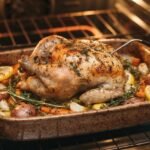
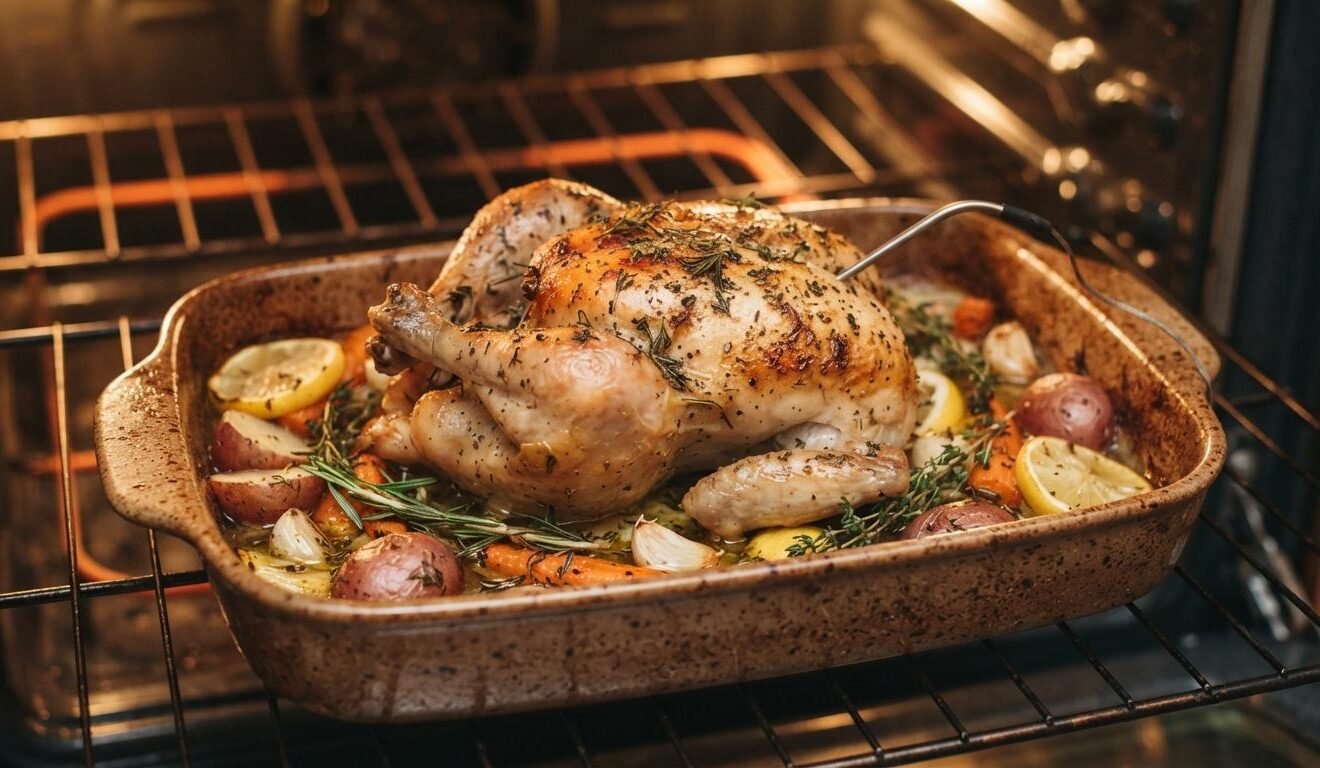
A whole chicken at 375°F takes roughly 20 minutes per pound, plus an additional 15 minutes, so a 4-pound bird needs about 1 hour 35 minutes, while a 5-pound bird needs closer to 1 hour 55 minutes.
Check the temperature in the thickest part of the thigh, avoiding the bone, since that’s the last part of a whole chicken to reach a safe internal temperature.
Baking Chicken Wings
Wings at 400°F typically take 40 to 45 minutes, flipped halfway through for even crisping. Higher heat, around 425°F, brings that down slightly to 35 to 40 minutes and produces crispier skin, which is usually the whole point of baking wings in the first place.
Quick Reference Chart
| Cut | Temp | Time |
| Boneless, skinless breast | 375°F | 20-30 min |
| Boneless, skinless breast | 400°F | 18-25 min |
| Bone-in, skin-on breast | 375°F | 35-45 min |
| Boneless, skinless thighs | 400°F | 20-25 min |
| Bone-in, skin-on thighs | 400°F | 35-45 min |
| Drumsticks | 400°F | 35-45 min |
| Whole chicken | 375°F | ~20 min/lb + 15 min |
| Wings | 400°F | 40-45 min |
Tips for Juicier, More Evenly Cooked Chicken
- Let chicken come closer to room temperature for about 15 to 20 minutes before baking, so it cooks more evenly rather than staying cold in the center while the outside overcooks.
- Pat it dry before seasoning. Excess moisture on the surface steams the chicken instead of letting it brown.
- Use a rimmed baking sheet or dish, not a flat sheet with no edges, to catch rendering fat and juices.
- Rest it after baking. Even a 5-minute rest lets the juices settle back into the meat instead of pooling on the cutting board.
Common Mistakes That Lead to Dry or Undercooked Chicken
Baking chicken straight from the fridge without adjusting for the extra cold mass is one of the most common reasons a recipe’s stated time comes up short. Overcrowding the pan is another — chicken pieces too close together steam rather than roast, extending the time needed and preventing the skin from crisping. And relying purely on color, rather than a thermometer, is how people end up serving chicken that looks done on the outside but isn’t safe on the inside.