
- Step 1. Make the Batter
In a large bowl, whisk together the flour and dashi stock until smooth and free of lumps. Whisk in the eggs and soy sauce until fully combined. The batter should be thin and pourable, similar to a crepe batter, since it needs to flow easily into the small, deep molds of a takoyaki pan. Let the batter rest for a few minutes while you prepare the fillings.
- Step 2. Prepare the Takoyaki Pan
Heat a specialized takoyaki pan, with its rounded, hemispherical molds, over medium heat. Generously brush or drizzle vegetable oil into each mold, making sure to coat the sides thoroughly, since this is essential for being able to rotate and remove the takoyaki later without them sticking and tearing apart.
- Step 3. Fill the Molds
Once the pan is hot, pour the batter generously over the entire surface, filling the molds and allowing excess batter to pool slightly over the top edges, which will later be folded into the balls as they are turned. Quickly distribute a piece of diced octopus, a sprinkle of chopped green onion, minced pickled ginger, and tempura bits into each filled mold.
- Step 4. Begin Shaping
Let the batter cook undisturbed for 2 to 3 minutes, until the bottoms begin to set and turn golden. Using a takoyaki pick, chopstick, or thin skewer, begin cutting into the batter around the edges of each mold and gently start rotating each ball a quarter turn, tucking any excess batter from the surface into the mold as you go.
- Step 5. Rotate Until Round
Continue rotating each takoyaki ball every minute or so, tucking in loose batter each time, gradually forming a round, uniform sphere. This process takes patience and several rotations over about 8 to 10 minutes total, with the balls turning a deep golden brown on the outside while remaining soft, custardy, and slightly gooey within.
- Step 6. Top and Serve
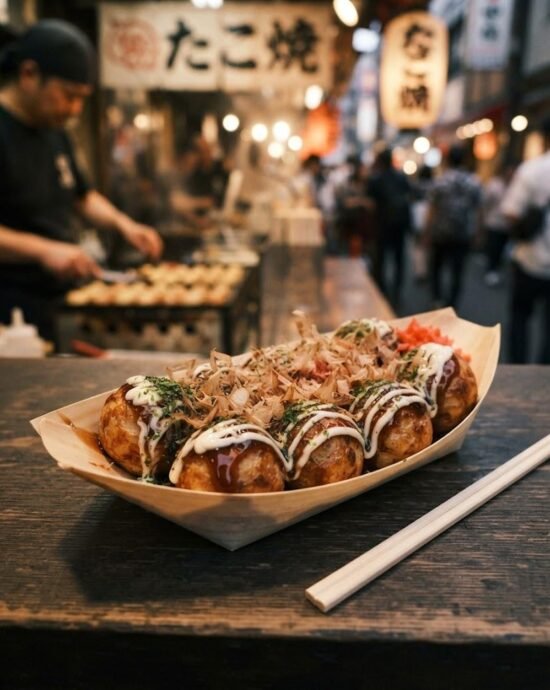
Once the takoyaki are fully round and cooked through, transfer them to a serving plate. Drizzle generously with takoyaki sauce and Japanese mayonnaise in a crosshatch pattern, then sprinkle with bonito flakes, which will curl from the residual heat, and a light dusting of aonori seaweed powder. Serve immediately while hot, ideally with toothpicks for easy eating.
- Calories:340 kcal17%
- Protein:14 g28%
- Carbohydrates:40 g15%
- Sugar:6 g7%
- Energy:1423 kJ17%
- Salt:1.9 g32%
- Fat:13 g19%
What is Takoyaki?
Takoyaki are round, golden-brown Japanese dumplings made from a savory, egg-rich batter cooked in a specialized molded pan, filled with diced octopus and other small ingredients, and finished with a generous drizzle of takoyaki sauce, Japanese mayonnaise, and dancing bonito flakes. Originating in Osaka in the 1930s, takoyaki quickly became one of the city's defining street foods, closely tied to Osaka's broader reputation as Japan's food capital and its love of casual, shareable snacks enjoyed while walking through bustling shopping streets and festivals. The dish's name combines tako, meaning octopus, with yaki, referring to the grilling or pan-frying method used to cook it, and its defining characteristic is the specialized cast-iron takoyaki pan, featuring a grid of small, hemispherical molds that allow the batter to be shaped into perfectly round balls through a careful, repeated rotating technique as it cooks. Achieving the ideal takoyaki texture, a thin, crisp exterior giving way to a soft, almost molten interior, requires practiced skill and patience, since the balls must be rotated multiple times to form their signature round shape while the batter inside remains delightfully gooey rather than fully solid. Beyond diced octopus, the batter often incorporates crunchy tempura bits and pickled ginger, adding textural complexity throughout each bite. Sold from bustling street stalls, festival booths, and dedicated takoyaki restaurants throughout Japan, this beloved snack, topped generously with its signature sweet-savory sauce and playful, curling bonito flakes, remains one of the country's most recognizable and cherished street foods.
Ingredient Notes
- Cooked Octopus: Look for pre-cooked octopus, often sold frozen or refrigerated at Japanese or Asian grocery stores, diced small so it distributes evenly throughout the batter.
- Dashi Stock: This savory stock forms the flavorful base of the thin takoyaki batter; instant dashi powder dissolved in water is a convenient substitute.
- Takoyaki Pan: A specialized cast-iron or nonstick pan with rounded molds is essential for making authentic, evenly shaped takoyaki; no substitute achieves quite the same result.
- Tempura Bits (Tenkasu): These crispy leftover bits of fried tempura batter add texture and a subtle richness throughout the takoyaki batter.
- Takoyaki Sauce: This thick, tangy-sweet sauce is a defining finishing touch; find it bottled in the Asian foods aisle, or substitute a mix of tonkatsu sauce and Worcestershire sauce.
Ingredient Suggestions
- Cheese: A small cube tucked into the center of each ball adds a gooey, melted surprise once cooked through.
- Shrimp: A popular alternative or addition to octopus for those who prefer a different type of seafood.
- Extra pickled ginger: For those who love a sharper, tangier bite, an extra sprinkle enhances the flavor throughout.
- Kewpie mayonnaise drizzle: A generous, decorative drizzle is a signature presentation element found at most takoyaki stalls.
- Chili powder or shichimi togarashi: A light dusting on top adds a customizable kick of heat.
Helpful Tips & Pro Tips
- If your takoyaki falls apart or leaks batter while rotating, the exterior likely was not given enough time to set before attempting to turn; be patient and let each side firm up first.
- Oil the pan molds thoroughly before adding batter, since this is essential for being able to rotate and release the takoyaki cleanly without tearing.
- Use a thin, pointed tool like a metal skewer or specialized takoyaki pick for the most precise control when rotating the balls into shape.
- Keep the batter thin and well-mixed, since a batter that is too thick will not flow properly into the molds or achieve the right creamy interior texture.
- Serve takoyaki immediately after topping with sauce, since the balls are best enjoyed hot, when the exterior is still crisp and the interior remains soft and gooey.
How to Serve and Store
Serve takoyaki hot, immediately after topping with sauce, mayonnaise, and bonito flakes, ideally with toothpicks for easy, casual eating. Takoyaki is best enjoyed fresh, since the crisp exterior softens considerably once cooled; leftovers can be stored in an airtight container in the refrigerator for up to 2 days. Reheat in a hot oven or air fryer for several minutes to help restore some crispness, rather than using a microwave, which leaves the exterior soft. Unfilled or uncooked takoyaki batter should not be stored for long, as it separates over time; freshly cooked, unsauced takoyaki can also be frozen for up to 1 month and reheated directly from frozen in a hot oven.
Substitutions
- Octopus → Diced mushrooms or extra tempura bits — A plant-based filling option that still provides good texture within the batter. (Vegan)
- All-Purpose Flour → A 1:1 gluten-free flour blend — Provides a similar batter consistency while keeping the dish free of gluten. (Gluten-Free)
- Fresh Octopus → Frozen cooked octopus, thawed — A more affordable and convenient option that works just as well once thawed and diced. (Budget-Friendly)
- Dashi Stock → Chicken stock with a small piece of kombu simmered in — A reasonable substitute that still provides a savory base for the batter.
- Takoyaki Sauce → A mix of ketchup, Worcestershire sauce, and oyster sauce — A homemade approximation when the bottled sauce is unavailable.
Suggested Recipes
- Okonomiyaki: Another iconic Osaka street food that shares takoyaki's savory batter, sauce, and bonito flake garnish.
- Yakitori: Grilled skewers that make a great addition to a casual Japanese street food spread alongside takoyaki.
- Onigiri: A portable rice snack that pairs well alongside takoyaki for a casual, shareable meal.
- Miso Soup: A light, comforting soup that balances a meal featuring rich, fried takoyaki.

Jeff Smith
"Cooking is the intersection of history, science, and emotion."
For me, the kitchen has always been a laboratory of culture. With a background deeply rooted in digital strategy and precision, I approach the culinary arts with the same rigor I apply to the digital landscape—analyzing flavors, perfecting techniques, and documenting the nuance that makes Filipino cuisine truly world-class.
Findme Recipe was born from a desire to bridge the gap between traditional heritage and the modern home cook. Whether it is mastering the perfect balance of acidity in a classic Adobo or simplifying complex regional dishes for everyday kitchens, my mission is to preserve our culinary identity through accessible, data-backed, and delicious content.
I am not just building a database; I am cultivating a community where every Filipino kitchen feels empowered, every ingredient is celebrated, and every family heirloom recipe finds a place to thrive.
Join me as we translate the soul of our islands into recipes for the next generation.