Pancakes seem simple right up until yours come out flat, rubbery, or pale. The gap between mediocre pancakes and genuinely great ones is surprisingly small — a few technique adjustments that most recipes don’t explain. If you want to know how to make the best pancakes from scratch, the secret is almost entirely in what you don’t do.
This guide covers the batter science, the mixing rule that most people break, the pan temperature trick, and the flip timing that guarantees a golden, evenly cooked result every single time.
The Ingredients That Matter
Ingredients (serves 4, about 8–10 pancakes):
- 1½ cups all-purpose flour
- 2 tsp baking powder
- ½ tsp baking soda
- 1 tbsp sugar
- ½ tsp salt
- 1¼ cups buttermilk (or milk + 1 tbsp vinegar)
- 1 large egg
- 3 tbsp melted butter (plus more for the pan)
- 1 tsp vanilla extract
The buttermilk is key: its acidity reacts with the baking soda to create extra lift, producing pancakes that are noticeably taller and more tender than those made with regular milk.
The Most Important Rule: Don’t Overmix
This is where most pancakes go wrong. Overmixed batter develops gluten, which makes pancakes tough and chewy. The batter should look lumpy and slightly rough — not smooth.
Mix dry ingredients in one bowl. Whisk wet ingredients in another. Pour wet into dry and fold together with a spatula using as few strokes as possible — 10 to 12 folds maximum. Stop while lumps are still visible. Rest the batter for 5 minutes before cooking.
💡 Pro Tip: The 5-minute rest isn’t optional — it lets the baking powder activate and the flour hydrate fully. Pancakes made from rested batter are consistently fluffier.
Step-by-Step Instructions
- Mix dry ingredients. Whisk flour, baking powder, baking soda, sugar, and salt together in a large bowl.
- Mix wet ingredients. In a separate bowl, whisk buttermilk, egg, melted butter, and vanilla until combined.
- Combine. Pour wet into dry and fold gently — 10–12 strokes max. Lumps are fine. Rest 5 minutes.
- Heat the pan. Set a non-stick skillet or griddle over medium heat. Add a small knob of butter. When butter foams and the foam subsides, the pan is ready.
- Pour and cook. Add ¼ cup batter per pancake. Cook until bubbles form across the surface and edges look set — about 2–3 minutes.
- Flip once. Flip and cook 1–2 minutes more until the bottom is golden. Never press them down.
💡 Pro Tip: Test the pan with a small drop of batter first. It should sizzle gently and turn golden in about 2 minutes. Too fast = too hot; too slow = too cold.
Why Your Pancakes Are Flat (And How to Fix It)
- Old baking powder — test it by dropping a teaspoon into hot water; it should bubble vigorously
- Overmixed batter — gluten development kills fluffiness
- Skipping the buttermilk — the acid-base reaction is what creates rise
- Pressing with the spatula — never do this; it deflates all the air you’ve built in
Toppings and Variations
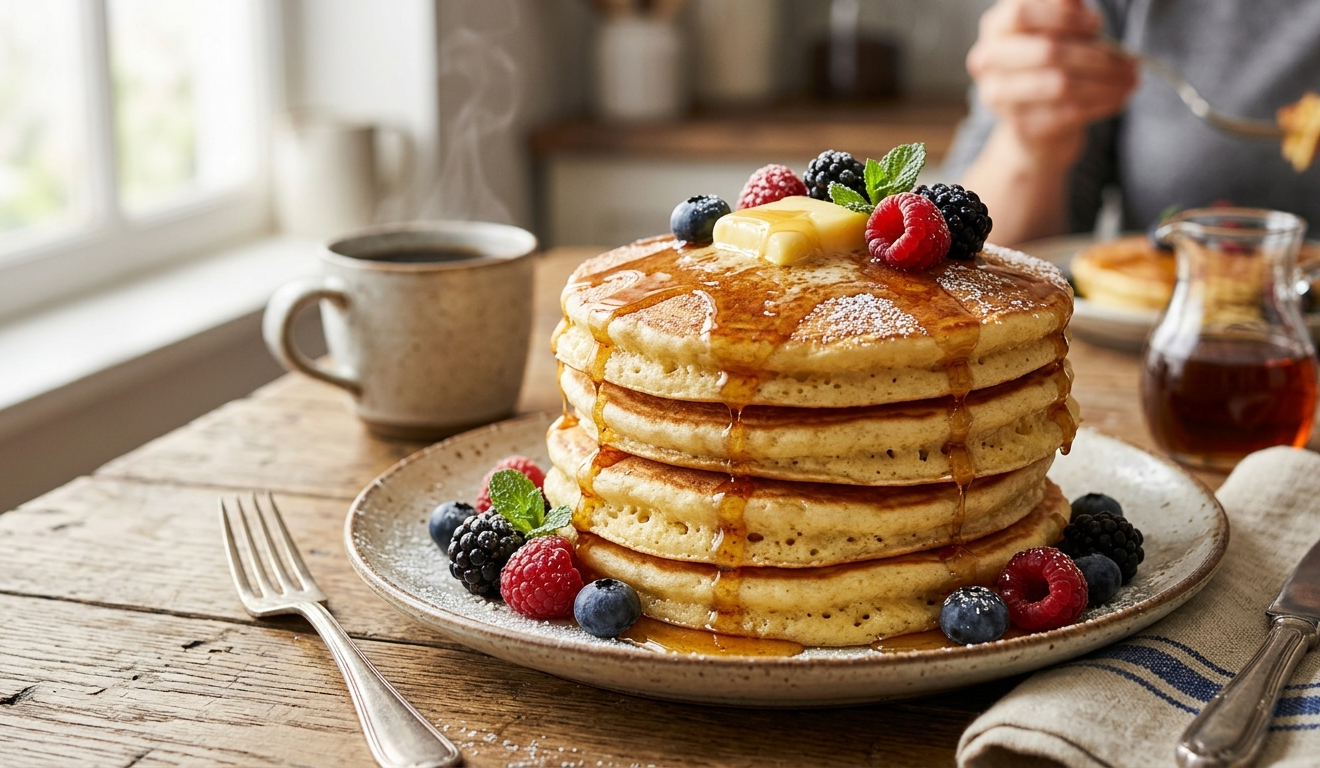
Classic: Warm maple syrup, softened butter, fresh fruit.
Blueberry: Fold 1 cup fresh or frozen blueberries into the rested batter.
Chocolate chip: Scatter chips onto each pancake just after pouring, before bubbles form.
Lemon ricotta: Replace ¼ cup buttermilk with ricotta, add lemon zest. Makes incredibly tender, cloud-like pancakes.
Frequently Asked Questions

Jeff Smith
"Cooking is the intersection of history, science, and emotion."
For me, the kitchen has always been a laboratory of culture. With a background deeply rooted in digital strategy and precision, I approach the culinary arts with the same rigor I apply to the digital landscape—analyzing flavors, perfecting techniques, and documenting the nuance that makes Filipino cuisine truly world-class.
Findme Recipe was born from a desire to bridge the gap between traditional heritage and the modern home cook. Whether it is mastering the perfect balance of acidity in a classic Adobo or simplifying complex regional dishes for everyday kitchens, my mission is to preserve our culinary identity through accessible, data-backed, and delicious content.
I am not just building a database; I am cultivating a community where every Filipino kitchen feels empowered, every ingredient is celebrated, and every family heirloom recipe finds a place to thrive.
Join me as we translate the soul of our islands into recipes for the next generation.