
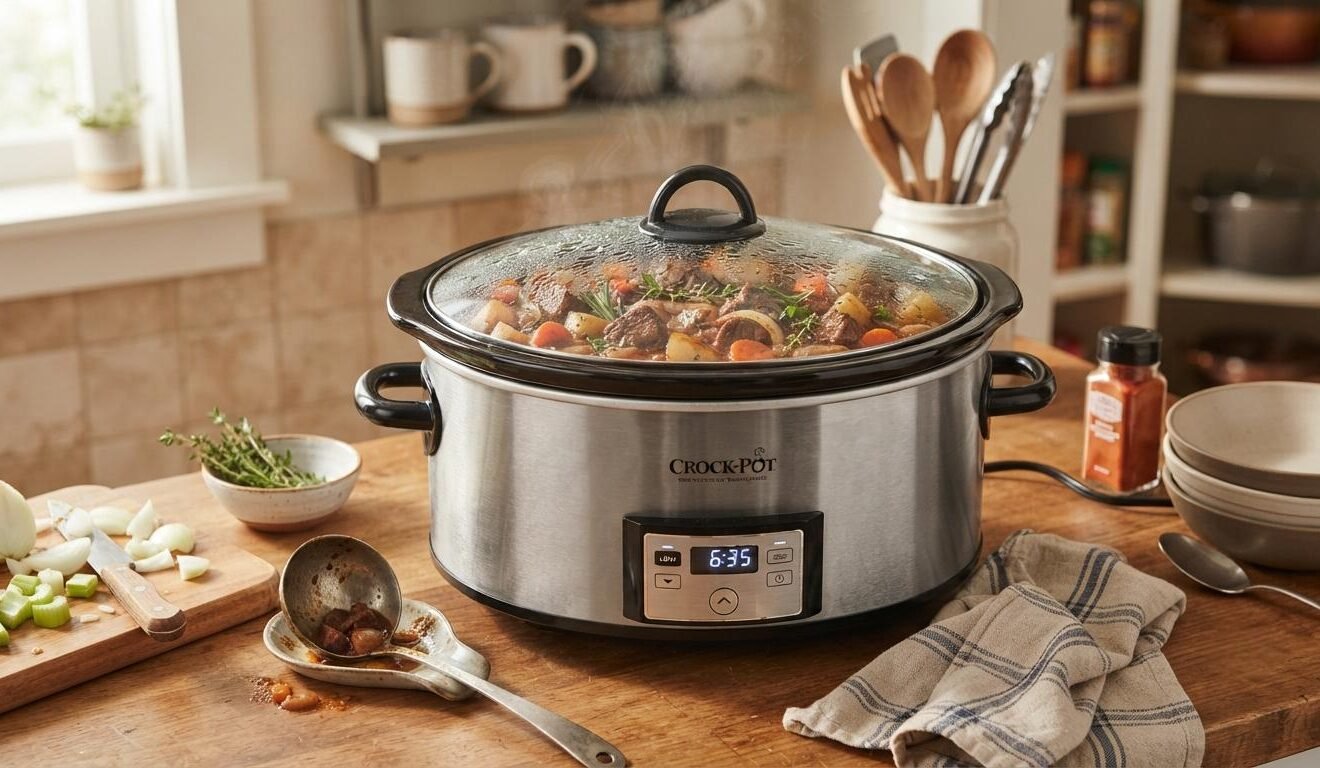
Slow cookers have a reputation for being nearly foolproof, and most of the time they are — until you lift the lid after eight hours and find a watery sauce, tough meat that should have been fall-apart tender, or a dish that tastes strangely flat despite all the ingredients you put in.
None of these problems mean you’re bad at using a slow cooker. They almost always come down to a handful of predictable, fixable issues: too much liquid, the wrong cut of meat, or seasoning that gets diluted after hours of slow cooking. Here’s how to troubleshoot the most common slow cooker mistakes and fix the meal you’ve already got simmering, plus how to avoid the same issue next time you set it going in the morning and walk away.
Fixing a Sauce That’s Too Thin or Watery
This is probably the single most common slow cooker complaint, and it happens because the lid traps steam that would normally evaporate on a stovetop, so liquid never reduces the way it does in an open pot. The fix is simple: make a cornstarch slurry by mixing one tablespoon of cornstarch with two tablespoons of cold water, then stir it into the slow cooker and let it cook uncovered on high for 15 to 20 minutes.
If you don’t have cornstarch on hand, removing the lid for the last 30 to 45 minutes of cooking and switching to high heat lets some of that trapped liquid evaporate naturally. Next time, start with less liquid than a stovetop version of the same recipe calls for, since almost nothing evaporates during slow cooking.
Fixing Meat That Came Out Tough
Tough meat after hours of slow cooking usually means one of two things: it wasn’t cooked long enough, or it was the wrong cut to begin with. Tougher, well-marbled cuts like chuck roast, pork shoulder, or beef brisket actually need long, slow cooking to break down their connective tissue — leaner cuts like chicken breast or sirloin can turn dry and stringy under the same treatment.
If your meat is already tough, put the lid back on and keep cooking. Counterintuitively, more time often fixes tough slow-cooked meat, since the connective tissue needs extended heat to fully break down into gelatin. Pulling it early is what leaves it chewy in the first place.
Fixing a Bland-Tasting Dish
Slow cooking mutes and dilutes flavor over long hours, which is why recipes that taste perfectly seasoned going in can taste flat eight hours later. Salt in particular needs a second pass — taste the dish right before serving and adjust, since the flavor concentration changes dramatically compared to when you first added the ingredients.
A splash of acid — lemon juice, vinegar, or even a spoonful of Dijon mustard — stirred in right at the end brightens up a dish that’s gone flat from hours of gentle simmering. This is one of those small fixes that makes a bigger difference than people expect; a dish that tasted like it needed a total do-over often just needed a squeeze of lime.
Fixing Vegetables That Turned to Mush
Vegetables like zucchini, peas, and leafy greens break down fast under long, moist heat and often turn to mush if they go in at the start alongside a roast that needs six or eight hours. Heartier vegetables like carrots, potatoes, and onions can handle the full cook time, but delicate ones need to go in during the last 30 to 60 minutes instead.
If your vegetables are already overcooked, there’s no fixing texture that’s already gone, but you can strain them out and serve the dish with a fresh side of quickly steamed vegetables instead. Next time, stagger your additions based on how sturdy each ingredient actually is.
Fixing a Dish That’s Cooking Too Slowly or Too Fast
Every slow cooker runs at a slightly different actual temperature despite having the same low and high labels, so a recipe timed for one model might run faster or slower in yours. If your dish consistently finishes early or is still underdone at the recipe’s stated time, adjust your own timing expectations for future batches based on what you’ve observed.
Also worth checking: how full the slow cooker is. A pot filled past the two-thirds mark takes noticeably longer to come up to temperature and cook through than one that’s appropriately filled, which can throw off timing more than people realize.
Preventing Problems Before They Start
Many slow cooker issues trace back to the very beginning of the recipe rather than anything that happens during the hours of cooking. Browning meat in a skillet before it goes into the slow cooker, for instance, builds a layer of flavor through the Maillard reaction that slow, moist heat alone can never fully recreate.
Layering ingredients thoughtfully also matters — dense root vegetables like potatoes and carrots belong on the bottom, closest to the heat source, while more delicate ingredients go on top where the temperature is slightly gentler. A few minutes of setup before you walk away for eight hours prevents most of the fixes covered above from being necessary in the first place.
Fixing Dairy That Curdled or Separated
Cream, milk, and cheese can curdle or separate into a grainy, broken texture when they spend too many hours at a slow cooker’s steady heat, especially on the high setting. Once it’s curdled, there’s no fully undoing the texture, but whisking in a small amount of cornstarch slurry can help re-emulsify the sauce enough to smooth it back out.
The better long-term fix is to change your process rather than your recipe: add dairy ingredients during the last 20 to 30 minutes of cooking instead of at the start. This keeps the sauce creamy and intact instead of gambling on it surviving six or eight hours of continuous heat. This same rule applies to delicate additions like sour cream or coconut milk, both of which hold up far better with a shorter cook time than a full day in the pot.