How to Cook Nilagang Baboy: The Comforting Filipino Pork Soup You Need Today
- June 27, 2026
- 0
- 4 Min Read
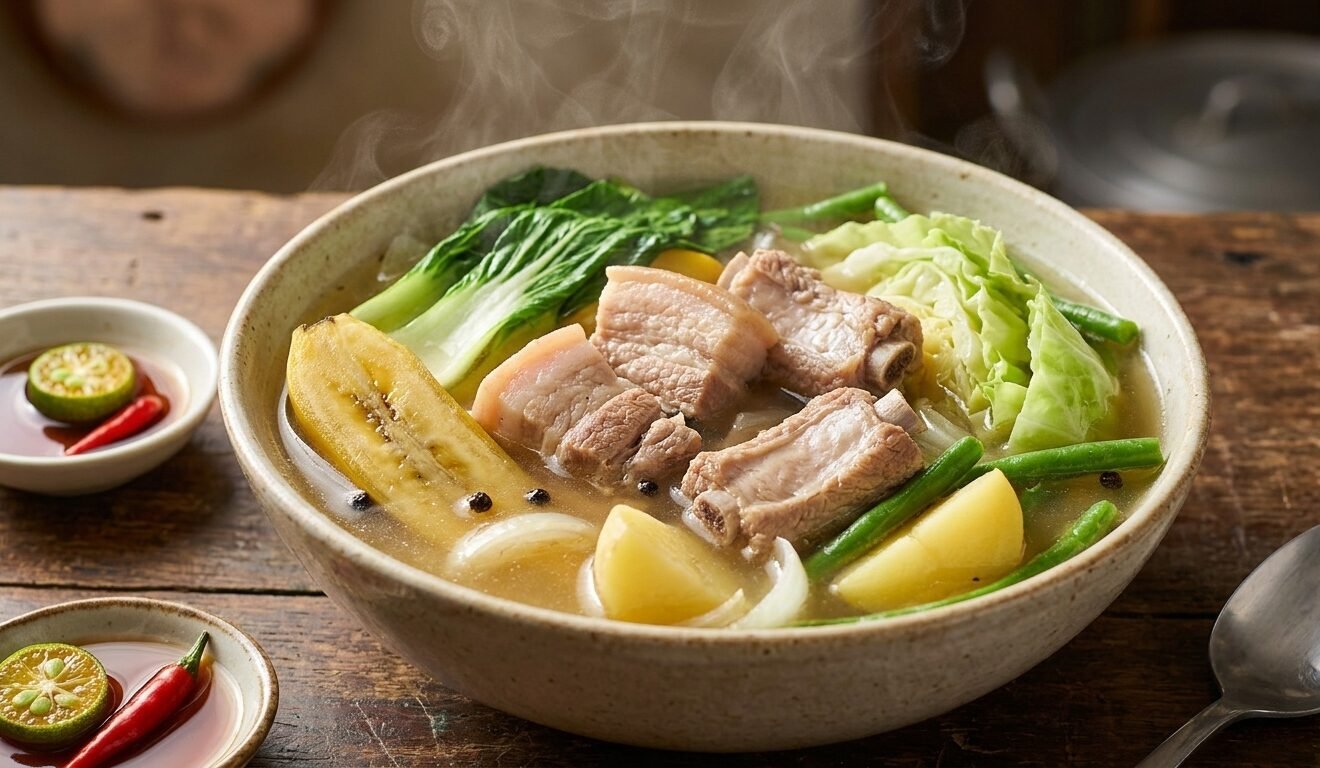
When the skies turn grey and rain starts tapping steadily on the roof, every Filipino kitchen instinctively responds with one answer: the quiet, steady bubbling of a pot of nilagang baboy on the stove. This humble boiled pork soup — clear broth, fall-apart tender pork, and soft, satisfying vegetables — is the culinary definition of Filipino comfort food. No bold vinegar-forward punch like sinigang. No rich peanut sauce like kare-kare. Just honest, deeply nourishing simplicity that heals from the inside out.
Learning how to cook nilagang baboy is really about learning to respect simplicity. The ingredients are humble; the technique is the whole story.
What Makes a Great Nilagang Baboy?
The soul of this dish is the broth. It should be clear and clean-tasting, subtly savory from the pork, with a warm peppery backbone from the whole peppercorns. The pork should be fork-tender — almost melting — and the vegetables should be fully cooked but not mushy, each one adding its own texture and sweetness to the bowl.
Get those three elements right and your nilagang baboy will be the kind of dish people request on cold and rainy days for the rest of your life.
Best Pork Cuts for Nilaga
The choice of pork cut has an enormous impact on the final dish. Here are the best options:
- Pork belly (liempo) — rich and fatty, renders beautiful flavor into the broth and becomes incredibly tender
- Pork ribs (tadyang) — bone-in ribs produce the most deeply flavored, naturally savory broth
- Neck bones (buto-buto) — collagen-rich cuts create a slightly thick, gelatinous broth that is deeply satisfying
Avoid lean cuts like pork loin — they turn dry, stringy, and tough with the long boiling required for a proper nilaga.
Ingredients
- 750g pork belly or pork ribs, cut into serving pieces
- 1.5 liters water (plus extra cold water for the initial blanching)
- 1 medium onion, peeled and quartered
- 2 tsp whole black peppercorns
- 2 medium potatoes, peeled and quartered
- 2 pieces corn on the cob, cut into thirds
- 1/4 head of cabbage, quartered
- 3-4 stalks pechay (bok choy) or baby bok choy
- Fish sauce (patis) and salt to taste
How to Cook Nilagang Baboy
Instructions
- Place the pork pieces in a large pot and cover completely with cold water. Bring to a hard, rolling boil over high heat. Boil for 5 minutes — you will see grey scum and impurities rising rapidly to the surface. Drain the water completely, rinse each piece of pork under cold running water, and clean the pot. This blanching step is non-negotiable for a clear, clean broth.
- Return the cleaned pork to the freshly rinsed pot. Add 1.5 liters of fresh cold water, the quartered onion, and the whole peppercorns. Bring to a boil over high heat, then reduce immediately to a gentle, steady simmer.
- Simmer uncovered for 45 to 60 minutes, skimming any foam that rises during the first 10 to 15 minutes, until the pork is completely fork-tender and the broth has developed a rich, clear golden color.
- Add the corn and potatoes. Cook for 10 to 12 minutes until the potatoes are tender when pierced with a fork.
- Add the cabbage and cook for 3 to 4 minutes until just tender and wilted but still holding its shape.
- Add the pechay last. Cook for only 60 to 90 seconds — it wilts almost immediately. Overcooked pechay becomes yellow, soft, and unappetizing.
- Season the broth generously with fish sauce (patis) and salt to taste. Start with 1 tablespoon of patis and build from there.
- Serve immediately in deep bowls alongside steamed white rice. Offer extra patis, fresh calamansi, and whole siling labuyo (bird’s eye chili) on the side for individual seasoning.
💡 Pro Tip: The double-boil method — discarding that first murky boiling water and starting fresh — is the single most important technique for this easy nilaga recipe. That initial boil aggressively draws out blood, proteins, and off-flavors that would otherwise cloud and muddy the broth, making it taste flat and slightly gamey. Never skip the blanching step.
Pressure Cooker and Slow Cooker Options
Pressure cooker: After the initial blanching, pressure cook the pork with onion, peppercorns, and fresh water at high pressure for 20 to 25 minutes. Natural release, then open and add vegetables in order of hardness on the sauté setting.
Slow cooker: After blanching, place pork with onion, peppercorns, and water in the slow cooker. Cook on LOW for 6 to 8 hours or HIGH for 3 to 4 hours until deeply tender. Add vegetables in the last 30 minutes on HIGH.
Serving Suggestions
The traditional condiment pairing for nilagang baboy is fish sauce (patis) with a squeeze of calamansi and a whole bird’s eye chili for those who want heat. Some families serve it with bagoong (fermented shrimp paste) on the side. Nilagang baboy is always, without exception, served with white rice — this is the one non-negotiable in Filipino comfort food.
Frequently Asked Questions

Jeff Smith
"Cooking is the intersection of history, science, and emotion."
For me, the kitchen has always been a laboratory of culture. With a background deeply rooted in digital strategy and precision, I approach the culinary arts with the same rigor I apply to the digital landscape—analyzing flavors, perfecting techniques, and documenting the nuance that makes Filipino cuisine truly world-class.
Findme Recipe was born from a desire to bridge the gap between traditional heritage and the modern home cook. Whether it is mastering the perfect balance of acidity in a classic Adobo or simplifying complex regional dishes for everyday kitchens, my mission is to preserve our culinary identity through accessible, data-backed, and delicious content.
I am not just building a database; I am cultivating a community where every Filipino kitchen feels empowered, every ingredient is celebrated, and every family heirloom recipe finds a place to thrive.
Join me as we translate the soul of our islands into recipes for the next generation.