
- Step 1: Shred the Green Papaya
Peel the firm, unripe green papaya and cut it in half lengthwise to remove the seeds and white membrane. Using a papaya shredder tool or a sharp vegetable peeler, create long, thin julienne strips about the thickness of spaghetti. Alternatively, use a large knife to score the cut surface of the papaya in a close crosshatch pattern, then shave across the cuts to produce consistent, thin shreds. The green papaya should be completely unripe — firm and white or pale green inside with absolutely no orange coloring or soft spots. Ripe papaya is far too sweet and soft and will not hold up in the salad. Soak the shredded papaya in ice water for ten minutes to crisp the strands, then drain and pat thoroughly dry. Properly prepared papaya shreds should be almost crunchy and hold their shape without wilting when dressed.
- Step 2: Prepare the Mortar
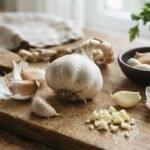
In a large Thai granite mortar and pestle, combine the peeled garlic cloves and bird's eye chilies. Pound vigorously using the pestle until the garlic and chilies break down into a rough, chunky paste — aim for distinct pieces rather than a smooth puree, as the chunky texture is characteristic of authentic Som Tum. The pounding releases the allicin from the garlic and capsaicin from the chilies far more effectively than chopping, creating a more intense, direct flavor impact in the final salad. Add the long beans or green beans to the mortar and give them three or four firm but controlled pounds to bruise and slightly crush them without reducing them to mush. Bruised beans absorb the dressing better and contribute a pleasantly tender-crisp texture to the finished salad.
- Step 3: Build the Dressing in the Mortar
Add the palm sugar to the bruised garlic, chili, and bean mixture in the mortar. Pound gently to dissolve the palm sugar and incorporate it into the paste. Add the fish sauce and fresh lime juice directly to the mortar. Using a large spoon or the pestle, stir and gently crush the mixture to integrate all the liquid and solid elements. Taste this dressing carefully — it should be a vibrant, dynamic balance of sour lime, salty fish sauce, sweet palm sugar, fiery chili, and pungent garlic. This is the moment to adjust the balance to your personal preference. Add more lime juice if you want more sourness, more palm sugar for sweetness, or another chili for heat. The dressing in the mortar is the entire flavor foundation of the salad, and getting this balance right is the single most important skill in making great Som Tum.
- Step 4: Add Tomatoes and Papaya
Add the halved cherry tomatoes to the mortar and gently pound them two or three times — just enough to bruise the skin and release their juice into the dressing without crushing them into sauce. The tomato juice mixes with the existing dressing, adding another layer of fruity sweetness and natural acidity. Add the shredded green papaya in large handfuls, using a combination of the pestle and a large spoon in a rhythmic pound-and-toss motion. The goal is to gently bruise the papaya strands so they absorb the dressing and become slightly more pliable while retaining their crunchy texture. This tossing action is why the dish is called Som Tum — the tosser simultaneously pounds and lifts the ingredients in a circular motion. Work in batches if the mortar becomes too full to toss comfortably.
- Step 5: Add Dried Shrimp and Peanuts
Add the dried shrimp to the mortar and toss well to incorporate. Dried shrimp contribute a deeply savory, almost funky umami note that is characteristic of Isaan-style Som Tum and cannot be replicated by fresh shrimp. They add an interesting textural element as well — slightly chewy and intensely flavored little bursts throughout the salad. Add half of the roasted peanuts and toss to combine, allowing the peanuts to slightly crush against the papaya and other ingredients during the mixing process. Taste the complete salad one final time and make any last adjustments. The salad at this stage should be vibrant, slightly wet from the dressing, and smell intoxicatingly of lime, fish sauce, garlic, and chili. If any dressing has pooled at the bottom of the mortar, spoon it back over the salad and toss once more.
- Step 6: Plate and Garnish
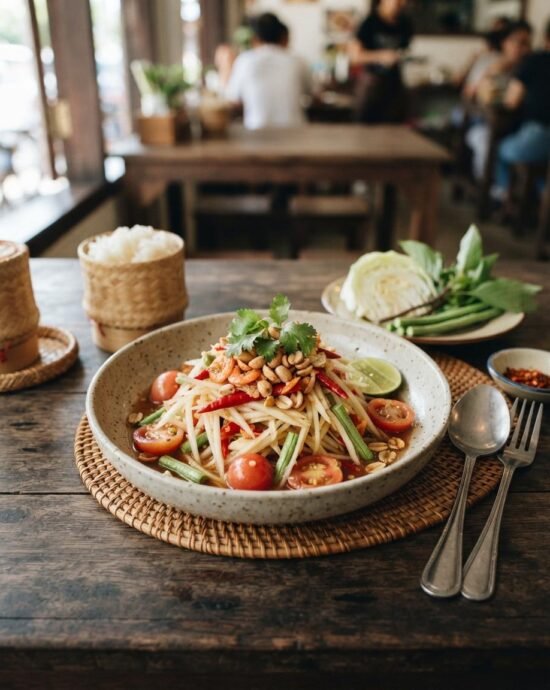
Using tongs or a large spoon, mound the Som Tum onto a serving plate or individual plates, pressing gently to create height and visual interest. Drizzle any remaining dressing from the mortar over the salad. Scatter the remaining roasted peanuts generously over the top — they provide the essential crunchy contrast to the tender papaya and will begin to soften in the dressing if left too long, so serve promptly. Add fresh cilantro leaves as garnish for color and herbal brightness. Som Tum is traditionally served alongside sticky rice in the northeastern Thai tradition, with dried or grilled salted fish on the side. The combination of the cool, crunchy salad and warm sticky rice is one of the most satisfying and quintessentially Thai flavor pairings imaginable. Serve immediately for the best texture.
- Calories:145 kcal7%
- Protein:7 g14%
- Carbohydrates:18 g7%
- Sugar:10 g11%
- Fat:5 g6%
- Salt:1.4 g23%
- Energy:607 kj7%
Table of Contents
What Is Som Tum?
Som Tum is Thailand’s most beloved and most consumed salad — a vibrant, refreshingly crunchy green papaya salad built on the bold, contrasting flavors of sour lime, salty fish sauce, spicy bird’s eye chilies, and sweet palm sugar, all pounded together in a traditional granite mortar and pestle. The name combines the Thai words “som” meaning sour and “tum” meaning to pound, perfectly capturing both the dominant flavor and the traditional preparation method. While now eaten and celebrated across all of Thailand, Som Tum traces its roots to Laos and the northeastern Thai region of Isaan, where it was brought by Lao immigrants and became deeply embedded in the local food culture over many generations. The Lao version, known as tam mak hoong, uses slightly different proportions and fermented fish sauce called pla ra for a more pungent, funky character. When the dish migrated to Bangkok in the mid-twentieth century alongside waves of Isaan laborers, it was adapted for central Thai palates — substituting regular fish sauce for fermented fish, reducing the pungency, and adding dried shrimp and roasted peanuts. The result was a slightly more accessible but still explosively flavored salad that captured the hearts and stomachs of all Thailand. Today, Som Tum is arguably the most ordered dish in the country, found at every level of the food system from street cart to fine dining. Its genius lies in its relentless freshness — it must be made to order, it cannot be prepared ahead, and every mortar-pounded bowl is a living expression of the cook’s skill in balancing its fearlessly bold flavors.
Ingredient Notes
- Green Papaya: The best green papaya for Som Tum must be completely firm and unripe — press the skin firmly and it should feel like a cucumber, not yielding at all. Select papaya with completely green skin and no soft areas or orange patches.
- Bird’s Eye Chilies: Bird’s eye chilies are small but ferociously hot — start with two or three for a milder salad and increase to five or more for authentic Isaan-level heat. Fresh bird’s eye chilies for Som Tum should be firm, shiny, and show no wrinkling.
- Dried Shrimp: Look for small, pink-orange dried shrimp with a clean oceanic scent rather than an overly fishy or sulfurous odor. The best dried shrimp for Som Tum are medium-sized with consistent coloring throughout.
- Long Beans: Chinese long beans provide a more authentic flavor and texture than regular green beans in Som Tum. Select the darkest green, crispest long beans you can find — they should snap cleanly when bent.
Ingredient Suggestions
- Blue Crab (Pu Ma): Adding raw marinated blue crab is a popular Bangkok street food variation called Som Tum Pu — the crab adds an intensely briny, creamy richness that elevates the salad dramatically.
- Fermented Fish Sauce (Pla Ra): The authentic Isaan version uses pungent fermented fish sauce instead of regular fish sauce — dramatically more complex and funky, not for the faint-hearted but absolutely authentic.
- Salted Egg: Adding a quartered salted duck egg alongside the salad adds a rich, creamy, salty component that balances the bright acidity of the papaya beautifully.
Helpful Tips & Pro Tips
- Make Som Tum immediately before serving — never in advance. The salt and acid in the dressing draw moisture from the papaya rapidly, turning the crisp shreds soft and limp within 20 to 30 minutes of dressing.
- Adjust chili quantity carefully. Bird’s eye chilies vary enormously in heat level. Taste one tiny piece before deciding how many to use — some batches are mild, others are scorchingly hot.
- Why is my Som Tum not crunchy? Over-ripe papaya or papaya that has been sitting in the dressing too long both result in a limp, soggy salad. Use completely firm, unripe papaya and serve within minutes of dressing.
- Use a large mortar if available — a standard-sized spice mortar is too small for a full recipe. A large Thai clay or granite mortar with at least a 2-liter capacity allows proper tossing and pounding of the full volume of papaya.
How to Serve and Store
Som Tum must be eaten immediately after preparation and cannot be stored successfully. The acidic lime juice and salty fish sauce draw moisture from the papaya shreds rapidly, causing them to wilt and become soggy within thirty minutes of dressing. Prepare only what you plan to eat in a single sitting. Undressed shredded papaya can be stored submerged in ice water in the refrigerator for up to eight hours before making the salad.
Substitutions
- Green Papaya → Kohlrabi or Green Mango — both provide comparable firm, slightly tart qualities when completely unripe.
- Fish Sauce → Soy Sauce plus a pinch of salt — suitable for a vegan Som Tum without losing too much depth.
- Dried Shrimp → Crushed roasted peanuts — maintains textural interest for a fully vegetarian version.
- Palm Sugar → Light brown sugar — closest in flavor profile to palm sugar for most pantries.
- Bird’s Eye Chilies → Serrano Peppers — milder heat level, suitable for those sensitive to very spicy food.
Suggested Recipes
- Pad Thai: The combination of Som Tum and Pad Thai is a classic Bangkok street food pairing — the cool, crunchy salad perfectly offsets the rich, sweet noodles.
- Khao Pad (Thai Fried Rice): Fried rice served alongside Som Tum creates a simple, satisfying complete meal that balances fresh and hearty elements beautifully.
- Mango Sticky Rice: Follow the bold, spicy flavors of Som Tum with the cooling sweetness of mango sticky rice for a perfectly balanced Thai meal arc.
Frequently Asked Questions

Jeff Smith
"Cooking is the intersection of history, science, and emotion."
For me, the kitchen has always been a laboratory of culture. With a background deeply rooted in digital strategy and precision, I approach the culinary arts with the same rigor I apply to the digital landscape—analyzing flavors, perfecting techniques, and documenting the nuance that makes Filipino cuisine truly world-class.
Findme Recipe was born from a desire to bridge the gap between traditional heritage and the modern home cook. Whether it is mastering the perfect balance of acidity in a classic Adobo or simplifying complex regional dishes for everyday kitchens, my mission is to preserve our culinary identity through accessible, data-backed, and delicious content.
I am not just building a database; I am cultivating a community where every Filipino kitchen feels empowered, every ingredient is celebrated, and every family heirloom recipe finds a place to thrive.
Join me as we translate the soul of our islands into recipes for the next generation.