

- Step 1. Make the aromatic paste
Using a mortar and pestle, pound the minced garlic, cilantro root, and crushed white peppercorns together into a coarse, fragrant paste. This classic Thai trio forms the aromatic backbone of many clear soups and stir-fries, releasing far more flavor when pounded together than when added separately. If you don't have a mortar and pestle, finely mince all three ingredients together with a knife until well combined into a similar rough paste.
- Step 2. Form the pork meatballs
In a bowl, combine the ground pork with a small portion of the aromatic paste, mixing thoroughly until well incorporated. Using your hands, shape the seasoned pork into small, bite-sized meatballs, about an inch in diameter, and set them aside on a plate. Keeping the meatballs uniform in size ensures they cook evenly once added to the simmering broth, preventing some from overcooking while others remain underdone.
- Step 3. Sauté the remaining aromatics
Heat the vegetable oil in a soup pot over medium heat, then add the remaining aromatic paste, stirring constantly for about 1 minute until fragrant. Be careful not to let the garlic burn, as this can introduce bitterness into the otherwise clean, mild broth. This brief sauté step builds a flavorful base before the stock is added, giving the soup more depth than simply boiling everything together.
- Step 4. Add stock and bring to a simmer
Pour in the pork or chicken stock and bring the mixture to a gentle boil over medium-high heat. Once boiling, reduce the heat slightly to maintain a steady simmer. The clear, light broth should remain relatively transparent throughout cooking, which is a hallmark of Gaeng Jued, distinguishing it from richer, coconut milk-based Thai soups.
- Step 5. Cook the meatballs and tofu
Carefully drop the pork meatballs into the simmering broth one at a time, allowing them to cook undisturbed for about 5 minutes until they float to the surface and are fully cooked through. Gently add the cubed soft tofu, being careful not to break the delicate pieces apart. Simmer for another 2 to 3 minutes to heat the tofu through without overcooking it into a mushy texture.
- Step 6. Add vegetables and season
Stir in the chopped napa cabbage, letting it wilt gently in the hot broth for 2 to 3 minutes until tender but still slightly crisp. Season the soup with fish sauce and light soy sauce, tasting and adjusting until the broth achieves a clean, savory balance without being overly salty. Ladle the soup into bowls and garnish with chopped green onion and fresh cilantro leaves before serving hot.
- Calories:210 kcal11%
- Protein:18 g36%
- Carbohydrates:7 g3%
- Sugar:2 g2%
- Energy:879 kj10%
- Salt:1.5 g25%
- Fat:11 g16%
Table of Contents
What Is Gaeng Jued?
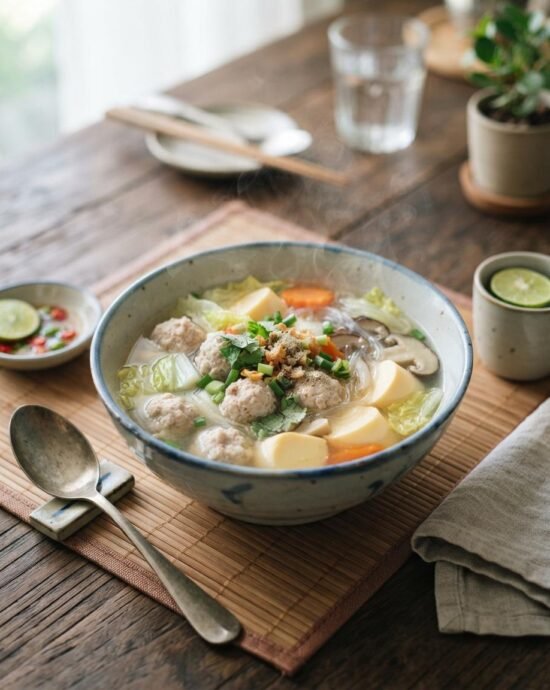
Gaeng Jued is a mild, comforting Thai clear soup that serves as a gentle counterpoint to the bold, spicy flavors found throughout much of Thai cuisine. The name translates roughly to ‘bland soup,’ though this doesn’t mean flavorless; rather, it reflects the dish’s restrained, clean character compared to fiery curries or tangy salads. Built on a light broth infused with pounded garlic, cilantro root, and white pepper, the soup typically features tender pork meatballs, soft tofu, and leafy napa cabbage, creating a soothing combination that’s both nourishing and satisfying. Gaeng Jued holds an important role in Thai meals as a balancing dish, often served alongside spicier curries or salads to give diners a mild option that cools the palate between bites of more intense flavors. This makes it a staple in family-style Thai dining, where multiple dishes are shared at once and balance across the entire spread matters as much as any single dish’s individual flavor. The soup’s preparation reflects broader Thai culinary techniques, particularly the use of pounded aromatics, garlic, cilantro root, and peppercorns, as a foundational flavor base found across countless Thai recipes. Unlike coconut milk-based soups, Gaeng Jued remains light and brothy, making it an excellent choice for those seeking a comforting, lower-calorie option or simply craving something gentle and easy to digest. Variations abound, with some versions featuring glass noodles, bitter melon, or winter melon in place of napa cabbage, but the core principle remains consistent: a clean, mildly seasoned broth that nourishes without overwhelming. Gaeng Jued exemplifies the often-overlooked subtlety within Thai cooking, proving that comfort and complexity don’t always require bold heat or richness.
Ingredient Notes
- Cilantro root: Cilantro root delivers a more intense, earthy flavor than the leaves alone and is essential to authentic Thai aromatic pastes. If unavailable, use the lower stems as the closest substitute.
- Ground pork: Choose ground pork with moderate fat content for tender, juicy meatballs that hold together well during simmering without becoming dry or crumbly.
- Soft tofu: Soft or silken tofu offers a delicate, custardy texture that absorbs the broth’s flavor beautifully; handle it gently to avoid breaking the cubes apart during cooking.
- White peppercorns: White pepper provides a cleaner, more subtle heat than black pepper, traditional in Thai clear soups for its ability to season without overwhelming the broth’s mild character.
- Napa cabbage: Choose fresh, crisp napa cabbage with tightly packed leaves; it wilts quickly in hot broth while retaining a pleasant, slightly sweet flavor that complements the mild soup base.
Ingredient Suggestions
- Glass noodles: Adding a handful of soaked glass noodles turns the soup into a more substantial, noodle-forward meal.
- Winter melon: Cubed winter melon is a traditional addition that offers a mild sweetness and tender texture similar to the tofu.
- Shiitake mushrooms: Sliced shiitake mushrooms deepen the broth’s umami flavor and add a satisfying, meaty texture.
- Crispy fried garlic: A sprinkle on top adds crunch and a deeper savory note to an otherwise mild, brothy dish.
- Extra white pepper: A touch more white pepper at the table allows diners to adjust the soup’s gentle warmth to their preference.
Helpful Tips & Pro Tips
- Pound the garlic, cilantro root, and white pepper together rather than adding them separately, since this technique releases far more aromatic oil into the broth.
- Handle soft tofu gently when adding it to the soup, since the delicate cubes can easily break apart if stirred too vigorously during the final cooking stages.
- Why is my Gaeng Jued bland? It likely needs more fish sauce or soy sauce; taste gradually and adjust, since the broth should be mild but still well-seasoned, not flavorless.
- Don’t overcook the napa cabbage, since it should retain a slight crispness; add it toward the end of cooking and simmer only until just tender.
- Shape pork meatballs uniformly in size to ensure even cooking, since larger or unevenly shaped meatballs can result in some remaining undercooked in the center.
How to Serve and Store
Serve Gaeng Jued hot, ideally as part of a larger Thai meal alongside spicier dishes like curry or larb, where its mild character offers a soothing balance. It also works well on its own as a light, comforting meal with steamed rice. Store leftovers in an airtight container in the refrigerator for up to 3 days, keeping in mind that the tofu may become slightly softer over time. Reheat gently on the stovetop over low to medium heat, and avoid vigorous boiling, which can cause the tofu to break apart further.
Substitutions
- Ground pork → Crumbled extra-firm tofu or mushrooms — creates a fully plant-based version that still provides satisfying texture in the broth. (Vegan)
- Fish sauce → Soy sauce or mushroom seasoning sauce — preserves the savory depth without animal-derived ingredients. (Vegan)
- Light soy sauce → Tamari — keeps the seasoning gluten-free while delivering a similar salty, umami flavor. (Gluten-Free)
- Ground pork → Ground chicken — offers a more budget-friendly protein option that still works beautifully in the mild broth. (Budget-Friendly)
- Napa cabbage → Bok choy — provides a similar mild, slightly sweet flavor and tender texture when napa cabbage isn’t available.
- Cilantro root → Cilantro stems — delivers a comparable, though slightly milder, earthy flavor as a substitute.
Suggested Recipes
- Tom Kha Gai: A richer, coconut milk-based soup that offers a creamier counterpoint to Gaeng Jued’s light, clear broth.
- Larb Moo: A bold, spicy salad that pairs well alongside Gaeng Jued’s mild flavor for a balanced Thai meal.
- Khao Man Gai: A comforting chicken and rice dish that shares Gaeng Jued’s gentle, soothing character.
- Pad Woon Sen: A light glass noodle stir-fry that complements the soup’s mild profile within a varied meal spread.
Frequently Asked Questions

Jeff Smith
"Cooking is the intersection of history, science, and emotion."
For me, the kitchen has always been a laboratory of culture. With a background deeply rooted in digital strategy and precision, I approach the culinary arts with the same rigor I apply to the digital landscape—analyzing flavors, perfecting techniques, and documenting the nuance that makes Filipino cuisine truly world-class.
Findme Recipe was born from a desire to bridge the gap between traditional heritage and the modern home cook. Whether it is mastering the perfect balance of acidity in a classic Adobo or simplifying complex regional dishes for everyday kitchens, my mission is to preserve our culinary identity through accessible, data-backed, and delicious content.
I am not just building a database; I am cultivating a community where every Filipino kitchen feels empowered, every ingredient is celebrated, and every family heirloom recipe finds a place to thrive.
Join me as we translate the soul of our islands into recipes for the next generation.