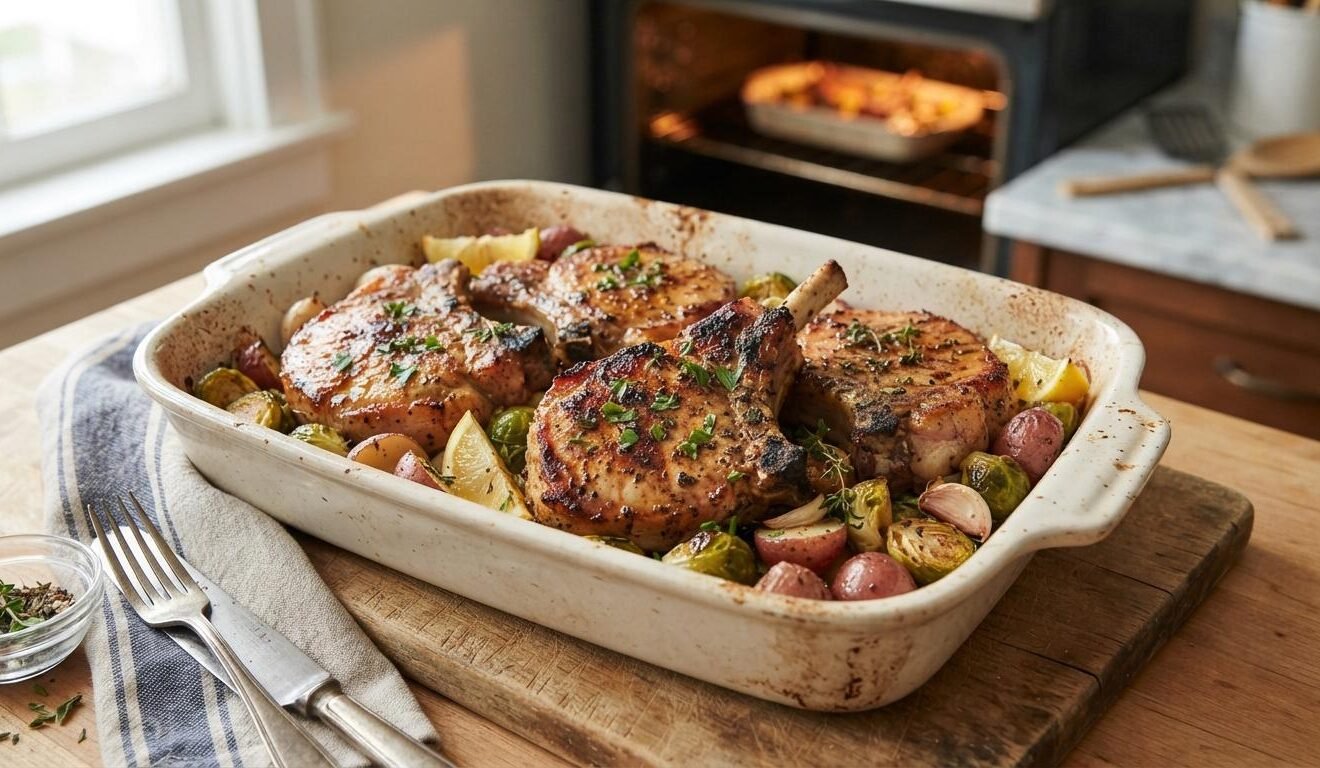
Pork chops have a reputation for coming out dry, and it’s almost never the recipe’s fault — it’s the timing. Pork chops vary wildly in thickness from one package to the next, and a few extra minutes in the oven is the difference between a chop that’s tender and one that eats like a hockey puck.
Here’s how to actually nail it, broken down by thickness and bone situation.
Why Pork Chops Dry Out So Easily
Pork chops are lean compared to cuts like pork shoulder, which means there’s less fat to keep them moist during cooking. Once they pass their ideal internal temperature, that limited fat and moisture escapes fast, and there’s no coming back from it. The margin between perfectly cooked and overdone is smaller than with fattier cuts, which is exactly why timing and a thermometer matter so much here.
Pork chops are one of the proteins where I genuinely think a thermometer isn’t optional — the visual cues just aren’t reliable enough to catch the window in time.
Target Internal Temperature
Pork is safe to eat at 145°F internally, followed by a 3-minute rest. This is a lower target than many people assume — pork hasn’t needed to be cooked to well-done for food safety in years, and pulling it at 145°F followed by a rest produces noticeably juicier meat than the old advice of cooking until no pink remains.
Baking Boneless Pork Chops
- Thin chops (under ½ inch) at 400°F: 10 to 15 minutes
- Medium chops (¾ to 1 inch) at 400°F: 18 to 22 minutes
- Thick chops (1 to 1½ inches) at 400°F: 22 to 28 minutes
Boneless chops cook a bit faster than bone-in chops of the same thickness, since there’s no bone slowing heat transfer through the center.
Baking Bone-In Pork Chops
- Medium chops (¾ to 1 inch) at 400°F: 20 to 25 minutes
- Thick chops (1 to 1½ inches) at 400°F: 25 to 30 minutes
Bone-in chops tend to stay juicier during baking, since the bone acts as a bit of an insulator, slowing the cooking process just enough to reduce the risk of overcooking the surrounding meat.
Should You Sear Before Baking?
Searing pork chops in a hot, oven-safe skillet for 2 to 3 minutes per side before transferring to the oven gives noticeably better color and flavor than baking alone. This two-step method (sear, then finish in the oven) generally cuts the oven time down by a few minutes compared to baking from raw, since the chops are already partway cooked from the stovetop sear.
Quick Reference Chart
| Thickness | Bone-In or Boneless | Temp | Time |
| Under ½ inch | Boneless | 400°F | 10-15 min |
| ¾-1 inch | Boneless | 400°F | 18-22 min |
| 1-1½ inch | Boneless | 400°F | 22-28 min |
| ¾-1 inch | Bone-in | 400°F | 20-25 min |
| 1-1½ inch | Bone-in | 400°F | 25-30 min |
Tips for Juicier Baked Pork Chops
- Brine or dry-brine ahead of time. Even 30 minutes with a light salt coating draws moisture into the meat rather than out of it during cooking.
- Bring chops closer to room temperature before baking so the center doesn’t lag far behind the surface temperature.
- Rest for a full 3 minutes after removing from the oven. This isn’t optional — a lot of the juiciness you’re aiming for comes from that resting period, not just the cook itself.
- Use a thermometer, not a timer, as your final check. Chop thickness varies enough between packages that a stated time is only ever a starting estimate.
Common Mistakes to Avoid
Baking straight from the fridge without accounting for the extra cold mass is one of the most common reasons chops come out overcooked on the outside before the center catches up. Skipping the rest period is another — cutting into a chop immediately after baking lets all the juice run out onto the cutting board instead of staying in the meat. And cooking to the old “no pink” standard, rather than 145°F with a rest, is the single biggest reason home-baked pork chops end up dry.