
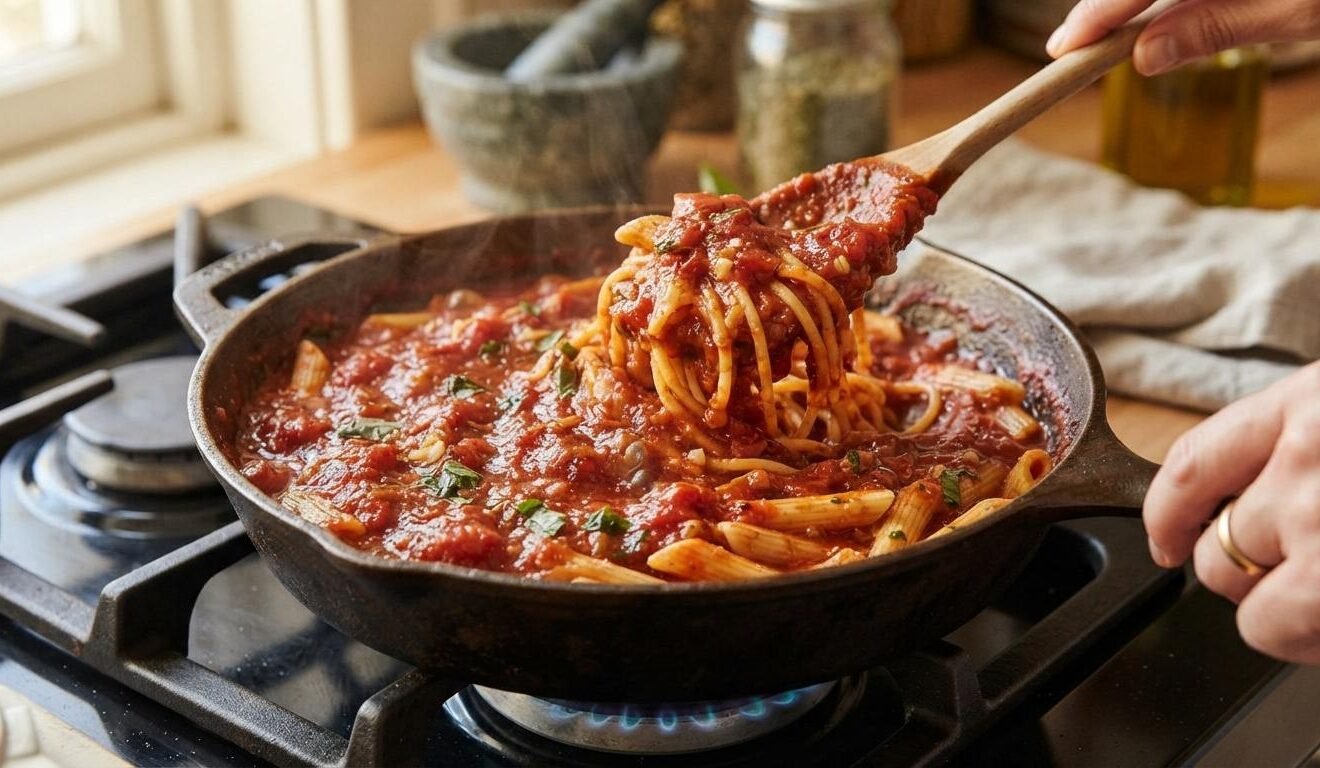
You’ve been simmering your sauce for twenty minutes and it’s still running off the noodles like soup. It happens to everyone — too many canned tomatoes, a splash too much pasta water, a sauce that just never quite came together. The good news is that thin pasta sauce is one of the easiest kitchen problems to fix, and you almost certainly have a solution sitting in your pantry right now.
There isn’t just one right way to do this. The best method depends on how much time you have, what’s already in the sauce, and whether you want to change the flavor along the way. Below are seven reliable ways to thicken pasta sauce, starting with the ones that require the least effort.
Just Let It Reduce
The simplest fix is also the slowest: turn the heat up slightly and let the sauce simmer uncovered. Water evaporates, the sauce concentrates, and the flavor actually gets better as it goes. This works because you’re not adding anything — you’re just removing the excess liquid that’s diluting everything else.
Give it 15 to 25 minutes, stirring occasionally so the bottom doesn’t scorch. This is the method to reach for when you’re not in a rush and want a deeper, more intense tomato flavor rather than a neutral thickener diluting the taste.
This is the method I default to almost every time — it costs nothing but patience, and the sauce tastes like itself, just more concentrated.
Make a Cornstarch Slurry
When you need a fast fix, cornstarch is the classic answer. Mix 1 tablespoon of cornstarch with 2 tablespoons of cold water until smooth, then stir it into the simmering sauce. Let it cook for 2 to 3 minutes — cornstarch needs heat to activate, and it thickens almost instantly once it hits temperature.
Don’t add cornstarch powder directly to hot sauce. It’ll clump into little gluey pockets instead of dissolving evenly. Always mix it with cold liquid first.
Stir in Tomato Paste
Tomato paste is concentrated tomato with almost no water content, which makes it a natural thickener that also deepens flavor rather than diluting it. Start with a tablespoon, stir it in fully, and simmer for a few minutes before deciding if you need more.
This is a good option specifically for tomato-based sauces — marinara, bolognese, arrabbiata — where you want more body without introducing a starchy texture.
Add Grated Parmesan or a Cheese Rind
If you keep parmesan rinds in the freezer (and if you don’t, start), drop one into a simmering sauce and let it melt down over 20 minutes. It thickens the sauce, adds a savory depth, and disappears completely into the pot. No rind on hand? Stirring in finely grated parmesan at the end does something similar on a smaller scale.
Use a Flour and Butter Paste (Beurre Manié)
This is a French technique that works beautifully for cream-based sauces like alfredo. Mash equal parts softened butter and flour into a paste, then whisk small pieces into the simmering sauce one at a time. The butter helps the flour disperse without clumping, and the sauce thickens as it comes back to a simmer.
Blend in Some Starchy Vegetables
Cooked, mashed vegetables like potato, carrot, or even white beans add body without any noticeable flavor shift if you use a small amount. Puree a small portion of cooked vegetable and stir it in — this trick is common in restaurant kitchens looking to add richness to a sauce without more fat or cream.
Save Your Pasta Water — But Use It Right
This one sounds backwards, since pasta water is liquid, but starchy pasta water actually thickens sauce because of the starch the noodles release while boiling. The trick is using it correctly: toss the sauce and pasta together in the pan over heat, adding pasta water a splash at a time while tossing constantly. The starch and fat emulsify together, creating a sauce that clings to the noodles instead of pooling at the bottom of the bowl.
This only works if your sauce already has some fat in it — oil, butter, or cheese — since starch alone won’t emulsify with a bare tomato sauce.
Mistakes That Make Sauce Thinner, Not Thicker
A few habits sabotage sauce consistency before you even reach for a fix:
- Adding too much liquid too fast. Canned tomatoes, wine, and broth should go in gradually, tasting and checking consistency as you go.
- Cooking uncovered from the start with high water content ingredients. If your recipe calls for crushed tomatoes and you’re using a very juicy brand, expect to reduce longer.
- Skipping the simmer. A sauce that’s only been on the stove for five minutes hasn’t had time for flavors to meld or liquid to cook off.
Which Method Should You Actually Use?
For everyday tomato sauce, reducing or adding tomato paste keeps things simple and doesn’t change the character of the dish. For cream sauces, a butter-flour paste is the traditional and most reliable choice. If you’re short on time and don’t mind a slightly different texture, cornstarch is fast and foolproof.
Whatever method you pick, thicken gradually. It’s much easier to add a little more than to fix a sauce that’s gone from thin to gluey.