

- Step 1. Simmer the Beef Broth
Place the beef brisket in a large pot and cover with the beef broth, adding enough water to fully submerge the meat if needed. Bring to a boil over high heat, then skim off any foam that rises to the surface for a cleaner-tasting broth. Reduce the heat to low and simmer uncovered for 40 minutes, until the brisket is tender enough to slice easily. Remove the beef and set it aside to cool, then strain the broth through a fine mesh sieve to remove any remaining impurities before chilling.
- Step 2. Season and Chill the Broth
Stir the soy sauce, 2 tablespoons of the rice vinegar, and 1 tablespoon of the sugar into the warm strained broth, tasting and adjusting until the flavor is balanced between savory, tangy, and lightly sweet. Transfer the broth to the refrigerator and chill for at least 2 hours, or until fully cold, since naengmyeon broth is meant to be served icy rather than at room temperature. A well-chilled broth is essential to the dish's refreshing character, so plan this step well ahead of serving time.
- Step 3. Cook the Noodles
Bring a separate pot of water to a rolling boil and cook the naengmyeon noodles according to the package instructions, typically 3 to 4 minutes, stirring occasionally to prevent sticking. As soon as the noodles are cooked, drain them immediately and rinse thoroughly under cold running water while rubbing the strands between your hands, which removes excess starch and firms up the chewy texture that defines a good bowl of naengmyeon. Drain well and set aside.
- Step 4. Prepare the Toppings
While the noodles and broth chill, slice the cooled brisket thinly against the grain, julienne the cucumber, and slice the Asian pear into thin pieces, tossing it in a little of the remaining sugar and rice vinegar to prevent browning and add a light pickled sweetness. Halve the hard-boiled eggs. Arrange all toppings on a plate so they are ready to assemble quickly once the noodles and broth are prepared, since naengmyeon is best served immediately while everything is cold.
- Step 5. Assemble the Bowls
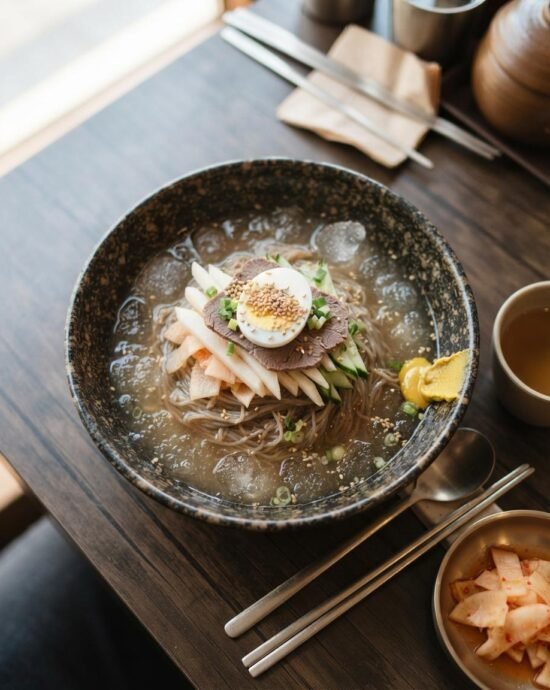
Divide the cold noodles between two large chilled bowls, coiling them into a neat mound in the center. Pour the icy broth around the noodles and add a handful of ice cubes to each bowl to keep everything cold throughout the meal. Arrange the sliced beef, pickled radish, cucumber, pear, and half an egg around the noodles in each bowl.
- Step 6. Finish and Serve
Sprinkle the toasted sesame seeds over the top of each bowl and serve with a small dollop of Korean mustard on the side, which diners can stir in for extra sharpness. Some cooks also offer extra rice vinegar at the table for those who prefer a tangier broth. Use kitchen scissors to cut the long noodle strands into shorter, more manageable lengths before eating, a common practice in Korean naengmyeon restaurants.
- Calories:420 kcal21%
- Protein:28 g56%
- Carbohydrates:54 g20%
- Sugar:11 g12%
- Energy:1757 kJ21%
- Salt:1.9 g32%
- Fat:9 g13%
What is Naengmyeon?
Naengmyeon is a Korean dish of chewy buckwheat noodles served in an icy, tangy broth alongside thin slices of beef, pickled radish, cucumber, and a hard-boiled egg, making it one of the country’s most beloved warm-weather meals. The name translates literally to cold noodles, a fitting description for a dish designed to be eaten well chilled, often with ice cubes floating directly in the bowl. Naengmyeon traces its origins to North Korea, particularly the city of Pyongyang, where a milder, broth-forward version known as mul naengmyeon was developed centuries ago as a way to enjoy noodles even in the coldest months, since the buckwheat used in the noodles thrives in the region’s cool climate. A spicier, sauce-based variation called bibim naengmyeon later emerged, tossed in a fiery gochujang dressing rather than served in broth, and both styles remain popular across Korea today. What defines great naengmyeon is the distinctive chew of its buckwheat noodles, achieved through a careful rinsing process that firms up the starch after boiling, paired with a broth that balances savory beef stock with the bright acidity of vinegar and the subtle sweetness of Asian pear. Traditionally enjoyed during hot summer months as a refreshing antidote to the heat, naengmyeon has become a year-round favorite in Korean restaurants worldwide, prized for its clean, invigorating flavors and satisfying textural contrast between the springy noodles and cool, tangy broth.
Ingredient Notes
- Naengmyeon Buckwheat Noodles: Look for noodles labeled specifically for naengmyeon rather than standard soba, since they contain a starch blend that gives the dish its signature springy chew.
- Beef Brisket: A well-marbled cut of brisket produces a rich, flavorful broth once simmered; trim excess fat before slicing for cleaner presentation.
- Rice Vinegar: This provides the broth’s essential tang; add it gradually and taste as you go, since the right balance of acidity is what makes naengmyeon so refreshing.
- Korean Pickled Radish: Also called chicken mu, this tangy, crunchy pickle is a classic naengmyeon topping; look for it pre-made in the refrigerated section of a Korean grocery store.
- Asian Pear: Adds a delicate sweetness and crisp bite that balances the broth’s acidity; choose a firm, unblemished pear for the best texture.
Ingredient Suggestions
- Kimchi: A few strands of chopped kimchi add extra tang and a spicy kick to the cold broth.
- Gochugaru: A light sprinkle on top adds color and a gentle heat for those who want more spice.
- Watermelon slices: A modern, refreshing addition that leans into the dish’s cooling, summery character.
- Extra Korean mustard: For those who love sharp heat, an extra dollop stirred into the broth intensifies the dish’s signature bite.
- Shredded nori: A few strips of toasted seaweed add a subtle briny note and extra visual appeal.
Helpful Tips & Pro Tips
- If your noodles taste gummy rather than chewy, they likely were not rinsed thoroughly enough after boiling; rub them under cold water until the surface feels clean and slightly squeaky.
- Chill your serving bowls in the freezer for 10 minutes before assembling, which helps keep the broth colder for longer once served.
- Do not skip skimming the broth while it simmers, since impurities left behind can make the final broth taste muddy rather than clean.
- Taste the broth before serving and adjust the vinegar and sugar balance to your preference, as naengmyeon should taste bright and refreshing rather than flat.
- Use kitchen scissors to cut the noodles at the table, a traditional practice that makes the long buckwheat strands much easier to eat.
How to Serve and Store
Serve naengmyeon immediately after assembling, in well-chilled bowls with extra ice, rice vinegar, and Korean mustard on the side so each diner can adjust the flavor to their liking. Because the dish relies on freshly cooked, freshly rinsed noodles for its signature chew, it does not store or reheat well once assembled; leftover broth alone can be kept in an airtight container in the refrigerator for up to 3 days. If you want to prep ahead, make the broth and toppings in advance and store them separately, cooking the noodles fresh just before serving. Naengmyeon is not suitable for freezing once assembled, as the texture of both the noodles and fresh vegetables will suffer.
Substitutions
- Beef Brisket → Grilled mushrooms or omit entirely — Keeps the dish plant-based while the broth still carries plenty of savory flavor from soy sauce. (Vegan)
- Soy Sauce → Tamari — Provides the same salty depth while keeping the broth free of gluten. (Gluten-Free)
- Beef Brisket → Leftover roast beef or deli beef — A budget-friendly shortcut that skips the long simmering time. (Budget-Friendly)
- Naengmyeon Noodles → Soba noodles — A more widely available substitute, though with a slightly softer texture than true naengmyeon noodles.
- Asian Pear → Apple, thinly sliced — A reasonable stand-in when Asian pear is not available locally.
Suggested Recipes
- Bibimbap: Another rice-and-vegetable forward Korean staple that shares naengmyeon’s emphasis on balanced, colorful toppings.
- Galbi: Grilled short ribs make a rich, smoky counterpoint to naengmyeon’s cool, tangy broth on a summer table.
- Kimchi Jjigae: A warm, spicy stew that offers a hearty contrast for a cooler-weather pairing with naengmyeon.
- Japchae: A stir-fried noodle dish that shares naengmyeon’s noodle-forward format with a completely different flavor profile.

Jeff Smith
"Cooking is the intersection of history, science, and emotion."
For me, the kitchen has always been a laboratory of culture. With a background deeply rooted in digital strategy and precision, I approach the culinary arts with the same rigor I apply to the digital landscape—analyzing flavors, perfecting techniques, and documenting the nuance that makes Filipino cuisine truly world-class.
Findme Recipe was born from a desire to bridge the gap between traditional heritage and the modern home cook. Whether it is mastering the perfect balance of acidity in a classic Adobo or simplifying complex regional dishes for everyday kitchens, my mission is to preserve our culinary identity through accessible, data-backed, and delicious content.
I am not just building a database; I am cultivating a community where every Filipino kitchen feels empowered, every ingredient is celebrated, and every family heirloom recipe finds a place to thrive.
Join me as we translate the soul of our islands into recipes for the next generation.