
- Step 1. Prepare the Ingredients
Dice the pork shoulder, onion, zucchini, potato, and cabbage into small, even bite-sized pieces so they cook at roughly the same rate. Having everything prepped and within reach before you begin is especially important for jajangmyeon, since the sauce comes together quickly once cooking starts and there is little time to chop mid-recipe. Mince the garlic and grate the ginger, setting both aside near the stove along with the black bean paste.
- Step 2. Fry the Black Bean Paste
Heat 2 tablespoons of the vegetable oil in a wok or large skillet over medium heat and add the black bean paste directly to the oil, stirring constantly for 2 to 3 minutes. This step, known as frying the chunjang, mellows the paste's raw bitterness and deepens its flavor into something rounder and more savory, and is considered essential by most Korean home cooks rather than an optional shortcut. Transfer the fried paste to a small bowl and set aside.
- Step 3. Brown the Pork
In the same wok, heat the remaining 2 tablespoons of oil over medium-high heat and add the diced pork shoulder, cooking for 4 to 5 minutes until browned on most sides. Add the garlic and ginger, stirring for 30 seconds until fragrant. Browning the pork thoroughly at this stage builds a savory base that supports the rest of the sauce, so resist the urge to rush this step even though the recipe moves quickly overall.
- Step 4. Cook the Vegetables
Add the onion, potato, zucchini, and cabbage to the wok with the pork, stirring frequently for 5 to 6 minutes until the vegetables begin to soften and the onion turns translucent. The potato in particular needs this head start since it takes the longest of the vegetables to become tender. Keep the heat at medium-high throughout, adjusting slightly lower if anything begins to catch or brown too quickly on the bottom of the pan.
- Step 5. Simmer the Sauce
Stir the fried black bean paste back into the wok along with the sugar and stock, mixing until everything is evenly coated in the dark, glossy sauce. Bring to a simmer and cook uncovered for 10 minutes, stirring occasionally, until the potato is fully tender and the sauce has reduced slightly. In a small bowl, whisk the cornstarch with the water to form a slurry, then stir it into the simmering sauce and cook for another 1 to 2 minutes until thickened to a glossy, clinging consistency.
- Step 6. Cook the Noodles and Serve
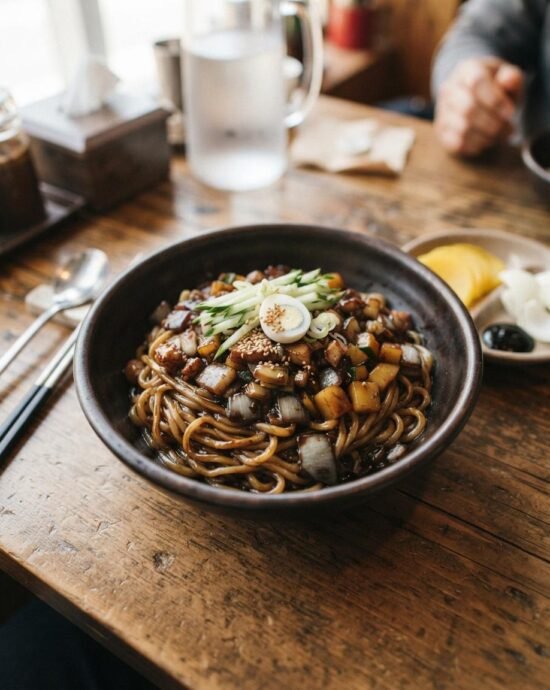
While the sauce finishes thickening, bring a large pot of water to a boil and cook the fresh jajangmyeon noodles according to the package instructions, typically 4 to 5 minutes, until tender but still chewy. Drain well and toss with a touch of sesame oil to prevent sticking. Divide the noodles among four bowls, ladle the black bean sauce generously over the top, and garnish with julienned cucumber before serving immediately.
- Calories:610 kcal31%
- Protein:24 g48%
- Carbohydrates:82 g30%
- Sugar:12 g13%
- Energy:2553 kJ31%
- Salt:2 g33%
- Fat:20 g29%
What is Jajangmyeon?
Jajangmyeon is a beloved Korean noodle dish featuring thick, chewy wheat noodles smothered in a rich, glossy black bean sauce made from fried chunjang and simmered with diced pork and vegetables. Though the dish’s roots trace back to Chinese immigrants who settled in the Incheon area of Korea in the late nineteenth century, jajangmyeon has since evolved into something distinctly Korean, diverging significantly from its Chinese zhajiangmian ancestor in both flavor and preparation, particularly through the use of caramelized chunjang paste and the addition of sugar for a rounder, sweeter profile. The dish became especially significant in Korean culture during the mid-twentieth century as an affordable, filling comfort meal, and it remains deeply tied to Korean social rituals today, most famously as the traditional dish ordered by singles on Black Day, an unofficial holiday celebrated on April 14th. What defines great jajangmyeon is the careful frying of the black bean paste in oil before it is combined with the other ingredients, a step that transforms its raw bitterness into a deep, savory sweetness that coats every strand of noodle. The combination of tender pork, softened vegetables, and thick, glossy sauce against the satisfying chew of fresh noodles has made jajangmyeon one of the most ordered dishes at Chinese-Korean restaurants across the country, often arriving at the table within minutes thanks to the speed and efficiency of delivery culture surrounding the dish. Its comforting, umami-rich flavor and universal appeal have cemented jajangmyeon’s place as one of Korea’s most iconic noodle dishes.
Ingredient Notes
- Black Bean Paste (Chunjang): This fermented, roasted black soybean paste is the defining ingredient of jajangmyeon; look for a Korean brand specifically labeled chunjang, which is milder than Chinese-style paste.
- Fresh Jajangmyeon Noodles: Thick, chewy wheat noodles sold fresh or frozen at Korean grocery stores hold up best to the heavy sauce; dried noodles can be substituted but yield a slightly different texture.
- Pork Shoulder: A well-marbled cut like pork shoulder stays tender and flavorful through the stir-frying and simmering process; trim any large pieces of excess fat before dicing.
- Potato: Starchy potatoes help thicken the sauce naturally as they break down slightly during simmering, in addition to adding texture and heartiness.
- Persian Cucumber: Fresh, crisp cucumber julienned on top provides a cool, bright contrast to the rich, savory sauce.
Ingredient Suggestions
- Diced zucchini: Extra zucchini adds more vegetable bulk and a subtle sweetness that balances the sauce’s richness.
- Shrimp or squid: A seafood addition transforms the dish into a version closer to haemul jajangmyeon, popular at many Korean-Chinese restaurants.
- A fried egg on top: A classic garnish that adds richness and a silky texture once the yolk is broken into the sauce.
- Pickled radish (danmuji): Served on the side, this tangy yellow pickle is a traditional accompaniment that cuts through the sauce’s sweetness.
- Extra sugar: For those who prefer a sweeter, more traditional Korean-style sauce, an extra spoonful rounds out the flavor further.
Helpful Tips & Pro Tips
- If your sauce tastes bitter or flat, the black bean paste likely was not fried long enough in oil; this step is essential to mellow its raw, slightly bitter edge.
- Dice all vegetables and meat into similarly small pieces so everything cooks evenly and the finished sauce has a consistent texture throughout.
- Add the cornstarch slurry gradually while stirring constantly, since adding it all at once can create lumps rather than a smooth, glossy sauce.
- Cook the noodles just before serving, since jajangmyeon noodles can clump and lose their signature chew if left to sit for too long after draining.
- Taste the sauce before serving and adjust the sugar level, as Korean-style jajangmyeon is traditionally slightly sweeter than its Chinese counterpart.
How to Serve and Store
Serve jajangmyeon immediately after tossing the noodles with sauce, garnished with fresh cucumber and alongside pickled radish for a traditional pairing. The sauce keeps well on its own in an airtight container in the refrigerator for up to 4 days and can be reheated gently on the stovetop with a splash of water to loosen it; however, noodles are best cooked fresh each time rather than stored, since they clump and soften unpleasantly once refrigerated. The black bean sauce also freezes well for up to 2 months, making it convenient to prepare a large batch in advance and simply cook fresh noodles when ready to eat. Always reheat the sauce thoroughly before serving over freshly cooked noodles.
Substitutions
- Pork Shoulder → Extra-firm tofu, diced — A hearty plant-based protein that absorbs the savory black bean sauce well. (Vegan)
- Jajangmyeon Noodles → Gluten-free rice noodles — A suitable swap for those avoiding wheat, though the texture will be less chewy. (Gluten-Free)
- Pork Shoulder → Ground pork or chicken — A more economical option that still delivers good flavor in the sauce. (Budget-Friendly)
- Black Bean Paste → A mix of miso and hoisin sauce — An improvised approximation when authentic chunjang cannot be sourced locally.
- Fresh Noodles → Dried udon noodles — A widely available substitute with a similarly thick, chewy bite.
Suggested Recipes
- Japchae: Another noodle-forward Korean dish that shares jajangmyeon’s savory, satisfying character.
- Tteokbokki: A spicy rice cake dish that offers a fiery contrast to jajangmyeon’s mild, savory sweetness.
- Bossam: A boiled pork dish that pairs well on a larger Korean-Chinese inspired spread alongside jajangmyeon.
- Kimbap: A portable rice roll that makes a light, refreshing side to balance jajangmyeon’s richness.

Jeff Smith
"Cooking is the intersection of history, science, and emotion."
For me, the kitchen has always been a laboratory of culture. With a background deeply rooted in digital strategy and precision, I approach the culinary arts with the same rigor I apply to the digital landscape—analyzing flavors, perfecting techniques, and documenting the nuance that makes Filipino cuisine truly world-class.
Findme Recipe was born from a desire to bridge the gap between traditional heritage and the modern home cook. Whether it is mastering the perfect balance of acidity in a classic Adobo or simplifying complex regional dishes for everyday kitchens, my mission is to preserve our culinary identity through accessible, data-backed, and delicious content.
I am not just building a database; I am cultivating a community where every Filipino kitchen feels empowered, every ingredient is celebrated, and every family heirloom recipe finds a place to thrive.
Join me as we translate the soul of our islands into recipes for the next generation.