
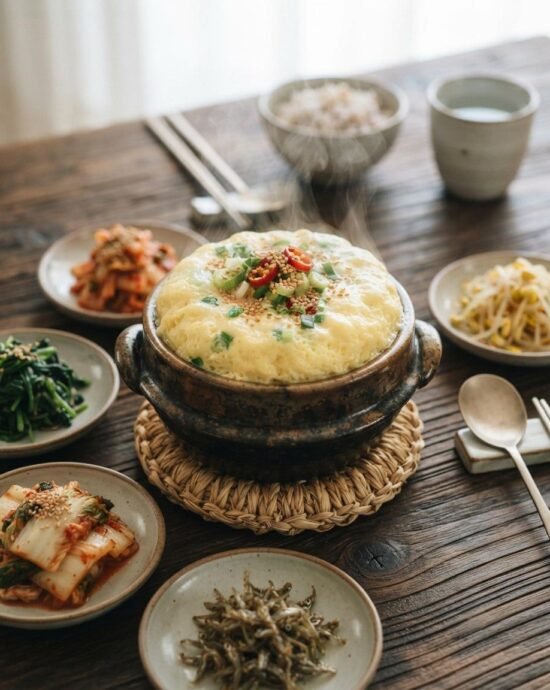

- Step 1. Whisk the Eggs
Crack the eggs into a mixing bowl and whisk thoroughly until the yolks and whites are fully combined and slightly frothy on top. A thorough whisk is important for gyeran jjim, since any streaks of unmixed white can result in an uneven, less silky texture once steamed. Strain the whisked eggs through a fine mesh sieve into another bowl if you want an especially smooth, restaurant-style texture, though this step is optional for home cooking.
- Step 2. Season the Egg Mixture
Whisk the water or anchovy stock into the eggs along with the salt and fish sauce or salted shrimp brine, mixing until fully incorporated. The liquid-to-egg ratio is what gives gyeran jjim its signature light, custardy texture, so measure carefully rather than eyeballing it. Stir in half of the chopped green onion at this stage, reserving the rest for garnish just before serving.
- Step 3. Prepare the Steaming Vessel
Pour the egg mixture into a small, heatproof stone pot (ttukbaegi) or a heatproof bowl that fits inside a larger pot for steaming. If using a stovetop steaming method, set up a steamer basket or a heatproof rack inside a larger pot with a few inches of water, making sure the water level stays below the bottom of the egg vessel once placed inside.
- Step 4. Steam the Eggs
Bring the water in the steaming pot to a boil, then carefully place the bowl of egg mixture onto the rack or into the steamer basket. Cover with a lid and steam over medium heat for 8 to 10 minutes, checking periodically. The eggs are done when they have puffed up slightly and set into a soft, custardy texture that jiggles gently but is no longer liquid in the center.
- Step 5. Check for Doneness
Insert a toothpick or thin skewer into the center of the steamed eggs; it should come out mostly clean with just a little moisture clinging to it, similar to testing a baked custard. If the eggs still seem very loose, cover and continue steaming in 1-minute increments, checking frequently, since gyeran jjim can quickly overcook and become rubbery if left on the heat too long.
- Step 6. Finish and Serve
As soon as the gyeran jjim is set, carefully remove it from the steamer, being cautious of the hot pot or bowl. Drizzle with the sesame oil and sprinkle with the remaining green onion and toasted sesame seeds. Serve immediately while still puffed and warm, as gyeran jjim naturally deflates slightly as it cools, alongside steamed rice and other banchan as part of a larger Korean meal.
- Calories:140 kcal7%
- Protein:12 g24%
- Carbohydrates:2 g1%
- Sugar:1 g1%
- Energy:586 kJ7%
- Salt:1.4 g23%
- Fat:9 g13%
What is Gyeran Jjim?
Gyeran jjim is a beloved Korean side dish made by steaming lightly seasoned whisked eggs into a soft, fluffy, custard-like texture, typically served bubbling hot in the small stone pot it was cooked in. The name simply combines gyeran, meaning egg, with jjim, the Korean term for steaming, and the dish stands as one of the most universally comforting items on a Korean banchan spread, appearing on tables ranging from humble home dinners to upscale restaurant meals alike. Gyeran jjim’s defining characteristic is its remarkably light, airy texture, achieved through a careful ratio of liquid to egg along with the gentle, indirect heat of steaming rather than the higher, more direct heat used for a Western-style baked custard or frittata. The dish is traditionally cooked in a ttukbaegi, a small earthenware pot that retains heat exceptionally well, allowing the eggs to continue puffing and bubbling dramatically even after being pulled from the heat source, creating a dramatic, soufflé-like presentation as it arrives at the table. Despite requiring only a handful of simple ingredients, gyeran jjim demands careful attention to timing, since even a minute or two of overcooking can quickly turn its signature silky texture rubbery and tough. Beloved for its mild, comforting flavor and satisfying texture, gyeran jjim is especially popular among children and those seeking a gentle, protein-rich addition to a meal, and it remains a staple side dish found alongside nearly any Korean barbecue or home-cooked spread across the country.
Ingredient Notes
- Large Eggs: Fresh, room-temperature eggs whisk more smoothly and steam more evenly than cold eggs straight from the refrigerator.
- Anchovy Stock: Using a light stock instead of plain water adds a subtle savory depth that elevates the dish beyond a basic steamed egg.
- Fish Sauce Or Salted Shrimp Brine: A small amount of either adds umami-rich seasoning traditional to gyeran jjim; use sparingly, as both are quite salty.
- Green Onion: Finely chopped green onion adds color and a mild, fresh bite; mince it finely so it distributes evenly throughout the custard.
- Sesame Oil: A light drizzle just before serving adds a final layer of nutty aroma that complements the delicate egg flavor.
Ingredient Suggestions
- Diced ham or crab meat: A classic addition folded into the egg mixture before steaming that adds extra protein and flavor.
- Shredded cheese: A modern, popular twist where cheese is stirred in partway through steaming for a creamy, savory finish.
- Diced carrot or bell pepper: Finely diced vegetables add color and a subtle crunch to the otherwise smooth, custardy texture.
- A pinch of gochugaru: For a gentle kick of heat and color, a light sprinkle on top just before serving adds visual appeal and warmth.
- Extra green onion: For those who love a stronger onion flavor, doubling the amount adds brightness throughout.
Helpful Tips & Pro Tips
- If your gyeran jjim turns out rubbery rather than silky, it was likely overcooked; check for doneness early and often, since it can go from perfect to tough within a minute.
- Strain the whisked egg mixture through a fine mesh sieve for an especially smooth, restaurant-quality texture free of any curdled bits.
- Use a stone pot if available, since its heat retention helps the eggs continue puffing dramatically even after being removed from direct heat.
- Measure your liquid-to-egg ratio carefully, since too little liquid results in a dense, rubbery texture rather than the dish’s signature light fluffiness.
- Serve gyeran jjim immediately after steaming, as it naturally deflates within a few minutes of leaving the heat, losing some of its dramatic, puffed presentation.
How to Serve and Store
Serve gyeran jjim immediately while still hot and puffed, straight from the steaming pot, as part of a larger Korean meal alongside rice and other banchan. Because the dish’s appeal relies so heavily on its fresh, fluffy texture, it is best enjoyed right after cooking rather than stored for later; leftovers can be kept in an airtight container in the refrigerator for up to 2 days, though the texture will become noticeably denser once chilled. Reheat gently in the microwave in short intervals, though be aware the eggs will not puff back up to their original texture. Gyeran jjim is not suitable for freezing, as the delicate egg structure breaks down and becomes watery once thawed.
Substitutions
- Eggs → This dish cannot be made vegan, as eggs are its defining ingredient — Consider a savory tofu custard as an alternative dish entirely for a plant-based option. (Vegan)
- Fish Sauce → Tamari with a pinch of salt — Keeps the seasoning gluten-free while still adding savory depth. (Gluten-Free)
- Anchovy Stock → Plain water — A simple, budget-friendly base that still produces a satisfying, mildly savory result. (Budget-Friendly)
- Fish Sauce Or Shrimp Brine → A pinch of extra salt — A reasonable substitute for those who prefer to avoid fish-based seasonings.
- Ttukbaegi Stone Pot → Any small heatproof bowl — Works well for steaming if a traditional Korean stone pot is not available.
Suggested Recipes
- Kimchi Jjigae: A hearty stew that pairs naturally alongside a comforting side of gyeran jjim.
- Bibimbap: A rice bowl that benefits from a side of gyeran jjim for extra protein and textural contrast.
- Samgyeopsal: Grilled pork belly that is traditionally accompanied by a warm bowl of gyeran jjim at the table.
- Doenjang Jjigae: A savory soybean stew that makes a well-rounded pairing alongside gyeran jjim’s mild, custardy flavor.

Jeff Smith
"Cooking is the intersection of history, science, and emotion."
For me, the kitchen has always been a laboratory of culture. With a background deeply rooted in digital strategy and precision, I approach the culinary arts with the same rigor I apply to the digital landscape—analyzing flavors, perfecting techniques, and documenting the nuance that makes Filipino cuisine truly world-class.
Findme Recipe was born from a desire to bridge the gap between traditional heritage and the modern home cook. Whether it is mastering the perfect balance of acidity in a classic Adobo or simplifying complex regional dishes for everyday kitchens, my mission is to preserve our culinary identity through accessible, data-backed, and delicious content.
I am not just building a database; I am cultivating a community where every Filipino kitchen feels empowered, every ingredient is celebrated, and every family heirloom recipe finds a place to thrive.
Join me as we translate the soul of our islands into recipes for the next generation.