
- Step 1. Season the Rice
While the rice is still warm, transfer it to a large bowl and drizzle with 2 tablespoons of the sesame oil and the salt, folding gently with a rice paddle or spatula to combine without mashing the grains. Well-seasoned rice is the foundation of good kimbap, so taste it and adjust with a touch more salt if needed. Cover the seasoned rice with a damp towel to keep it from drying out while you prepare the remaining fillings.
- Step 2. Cook the Beef Filling
In a bowl, combine the ground beef with the soy sauce, sugar, and minced garlic, mixing well. Heat a skillet over medium-high heat and cook the beef for 5 to 6 minutes, breaking it apart as it browns, until fully cooked and any liquid has evaporated. Remove from the heat and let cool slightly, since warm fillings can make the rice sticky and difficult to roll neatly.
- Step 3. Prepare the Vegetables and Egg
Blanch the spinach in boiling water for 30 seconds, then shock in cold water, squeeze dry, and toss with a touch of sesame oil and a pinch of salt. Saute the julienned carrot in a small amount of oil for 2 minutes until just tender, seasoning lightly with salt. Beat the eggs with a pinch of salt, then cook in a lightly oiled pan over low heat as a thin, even sheet, flipping once, and slice into long strips once cooled.
- Step 4. Set Up Your Rolling Station
Lay a bamboo rolling mat on a clean, flat surface and place one sheet of seaweed on top, shiny side down. Have the seasoned rice, cooked beef, spinach, carrot, egg strips, and pickled radish arranged within easy reach, since kimbap comes together quickly once you start rolling and having everything organized prevents fillings from spilling out unevenly.
- Step 5. Fill and Roll
Using damp hands to prevent sticking, spread a thin, even layer of rice over the seaweed sheet, leaving about an inch of bare seaweed at the top edge to help seal the roll. Arrange a small amount of each filling in a horizontal line across the center of the rice. Using the bamboo mat as a guide, lift the bottom edge and roll tightly away from you, applying gentle, even pressure to compact the roll as you go, sealing the bare edge with a touch of water if needed.
- Step 6. Slice and Serve
Once rolled, brush the outside of the kimbap lightly with the remaining sesame oil, which adds shine and flavor. Using a sharp knife wiped clean between cuts, slice the roll into bite-sized pieces about three-quarters of an inch thick. Repeat with the remaining seaweed sheets and fillings. Sprinkle the sliced kimbap with toasted sesame seeds and serve at room temperature.
- Calories:430 kcal22%
- Protein:20 g40%
- Carbohydrates:52 g19%
- Sugar:6 g7%
- Energy:1799 kJ22%
- Salt:1.7 g28%
- Fat:15 g21%
What is Kimbap?
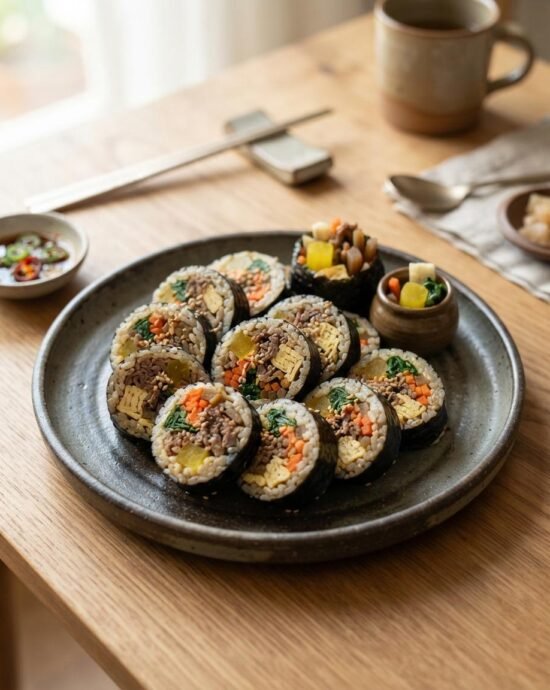
Kimbap is a beloved Korean dish of seasoned rice and an assortment of colorful fillings, such as marinated beef, vegetables, and egg, rolled tightly in sheets of roasted seaweed and sliced into bite-sized pieces. Though often compared to Japanese sushi due to its visual similarity, kimbap developed as its own distinct tradition within Korean cuisine, seasoned with sesame oil and salt rather than vinegar, and typically built around cooked rather than raw ingredients, resulting in a flavor profile that is more savory and nutty than tangy. Kimbap has long been a fixture of Korean picnic and travel culture, historically packed for school outings, hiking trips, and long train journeys because it holds together well, requires no utensils, and stays flavorful at room temperature for hours. The dish’s versatility is part of its enduring appeal, as nearly any combination of vegetables, proteins, and pickles can be rolled inside, giving rise to countless regional and modern variations found at kimbap specialty restaurants across Korea, some of which serve dozens of different filling combinations on a single menu. What unites all versions of kimbap is the careful technique of rolling, requiring rice spread in an even layer, fillings arranged in a balanced horizontal line, and firm, even pressure applied with a bamboo mat to create a tight, uniform roll that slices cleanly without falling apart. Loved for its portability, visual appeal, and satisfying balance of textures and flavors, kimbap remains one of Korea’s most iconic and widely enjoyed foods.
Ingredient Notes
- Cooked Short-Grain Rice: Freshly cooked, slightly warm short-grain rice rolls most easily; day-old rice can be too dry and prone to cracking once rolled.
- Roasted Seaweed Sheets (Gim): Look for seaweed labeled specifically for kimbap or sushi, which is roasted and slightly thicker than seasoned snacking seaweed.
- Ground Beef: A lean-to-moderate fat ratio works best, since excess grease can make the filling slide around rather than stay compact inside the roll.
- Pickled Radish Strips (Danmuji): This tangy, crunchy yellow pickle is a defining kimbap ingredient, adding brightness that cuts through the richness of the other fillings.
- Sesame Oil: Both seasoning the rice and brushing the finished roll, toasted sesame oil provides the nutty aroma essential to authentic kimbap flavor.
Ingredient Suggestions
- Imitation crab or tuna salad: Popular modern fillings that add a different protein option and a creamy texture.
- Cheese: A slice of cheese rolled inside adds a rich, gooey twist favored in many contemporary kimbap variations.
- Bulgogi: Using marinated bulgogi beef instead of plain ground beef adds a sweeter, more complex flavor to the filling.
- Pickled burdock root: A traditional addition in some regional kimbap styles that adds an earthy, slightly sweet flavor.
- Perilla leaves: A layer of fresh perilla leaves adds a distinctive herbal note alongside the other classic fillings.
Helpful Tips & Pro Tips
- If your kimbap falls apart when sliced, the roll likely was not packed tightly enough; use firm, even pressure with the bamboo mat as you roll.
- Spread the rice in a thin, even layer rather than a thick one, since overfilling with rice makes the roll bulky and harder to close neatly.
- Let all cooked fillings cool slightly before assembling, since warm ingredients can make the rice sticky and difficult to work with.
- Wipe your knife clean and lightly oil the blade between slices for the cleanest cuts through the seaweed and rice.
- Arrange fillings in a thin, even horizontal line across the center of the rice rather than piling them, which makes rolling and slicing much easier.
How to Serve and Store
Serve kimbap at room temperature, sliced and arranged on a platter, ideal for picnics, lunchboxes, or as part of a larger Korean spread. Kimbap is best eaten within a few hours of rolling, since refrigeration causes the rice to harden and the seaweed to lose its pleasant chew; if you must store leftovers, keep them tightly wrapped in plastic in the refrigerator for up to 1 day and let them come back to room temperature before eating. Reheating is not recommended, as it can make the seaweed rubbery and the rice unevenly textured. Kimbap does not freeze well due to the fresh vegetables, rice, and seaweed all suffering significant texture loss once thawed.
Substitutions
- Ground Beef → Sauteed mushrooms or seasoned tofu — A satisfying plant-based filling that still absorbs the savory soy seasoning well. (Vegan)
- Soy Sauce → Tamari — Keeps the beef filling’s seasoning gluten-free without sacrificing flavor. (Gluten-Free)
- Ground Beef → Canned tuna or leftover cooked chicken — A more budget-friendly protein option that still works well as a kimbap filling. (Budget-Friendly)
- Pickled Radish → Thinly sliced cucumber — A fresh, crunchy alternative when danmuji is not available.
- Short-Grain Rice → Medium-grain rice — A reasonable substitute that still provides the slight stickiness needed for rolling.
Suggested Recipes
- Bibimbap: Shares kimbap’s foundation of seasoned rice and colorful, separately prepared vegetable toppings.
- Japchae: A stir-fried noodle dish that makes a great side alongside a platter of freshly rolled kimbap.
- Bulgogi: Marinated beef that can be used as an elevated filling option for a more flavorful kimbap variation.
- Hobak Jeon: A crispy zucchini pancake that pairs well as a light side dish alongside kimbap for a varied meal.

Jeff Smith
"Cooking is the intersection of history, science, and emotion."
For me, the kitchen has always been a laboratory of culture. With a background deeply rooted in digital strategy and precision, I approach the culinary arts with the same rigor I apply to the digital landscape—analyzing flavors, perfecting techniques, and documenting the nuance that makes Filipino cuisine truly world-class.
Findme Recipe was born from a desire to bridge the gap between traditional heritage and the modern home cook. Whether it is mastering the perfect balance of acidity in a classic Adobo or simplifying complex regional dishes for everyday kitchens, my mission is to preserve our culinary identity through accessible, data-backed, and delicious content.
I am not just building a database; I am cultivating a community where every Filipino kitchen feels empowered, every ingredient is celebrated, and every family heirloom recipe finds a place to thrive.
Join me as we translate the soul of our islands into recipes for the next generation.