

- Step 1. Cook the Sushi Rice
Rinse the sushi rice under cold water until the water runs mostly clear, which removes excess surface starch and prevents the rice from becoming overly gummy. Combine the rinsed rice with the water in a rice cooker or pot and cook according to the package instructions, typically 15 to 20 minutes, until the water is fully absorbed and the grains are tender but still hold their shape. Let the rice rest, covered, for 10 minutes after cooking before proceeding to the next step.
- Step 2. Season the Rice
In a small saucepan, gently warm the rice vinegar, sugar, and salt over low heat, stirring just until the sugar and salt dissolve; do not let the mixture boil. Transfer the warm cooked rice to a large wooden or glass bowl and drizzle the vinegar mixture evenly over the top. Using a rice paddle, fold the seasoning into the rice with a gentle slicing motion while fanning it to cool, which gives sushi rice its characteristic glossy sheen and prevents it from turning mushy.
- Step 3. Prepare the Fish
While the rice cools, remove the sushi-grade salmon and tuna from the refrigerator and pat them dry with paper towels. Using a very sharp knife, slice the fish against the grain into clean, even pieces about a quarter-inch thick for nigiri, or thicker diagonal slices for sashimi. Wipe the knife blade clean between cuts to keep every slice smooth and neat, which is essential for both presentation and texture.
- Step 4. Shape the Nigiri
Wet your hands slightly with water to prevent sticking, then scoop about a tablespoon and a half of the seasoned rice and gently shape it into a small, compact oval mound. Dab a tiny amount of wasabi onto the top of the rice, then drape a slice of fish over the mound, pressing gently so the fish adheres and molds slightly around the rice. Repeat with the remaining rice and fish slices.
- Step 5. Roll the Maki
Lay a sheet of nori shiny side down on a bamboo rolling mat and spread a thin, even layer of seasoned rice over it, leaving a one-inch border bare at the top edge. Arrange strips of cucumber and avocado in a line across the center. Using the mat as a guide, roll tightly from the bottom edge, sealing the bare nori edge with a touch of water, then slice into rounds with a sharp, wet knife.
- Step 6. Arrange and Serve
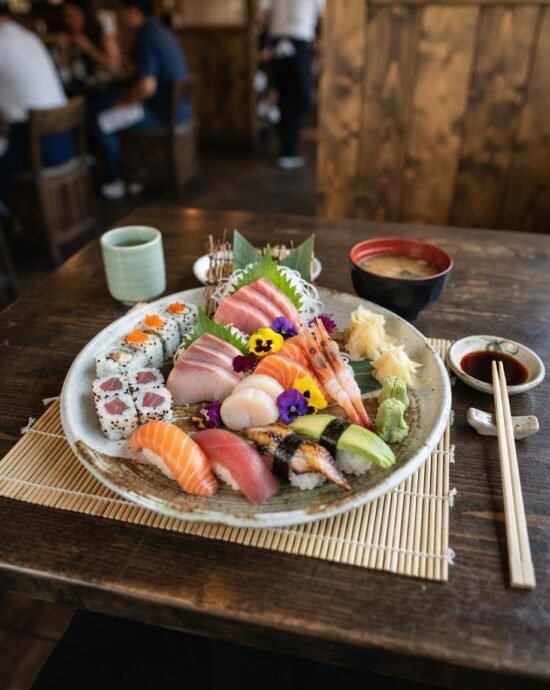
Arrange the nigiri, maki rolls, and any remaining fish sliced as sashimi on a large serving platter. Garnish with pickled ginger and small mounds of extra wasabi. Serve immediately with a small dish of soy sauce for dipping, keeping everything as fresh and cold as possible since sushi and sashimi are best enjoyed right after preparation.
- Calories:420 kcal21%
- Protein:26 g52%
- Carbohydrates:58 g21%
- Sugar:6 g7%
- Energy:1757 kJ21%
- Salt:1.6 g27%
- Fat:9 g13%
What is Sushi & Sashimi?
Sushi and sashimi are two of Japan's most iconic culinary traditions, built around the pairing of impeccably fresh, thinly sliced raw fish with either vinegared rice, in the case of sushi, or served entirely on its own, in the case of sashimi. While the two are frequently mentioned together and often served side by side, they represent distinct techniques: sashimi refers strictly to skillfully sliced raw fish or seafood served without rice, prized purely for the quality and texture of the fish itself, while sushi specifically incorporates seasoned rice, whether pressed into nigiri, rolled into maki, or arranged in countless other styles. Both traditions trace their roots back centuries, with early forms of fermented fish and rice evolving over generations into the fresh, quick-prepared dishes recognized worldwide today, particularly following the popularization of nigiri-style sushi in nineteenth-century Edo, modern-day Tokyo. Central to both dishes is an unwavering emphasis on the freshness and quality of the fish, which must be sourced and handled with meticulous care, alongside the precise knife skills required to slice each piece cleanly against the grain for the best texture. Sushi rice itself is a craft in its own right, seasoned with a delicate balance of vinegar, sugar, and salt and cooled to a specific texture that is neither too sticky nor too dry. Together, sushi and sashimi showcase a broader Japanese culinary philosophy that values simplicity, precision, and deep respect for high-quality raw ingredients above heavy seasoning or elaborate preparation.
Ingredient Notes
- Sushi-Grade Salmon And Tuna: Always purchase fish explicitly labeled sushi-grade or sashimi-grade from a reputable fishmonger, since this indicates it has been handled and frozen according to safety standards for raw consumption.
- Sushi Rice: Short-grain Japanese rice is essential for proper texture; avoid substituting long-grain rice, which lacks the necessary stickiness to hold its shape.
- Rice Vinegar: A high-quality, unseasoned rice vinegar gives the best control over the final sweetness and acidity of the seasoned sushi rice.
- Nori Sheets: Look for roasted nori labeled specifically for sushi rather than the thinner, seasoned variety meant for snacking, which lacks the sturdiness needed for rolling.
- Wasabi Paste: Fresh-grated wasabi root offers the most authentic, complex heat; prepared tube wasabi is a convenient substitute for home cooks.
Ingredient Suggestions
- Tobiko or ikura: These small, briny fish roe add a pop of texture and color when sprinkled over nigiri or rolled into maki.
- Toasted sesame seeds: A light sprinkle over maki rolls adds a subtle nutty crunch and visual appeal.
- Spicy mayo: A modern addition drizzled over rolls that adds creaminess and a touch of heat, popular in many contemporary sushi styles.
- Shiso leaves: A fragrant, slightly minty leaf traditionally used to separate or garnish sashimi platters.
- Extra pickled ginger: Served generously between bites, pickled ginger cleanses the palate and lets each type of fish be tasted distinctly.
Helpful Tips & Pro Tips
- If your sushi rice turns out mushy, it was likely over-rinsed or cooked with too much water; measure carefully and rinse just until the water runs mostly clear.
- Always use a very sharp knife for slicing fish, since a dull blade tears the delicate flesh rather than cutting it cleanly, affecting both texture and presentation.
- Keep your hands and rice slightly damp while shaping nigiri, which prevents the sticky rice from clumping onto your fingers.
- Buy fish only from a trusted source specifically labeled for raw consumption, and keep it well chilled until the moment you are ready to slice and serve.
- Fan the rice while seasoning it with vinegar, which helps it cool quickly and develop the glossy, slightly firm texture essential to good sushi.
How to Serve and Store
Serve sushi and sashimi immediately after preparing, arranged attractively on a chilled platter with soy sauce, wasabi, and pickled ginger alongside for dipping and garnish. Because both dishes rely entirely on the freshness of raw fish, they should be eaten the same day they are made and are not suitable for leftovers beyond a few hours in the refrigerator, tightly covered. Never freeze prepared sushi or sashimi, as thawing significantly degrades the texture and safety of the raw fish. If you have extra sushi rice or vegetables left over, they can be stored separately in the refrigerator for up to 2 days and repurposed into a rice bowl.
Substitutions
- Raw Fish → Cooked shrimp, crab, or marinated tofu — A safe, satisfying option for those avoiding raw seafood, especially in maki rolls. (Vegan (Tofu Option))
- Soy Sauce → Tamari — Provides the same salty, umami dipping flavor while keeping the meal gluten-free. (Gluten-Free)
- Sushi-Grade Tuna → Frozen sushi-grade fish, thawed properly — A more affordable and accessible option that is just as safe when handled correctly. (Budget-Friendly)
- Nori Sheets → Soy paper — A colorful, nori-free wrap alternative for those who dislike the taste of seaweed.
- Wasabi Paste → Prepared horseradish — A reasonable substitute that offers similar sharp heat when fresh or tube wasabi is unavailable.
Suggested Recipes
- Miso Soup: A traditional, comforting starter that pairs naturally alongside a sushi and sashimi meal.
- Chawanmushi: A silky steamed egg custard that offers a warm, savory contrast to cool, fresh sushi and sashimi.
- Tempura: Crispy fried seafood and vegetables that make an excellent textural counterpart on a larger Japanese spread.
- Onigiri: A portable rice snack that shares sushi's foundation of seasoned rice in a completely different format.

Jeff Smith
"Cooking is the intersection of history, science, and emotion."
For me, the kitchen has always been a laboratory of culture. With a background deeply rooted in digital strategy and precision, I approach the culinary arts with the same rigor I apply to the digital landscape—analyzing flavors, perfecting techniques, and documenting the nuance that makes Filipino cuisine truly world-class.
Findme Recipe was born from a desire to bridge the gap between traditional heritage and the modern home cook. Whether it is mastering the perfect balance of acidity in a classic Adobo or simplifying complex regional dishes for everyday kitchens, my mission is to preserve our culinary identity through accessible, data-backed, and delicious content.
I am not just building a database; I am cultivating a community where every Filipino kitchen feels empowered, every ingredient is celebrated, and every family heirloom recipe finds a place to thrive.
Join me as we translate the soul of our islands into recipes for the next generation.