
- Step 1. Prepare the Pork
Pat the pork chops dry with paper towels and place them between two sheets of plastic wrap. Using a meat mallet or the bottom of a heavy pan, gently pound each chop to an even thickness of about half an inch, which tenderizes the meat and ensures it cooks evenly. Season both sides generously with the salt and black pepper, letting the pork rest for a few minutes to absorb the seasoning.
- Step 2. Set Up the Breading Station
Arrange three shallow dishes in a row: one with the flour, one with the beaten eggs, and one with the panko breadcrumbs. This assembly-line setup makes breading efficient and helps keep your hands from becoming too messy. Have a clean plate ready at the end of the station to hold the fully breaded cutlets before frying.
- Step 3. Bread the Cutlets
Dredge each pork chop first in the flour, shaking off any excess, then dip it into the beaten egg, letting any extra egg drip back into the bowl. Finally, press the chop firmly into the panko breadcrumbs, coating both sides evenly and pressing gently so the crumbs adhere well. Place the breaded cutlets on the clean plate, making sure they do not touch each other before frying.
- Step 4. Heat the Oil
Pour the vegetable oil into a large, heavy skillet or deep pot, filling it about an inch and a half deep, and heat over medium heat until it reaches 340 to 350 degrees Fahrenheit on a kitchen thermometer. Maintaining the correct oil temperature is crucial for tonkatsu, since oil that is too cool results in greasy, soggy breading, while oil that is too hot burns the crust before the pork cooks through.
- Step 5. Fry the Cutlets
Carefully lower one or two breaded cutlets into the hot oil at a time, being careful not to overcrowd the pan, which can drop the oil temperature too quickly. Fry for 3 to 4 minutes per side, until the breading turns a deep golden brown and the internal temperature of the pork reaches 145 degrees Fahrenheit. Transfer the fried cutlets to a wire rack to drain, which keeps the bottom crust from becoming soggy.
- Step 6. Slice and Serve
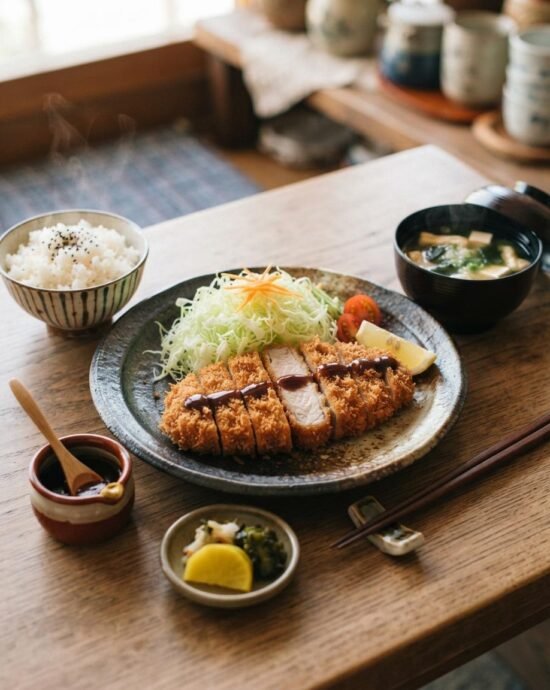
Let the fried tonkatsu rest for 2 to 3 minutes before slicing it into thick strips using a sharp knife, which makes it easier to eat with chopsticks. Serve the sliced tonkatsu over a bed of shredded cabbage alongside steamed rice, with tonkatsu sauce drizzled over the top or served in a small dish for dipping, and Japanese mustard and lemon wedges on the side.
- Calories:520 kcal26%
- Protein:34 g68%
- Carbohydrates:44 g16%
- Sugar:7 g8%
- Energy:2176 kJ26%
- Salt:1.5 g25%
- Fat:22 g31%
What is Tonkatsu?
Tonkatsu is a beloved Japanese dish featuring a breaded and deep-fried pork cutlet, prized for its remarkably crisp, crunchy panko coating and tender, juicy interior, typically served sliced over shredded cabbage with a tangy, slightly sweet sauce. The dish emerged in Japan during the late nineteenth century as part of the broader yoshoku movement, a category of Western-influenced dishes adapted to Japanese tastes and ingredients following the country's period of modernization, with tonkatsu itself evolving from earlier European breaded cutlet preparations into something distinctly Japanese through the use of panko breadcrumbs and its now-iconic tangy tonkatsu sauce. What sets tonkatsu apart from other fried cutlets is its coating, made with panko rather than standard breadcrumbs, resulting in a noticeably lighter, airier, and crunchier crust that shatters pleasingly with each bite rather than turning dense or greasy. The accompanying tonkatsu sauce, a thick, fruit-and-vegetable-based condiment similar in spirit to Worcestershire sauce but sweeter and more viscous, has become so closely associated with the dish that it takes its very name from it. Traditionally served alongside finely shredded raw cabbage, which offers a light, crisp contrast to the rich, fried pork, tonkatsu remains a staple of casual Japanese dining, found everywhere from dedicated tonkatsu specialty restaurants to home kitchens and bento boxes. Its combination of satisfying crunch, juicy meat, and tangy sauce has made tonkatsu one of Japan's most enduringly popular comfort foods.
Ingredient Notes
- Boneless Pork Loin Chops: Choose chops of even thickness for the most consistent cooking; pounding them slightly also helps tenderize the meat before breading.
- Panko Breadcrumbs: These large, airy Japanese breadcrumbs are essential for tonkatsu's signature light, crunchy texture; standard breadcrumbs produce a much denser crust.
- Tonkatsu Sauce: This thick, tangy-sweet sauce is the traditional accompaniment; look for a bottled Japanese brand in the Asian foods aisle for the most authentic flavor.
- Vegetable Oil: A neutral, high smoke-point oil like vegetable or canola oil is ideal for frying, allowing the pork to cook through without the oil breaking down.
- Green Cabbage: Shredded very finely, raw cabbage provides a crisp, refreshing contrast to the rich fried pork; a mandoline slicer makes achieving thin, even shreds easy.
Ingredient Suggestions
- Curry sauce: Serving tonkatsu with Japanese curry instead of tonkatsu sauce transforms the dish into katsu curry, a popular variation.
- Shredded carrot: A few strands mixed into the cabbage add color and a subtle sweetness.
- Sesame dressing: A creamy, nutty dressing drizzled over the cabbage adds extra richness and flavor.
- A fried egg on top: A popular addition, similar to katsudon style, that adds richness once the yolk breaks over the pork.
- Extra karashi mustard: For those who enjoy sharp heat, an extra dab enhances the dish's tang.
Helpful Tips & Pro Tips
- If your tonkatsu turns out greasy rather than crisp, your oil temperature was likely too low; use a thermometer to keep it steady between 340 and 350 degrees Fahrenheit.
- Pound the pork to an even thickness before breading, which ensures the cutlet cooks through evenly without the exterior burning before the center is done.
- Press the panko firmly onto the pork when breading, which helps it adhere properly and prevents the coating from falling off during frying.
- Let the fried cutlets rest on a wire rack rather than paper towels, which allows air to circulate underneath and keeps the bottom crust from steaming and turning soggy.
- Slice the tonkatsu with a sharp knife right before serving, since this makes it much easier to eat neatly with chopsticks.
How to Serve and Store
Serve tonkatsu hot and freshly sliced over shredded cabbage, alongside steamed rice, miso soup, and tonkatsu sauce for a complete traditional meal. Leftover cooked tonkatsu keeps in an airtight container in the refrigerator for up to 2 days; reheat in an oven or air fryer at 375 degrees Fahrenheit for several minutes to help restore some crispness, since microwaving will leave the coating soft and slightly soggy. Uncooked, breaded cutlets can also be frozen for up to 1 month; fry directly from frozen, adding a few extra minutes to the cooking time. Always fry to a safe internal temperature of at least 145 degrees Fahrenheit when cooking from frozen.
Substitutions
- Pork Loin → Thick slices of eggplant or firm tofu — A satisfying plant-based version that still achieves a crispy panko crust. (Vegan)
- Panko Breadcrumbs → Gluten-free panko or crushed rice crackers — Provides a similar light, crunchy texture while keeping the dish free of gluten. (Gluten-Free)
- Pork Loin Chops → Chicken breast, pounded thin — A more affordable protein option that works just as well with the same breading technique. (Budget-Friendly)
- Tonkatsu Sauce → A mix of ketchup, Worcestershire sauce, and a touch of sugar — A homemade approximation when bottled tonkatsu sauce is unavailable.
- Vegetable Oil → Any neutral high-heat oil such as canola or peanut oil — Works equally well for achieving a crisp, golden fry.
Suggested Recipes
- Katsu Curry: Uses the same fried pork cutlet technique, served over rice with a rich Japanese curry sauce instead of tonkatsu sauce.
- Ramen: A noodle soup that pairs well on a larger Japanese comfort food menu alongside tonkatsu.
- Miso Soup: A traditional starter that is almost always served alongside tonkatsu at Japanese restaurants.
- Tempura: Another beloved fried Japanese dish, offering a lighter, batter-based alternative to tonkatsu's breaded style.

Jeff Smith
"Cooking is the intersection of history, science, and emotion."
For me, the kitchen has always been a laboratory of culture. With a background deeply rooted in digital strategy and precision, I approach the culinary arts with the same rigor I apply to the digital landscape—analyzing flavors, perfecting techniques, and documenting the nuance that makes Filipino cuisine truly world-class.
Findme Recipe was born from a desire to bridge the gap between traditional heritage and the modern home cook. Whether it is mastering the perfect balance of acidity in a classic Adobo or simplifying complex regional dishes for everyday kitchens, my mission is to preserve our culinary identity through accessible, data-backed, and delicious content.
I am not just building a database; I am cultivating a community where every Filipino kitchen feels empowered, every ingredient is celebrated, and every family heirloom recipe finds a place to thrive.
Join me as we translate the soul of our islands into recipes for the next generation.