
- Step 1. Make the Batter
In a large bowl, whisk together the flour and dashi stock until smooth, then whisk in the eggs until fully combined. The batter should be relatively thin, similar to a pancake batter, since it primarily serves to bind the cabbage and other ingredients together rather than forming the bulk of the dish. Let the batter rest for a few minutes while you prepare the cabbage.
- Step 2. Fold in the Cabbage
Add the finely shredded cabbage and chopped green onions to the batter, folding gently with a spatula until every strand of cabbage is coated. The cabbage should make up the majority of the mixture's volume, which is essential to okonomiyaki's texture, giving it substance and a slight crunch rather than the dense, eggy consistency of a standard pancake.
- Step 3. Heat the Griddle
Heat the vegetable oil on a large flat griddle or nonstick skillet over medium heat. Once the oil is shimmering, scoop the cabbage batter mixture onto the griddle, shaping it into a round mound about an inch thick using a spatula. Arrange the thinly sliced pork belly over the top of the pancake, pressing gently so the slices adhere to the surface.
- Step 4. Cook the First Side
Cook the okonomiyaki undisturbed for 5 to 6 minutes, until the bottom turns a deep golden brown and the edges begin to firm up. Resist the urge to move or press the pancake during this time, since disturbing it too early can cause it to fall apart when you attempt to flip it. Check the bottom carefully by gently lifting an edge with a spatula before flipping.
- Step 5. Flip and Finish Cooking
Using two spatulas or a large plate to help support the pancake, carefully flip the okonomiyaki so the pork-belly side now faces down onto the griddle. Cook for another 6 to 8 minutes, pressing down gently once or twice with a spatula, until the pork is fully cooked and the pancake is cooked through in the center, checking with a toothpick if needed.
- Step 6. Top and Serve
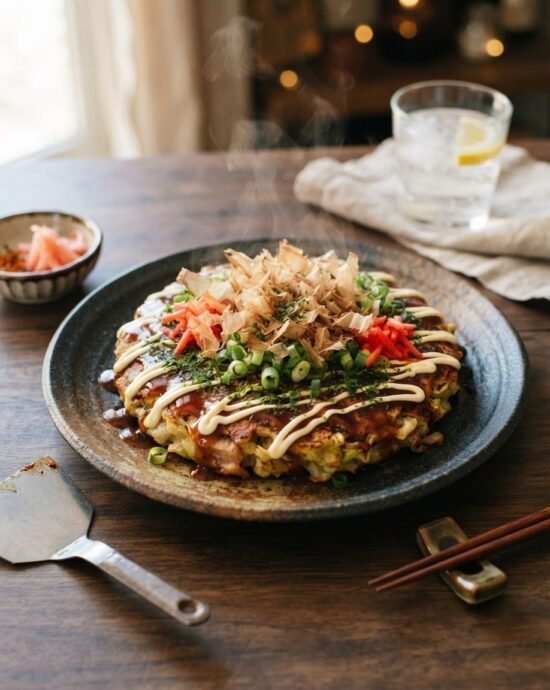
Transfer the finished okonomiyaki to a serving plate and generously drizzle with okonomiyaki sauce and Japanese mayonnaise in a crosshatch pattern. Sprinkle bonito flakes over the top, which will appear to dance from the rising heat, along with a light dusting of aonori seaweed powder and chopped pickled ginger. Slice into wedges and serve immediately while hot.
- Calories:460 kcal23%
- Protein:20 g40%
- Carbohydrates:30 g11%
- Sugar:8 g9%
- Energy:1925 kJ23%
- Salt:2 g33%
- Fat:28 g40%
What is Okonomiyaki?
Okonomiyaki is a savory Japanese pancake built primarily from finely shredded cabbage bound together with a light batter, traditionally topped with sliced pork belly and finished with a generous drizzle of tangy okonomiyaki sauce, Japanese mayonnaise, and delicate bonito flakes. The name translates roughly to grilled as you like it, a nod to the dish's remarkable versatility, since nearly any combination of proteins, seafood, or vegetables can be folded into the batter alongside the cabbage. Okonomiyaki is most closely associated with the city of Osaka, where it is considered a defining regional specialty, though a distinct layered version from Hiroshima, featuring noodles stacked between the pancake and toppings rather than mixed directly into the batter, offers a completely different take on the same basic concept. The dish's texture depends heavily on the ratio of cabbage to batter, with cabbage typically making up the bulk of the mixture, giving the finished pancake a light, almost fluffy interior punctuated by pleasant bits of crunch, quite different from a dense, egg-heavy Western-style pancake. Okonomiyaki is often prepared tableside on built-in griddles at specialty restaurants, allowing diners to watch or even participate in the cooking process themselves, adding a lively, interactive element to the dining experience. Topped generously with its signature sweet-savory sauce and the visually striking movement of bonito flakes curling from the residual heat, okonomiyaki remains one of Japan's most beloved and comforting street food and casual dining dishes.
Ingredient Notes
- Green Cabbage: Finely shredded cabbage forms the bulk of the batter and is essential to okonomiyaki's signature light, slightly crunchy texture; shred it thinly and evenly for the best result.
- Dashi Stock: This savory Japanese stock adds depth to the otherwise simple batter; instant dashi powder dissolved in water is a convenient substitute.
- Okonomiyaki Sauce: This thick, tangy-sweet sauce is essential to the dish's signature flavor; find it bottled in the Asian foods aisle, or substitute a mix of tonkatsu sauce and ketchup.
- Bonito Flakes: These delicate, paper-thin dried fish flakes curl and appear to dance from the heat of the finished pancake, adding a smoky, umami finish.
- Pork Belly: Thin slices are traditional and crisp up nicely on the griddle; substitute bacon if pork belly is unavailable.
Ingredient Suggestions
- Shrimp or squid: Popular seafood additions folded into the batter alongside or instead of pork for a heartier, coastal-style okonomiyaki.
- Cheese: A modern, indulgent addition melted into the center of the pancake for extra richness.
- Yam or nagaimo: Grated mountain yam mixed into the batter is a traditional technique that adds extra fluffiness to the finished pancake.
- Fried noodles: Adding cooked yakisoba noodles to the batter, Hiroshima-style, creates a heartier, more substantial dish.
- Extra Japanese mayonnaise: A generous drizzle enhances the dish's richness and is a beloved finishing touch for many diners.
Helpful Tips & Pro Tips
- If your okonomiyaki falls apart when flipping, the batter likely had too much liquid relative to cabbage; use two spatulas or a plate for extra support during the flip.
- Do not press the pancake down too much while it cooks, since this can push out moisture and make the interior dense rather than light and fluffy.
- Let the first side cook undisturbed for the full recommended time before attempting to flip, since flipping too early can cause the pancake to break apart.
- Shred the cabbage as finely as possible, since large, chunky pieces make the pancake harder to hold together and cook evenly.
- Serve okonomiyaki immediately after topping with sauce and bonito flakes, since the dish is best enjoyed hot off the griddle.
How to Serve and Store
Serve okonomiyaki hot off the griddle, sliced into wedges, with extra sauce and mayonnaise available at the table for those who want more. Leftovers keep in an airtight container in the refrigerator for up to 2 days; reheat in a skillet over medium heat for a few minutes per side to help restore some of the original texture, since microwaving can leave the pancake slightly soggy. Okonomiyaki batter, before cooking, can also be portioned and frozen for up to 1 month; thaw in the refrigerator overnight before cooking fresh on the griddle. Add fresh sauce, mayonnaise, and bonito flakes only after reheating, never before storing.
Substitutions
- Pork Belly → Extra mushrooms or plant-based bacon — A satisfying plant-based version that still crisps up nicely on the griddle. (Vegan)
- All-Purpose Flour → A 1:1 gluten-free flour blend — Works well in the thin batter while keeping the dish free of gluten. (Gluten-Free)
- Pork Belly → Sliced bacon — A more widely available and often more affordable substitute with a similar smoky flavor. (Budget-Friendly)
- Okonomiyaki Sauce → A blend of ketchup, Worcestershire sauce, and oyster sauce — A reasonable homemade approximation when the bottled sauce is unavailable.
- Japanese Mayonnaise → Regular mayonnaise with a touch of rice vinegar — A close substitute for the tangier, richer Japanese variety.
Suggested Recipes
- Takoyaki: Another iconic Osaka street food that shares okonomiyaki's savory batter and bonito flake garnish.
- Yakitori: Grilled skewers that make a great addition to a casual Japanese street food spread alongside okonomiyaki.
- Udon & Soba: Japanese noodle dishes that pair well on a larger menu featuring okonomiyaki's savory, hearty flavors.
- Miso Soup: A light, comforting soup that balances the richness of a freshly griddled okonomiyaki.

Jeff Smith
"Cooking is the intersection of history, science, and emotion."
For me, the kitchen has always been a laboratory of culture. With a background deeply rooted in digital strategy and precision, I approach the culinary arts with the same rigor I apply to the digital landscape—analyzing flavors, perfecting techniques, and documenting the nuance that makes Filipino cuisine truly world-class.
Findme Recipe was born from a desire to bridge the gap between traditional heritage and the modern home cook. Whether it is mastering the perfect balance of acidity in a classic Adobo or simplifying complex regional dishes for everyday kitchens, my mission is to preserve our culinary identity through accessible, data-backed, and delicious content.
I am not just building a database; I am cultivating a community where every Filipino kitchen feels empowered, every ingredient is celebrated, and every family heirloom recipe finds a place to thrive.
Join me as we translate the soul of our islands into recipes for the next generation.