
- Step 1. Salt the Cabbage
Place the finely chopped napa cabbage in a bowl and sprinkle with a pinch of salt, tossing well. Let it sit for 10 minutes, which draws out excess moisture that could otherwise make the filling watery. Squeeze the cabbage firmly with clean hands over the sink to remove as much liquid as possible before adding it to the rest of the filling.
- Step 2. Mix the Filling
In a large bowl, combine the ground pork, squeezed cabbage, minced garlic, grated ginger, chopped green onions, 2 tablespoons of the soy sauce, 1 tablespoon of the sesame oil, and the salt. Mix thoroughly with your hands or a spatula until everything is evenly combined and slightly sticky, which helps the filling hold together well once wrapped and cooked.
- Step 3. Fill the Wrappers
Working with a few gyoza wrappers at a time to prevent them from drying out, place about a teaspoon of filling in the center of each wrapper. Dip a finger in water and trace it along the edge of the wrapper, then fold it in half over the filling, pressing the center to seal. Create small pleats along one side of the seal, pressing firmly, which is the traditional crescent shape for gyoza.
- Step 4. Arrange for Cooking
Place the folded gyoza on a lightly floured tray, making sure they do not touch each other, since the wrappers can stick together if crowded. Continue filling and folding the remaining wrappers, working efficiently since exposed wrapper edges dry out quickly and can crack if left too long before cooking.
- Step 5. Pan-Fry the Gyoza
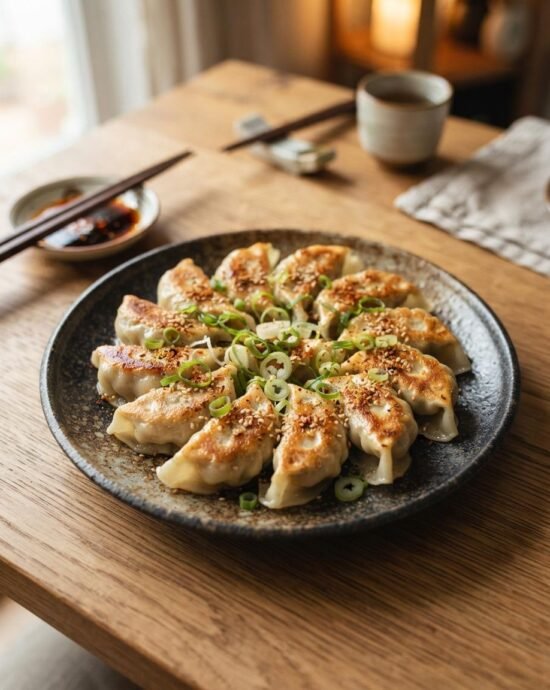
Heat the vegetable oil in a large nonstick skillet over medium-high heat. Arrange the gyoza in the pan in a single layer, flat side down, and fry for 2 to 3 minutes, until the bottoms turn a deep golden brown. Carefully pour the water into the pan and immediately cover with a lid, letting the gyoza steam for 5 to 6 minutes, until the wrappers turn translucent and the filling is fully cooked through.
- Step 6. Crisp and Serve
Remove the lid and continue cooking for another 1 to 2 minutes, uncovered, allowing any remaining water to evaporate and the bottoms to re-crisp. While the gyoza cook, whisk together the remaining soy sauce, remaining sesame oil, rice vinegar, and chili oil in a small bowl for dipping. Transfer the gyoza to a plate, crispy side up, and serve immediately with the dipping sauce.
- Calories:380 kcal19%
- Protein:18 g36%
- Carbohydrates:38 g14%
- Sugar:3 g3%
- Energy:1590 kJ19%
- Salt:2 g33%
- Fat:17 g24%
What is Gyoza?
Gyoza are Japanese pan-fried dumplings filled with a savory mixture of seasoned ground pork and finely chopped cabbage, cooked using a distinctive technique that produces a crispy, golden-brown bottom while the top remains soft and steamed. Though gyoza's origins trace directly back to Chinese jiaozi dumplings, brought to Japan by soldiers returning after World War II, the dish quickly evolved into something distinctly Japanese, characterized by thinner wrappers, a more pronounced garlic and ginger flavor, and a defining cooking method that combines frying and steaming in a single pan rather than boiling. This hybrid technique, in which the dumplings are first seared in oil and then steamed with a small amount of added water under a lid, is what gives gyoza their signature textural contrast: a satisfyingly crisp, lacy bottom crust paired with a tender, juicy filling and delicately steamed top. Gyoza have become one of the most beloved side dishes across Japan, commonly served alongside ramen at noodle shops or as a popular item at izakaya, the casual Japanese pubs where small, shareable dishes are enjoyed alongside drinks. Making gyoza at home has also become something of a beloved family tradition in many households, with the folding and pleating of each dumpling often becoming a shared, communal activity. Served with a simple dipping sauce combining soy sauce, vinegar, and chili oil, gyoza's combination of crispy texture, savory filling, and satisfying dumpling wrapper have made it a defining and universally cherished component of Japanese cuisine.
Ingredient Notes
- Ground Pork: A moderate fat content, around 20 percent, keeps the filling juicy; leaner pork can result in a drier, less flavorful dumpling.
- Napa Cabbage: This tender cabbage variety is traditional for gyoza filling; salting and squeezing out excess moisture is essential to prevent a watery, soggy filling.
- Gyoza Wrappers: Look for thin, round wrappers specifically labeled for gyoza rather than thicker wonton wrappers, which will not crisp or fold the same way.
- Sesame Oil: Toasted sesame oil adds a distinctive nutty aroma both to the filling and the dipping sauce; a little goes a long way.
- Chili Oil (Rayu): This Japanese chili oil adds a customizable kick of heat to the dipping sauce; adjust the amount based on your spice preference.
Ingredient Suggestions
- Shrimp: Finely chopped shrimp mixed into the pork filling adds a subtly sweet, briny dimension.
- Garlic chives (nira): A traditional addition in many Japanese and Chinese gyoza recipes that adds a mild, oniony flavor distinct from green onion.
- Extra garlic: For those who love a bolder, more assertive flavor, doubling the garlic deepens the filling's aromatic profile.
- Ponzu sauce: A citrus-based alternative to the classic soy-vinegar dipping sauce that adds bright, tangy flavor.
- Cheese: A modern, indulgent twist where a small cube of cheese is added to the filling for a gooey surprise.
Helpful Tips & Pro Tips
- If your gyoza filling turns out watery, the cabbage likely was not squeezed thoroughly enough after salting; take the time to remove as much liquid as possible.
- Do not overfill the wrappers, since too much filling makes sealing difficult and can cause the dumplings to burst open during cooking.
- Keep unused wrappers covered with a damp towel while working, since exposed wrappers dry out quickly and become difficult to fold or seal properly.
- Add the water to the pan carefully and cover immediately, since the residual oil can cause vigorous splattering when the water hits the hot pan.
- Let the gyoza cook uncovered for the final minute or two, which allows excess moisture to evaporate and helps the bottoms re-crisp before serving.
How to Serve and Store
Serve gyoza hot off the pan, crispy side up, with the soy-vinegar-chili dipping sauce alongside, ideally as part of a larger Japanese meal with rice or noodles. Leftover cooked gyoza keep in an airtight container in the refrigerator for up to 3 days; reheat in a lightly oiled skillet over medium heat for a few minutes to help restore some crispness, since microwaving will leave the wrappers soft. Uncooked, filled gyoza freeze exceptionally well for up to 2 months; freeze them in a single layer on a tray before transferring to a bag, then cook directly from frozen, adding a couple of extra minutes to the steaming time.
Substitutions
- Ground Pork → Finely chopped mushrooms and extra-firm tofu — A savory, plant-based filling that still holds together well when folded and pan-fried. (Vegan)
- Gyoza Wrappers → Gluten-free dumpling wrappers or rice paper — Allows those avoiding gluten to enjoy a similar dumpling experience, though the texture will differ slightly. (Gluten-Free)
- Ground Pork → Ground chicken or turkey — A leaner, often more affordable protein option that still works well in the filling. (Budget-Friendly)
- Napa Cabbage → Green cabbage — A widely available substitute, though slightly firmer in texture than tender napa cabbage.
- Chili Oil → A pinch of red pepper flakes in oil — A simple homemade approximation when store-bought rayu is unavailable.
Suggested Recipes
- Ramen: A noodle soup that gyoza is traditionally served alongside at Japanese restaurants.
- Yakitori: Grilled skewers that make a great addition to a shared izakaya-style meal alongside gyoza.
- Okonomiyaki: Another savory, satisfying Japanese dish that pairs well on a casual comfort food menu.
- Miso Soup: A light, comforting soup that balances a meal featuring rich, pan-fried gyoza.

Jeff Smith
"Cooking is the intersection of history, science, and emotion."
For me, the kitchen has always been a laboratory of culture. With a background deeply rooted in digital strategy and precision, I approach the culinary arts with the same rigor I apply to the digital landscape—analyzing flavors, perfecting techniques, and documenting the nuance that makes Filipino cuisine truly world-class.
Findme Recipe was born from a desire to bridge the gap between traditional heritage and the modern home cook. Whether it is mastering the perfect balance of acidity in a classic Adobo or simplifying complex regional dishes for everyday kitchens, my mission is to preserve our culinary identity through accessible, data-backed, and delicious content.
I am not just building a database; I am cultivating a community where every Filipino kitchen feels empowered, every ingredient is celebrated, and every family heirloom recipe finds a place to thrive.
Join me as we translate the soul of our islands into recipes for the next generation.