
- Step 1. Make the Warishita Sauce
In a small saucepan, combine the soy sauce, mirin, sugar, and sake. Bring to a gentle simmer over medium heat, stirring until the sugar fully dissolves. This sweet, savory sauce, called warishita, is the defining seasoning of sukiyaki and can be adjusted at the table with a splash more water if it becomes too concentrated as the dish cooks.
- Step 2. Prepare the Ingredients
Arrange the thinly sliced beef on a platter for easy access. Chop the napa cabbage into large pieces, slice the green onions diagonally, drain and rinse the shirataki noodles, cube the tofu, and trim the shiitake and enoki mushrooms. Arrange everything in an organized fashion, either on separate plates or sectioned on one large platter, ready to be added to the pot in stages.
- Step 3. Heat the Pot
Heat the beef tallow or vegetable oil in a large, heavy skillet, donabe clay pot, or electric hot pot set at the table over medium-high heat. A small amount of fat is traditional in sukiyaki, both for searing the beef and for building the initial layer of flavor in the pot before the sauce and vegetables are added.
- Step 4. Sear the Beef
Add a few slices of the beef to the hot pot in a single layer and sear for about 30 seconds per side, just until lightly browned but not fully cooked through. Push the seared beef to one side of the pot. This initial searing step, unique to sukiyaki compared to other hot pot styles, develops a deeper, more complex flavor in the meat before it finishes cooking in the sauce.
- Step 5. Add the Sauce and Vegetables
Pour a portion of the warishita sauce into the pot, letting it bubble gently around the seared beef. Add the cabbage, green onions, shirataki noodles, tofu, and mushrooms in sections around the pot, allowing each to simmer in the sweet, savory sauce for several minutes until tender, adding more sauce or a splash of water as needed to maintain the right level of liquid.
- Step 6. Serve with Raw Egg
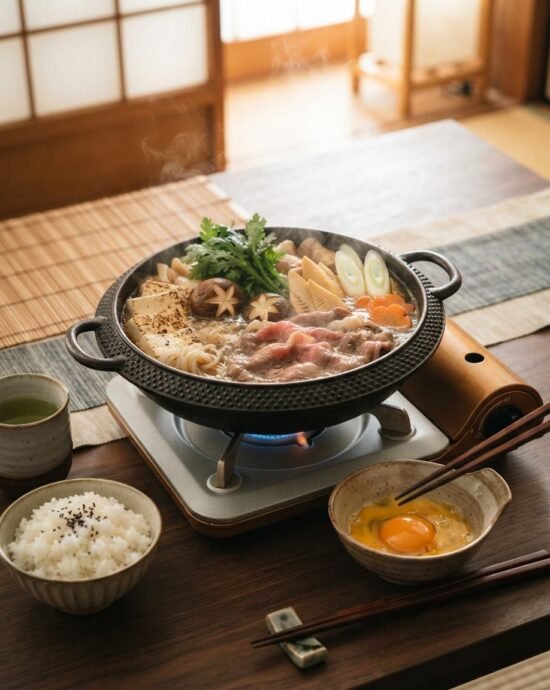
Crack a raw egg into individual small bowls for each diner and beat lightly with chopsticks. To eat, remove pieces of beef, vegetables, and noodles from the simmering pot and dip them into the beaten raw egg before eating, which cools the hot ingredients slightly and adds a rich, silky coating. Serve with steamed rice on the side, continuing to add more raw ingredients to the pot as the meal progresses.
- Calories:480 kcal24%
- Protein:32 g64%
- Carbohydrates:34 g12%
- Sugar:18 g20%
- Energy:2008 kJ24%
- Salt:2.3 g38%
- Fat:22 g31%
What is Sukiyaki?
Sukiyaki is a beloved Japanese hot pot dish featuring thinly sliced beef and an assortment of vegetables, tofu, and noodles simmered together in a distinctly sweet, soy-based sauce known as warishita, traditionally eaten dipped in raw beaten egg. Unlike the lighter, more delicate broth of shabu-shabu, sukiyaki is defined by its bold, sweet-savory seasoning, built from a careful balance of soy sauce, sugar, and mirin that caramelizes slightly as the beef sears directly in the pot before the sauce and vegetables are added. This distinctive searing step, in which beef is browned in a small amount of fat before the sauce is introduced, sets sukiyaki apart from other Japanese hot pot traditions and contributes to its rich, deeply savory flavor profile. The dish holds a particularly special place in Japanese food culture, historically associated with celebration and special occasions, since beef was once a luxury ingredient reserved for wealthier households following its introduction to the Japanese diet during the Meiji era in the late nineteenth century. The custom of dipping hot sukiyaki ingredients into a bowl of raw beaten egg before eating, while unusual to newcomers, serves a practical purpose: the egg cools the piping hot food slightly while adding a rich, silky coating that beautifully complements the sweet, savory sauce. Traditionally prepared and eaten communally at the table from a single simmering pot, sukiyaki remains one of Japan's most cherished cold-weather comfort foods, prized for its rich flavor and warm, convivial dining experience.
Ingredient Notes
- Thinly Sliced Beef: Look for beef sliced paper-thin and specifically labeled for sukiyaki or shabu-shabu; well-marbled cuts like ribeye deliver the richest flavor.
- Mirin And Sugar: Together these two ingredients create the signature sweetness of the warishita sauce; adjust the ratio slightly based on how sweet you prefer the finished dish.
- Shirataki Noodles: These thin, translucent noodles made from konjac yam have very little flavor of their own but absorb the sweet sukiyaki sauce beautifully; rinse well before adding to the pot.
- Beef Tallow: Traditional sukiyaki recipes call for beef fat to sear the meat, adding richness; vegetable oil is a suitable substitute if beef tallow is unavailable.
- Large Eggs: Always use the freshest, highest-quality eggs possible for dipping, since they are eaten essentially raw; pasteurized eggs are a safer option if you have concerns.
Ingredient Suggestions
- Udon noodles: Adding cooked udon toward the end of the meal is a popular variation that soaks up the remaining sweet sauce.
- Grilled tofu (yaki-dofu): A firmer, slightly charred tofu variety traditional to many sukiyaki recipes that holds its shape well in the pot.
- Extra green onion: For those who enjoy a sharper onion flavor, doubling the amount adds brightness to the rich, sweet broth.
- Chrysanthemum greens (shungiku): A traditional, slightly bitter green that balances the dish's inherent sweetness.
- Extra warishita sauce: Prepare a bit more than needed, since the sauce reduces and concentrates as the meal progresses and diners often want to replenish it.
Helpful Tips & Pro Tips
- If your sukiyaki tastes overly sweet, dilute the sauce slightly with a splash of water or additional soy sauce to rebalance the flavor.
- Sear the beef briefly before adding sauce, which is the defining technique of sukiyaki and builds a deeper flavor than simply simmering the meat from the start.
- Only use very fresh, high-quality eggs for the raw dipping component, given they are eaten essentially uncooked.
- Add ingredients to the pot in stages rather than all at once, allowing the beef to sear properly before the vegetables release their moisture into the sauce.
- Keep extra warishita sauce on hand to replenish the pot as the meal progresses, since the liquid reduces and concentrates over time.
How to Serve and Store
Serve sukiyaki as a shared, interactive meal at the table, with each diner dipping hot ingredients into individual bowls of beaten raw egg before eating, alongside steamed rice. Leftover cooked sukiyaki keeps in an airtight container in the refrigerator for up to 3 days, though the raw egg component should always be prepared fresh and never stored raw once used for dipping. Reheat leftovers gently on the stovetop, adding a splash of water if the sauce has thickened too much. Sukiyaki also freezes reasonably well for up to 2 months, though the shirataki noodles and tofu may change texture slightly upon thawing; the raw egg dip must always be made fresh at serving time.
Substitutions
- Thinly Sliced Beef → Grilled tofu and extra mushrooms — A hearty plant-based version that still absorbs the sweet, savory sauce well. (Vegan (Omit Egg Dip))
- Soy Sauce → Tamari — Preserves the warishita sauce's savory depth while keeping the dish gluten-free. (Gluten-Free)
- Ribeye Or Sirloin → Thinly sliced chuck steak — A more affordable cut that still works well when sliced thin for quick cooking. (Budget-Friendly)
- Raw Egg Dip → Lightly warmed egg or omit entirely — A food-safety-conscious alternative for those who prefer not to eat raw egg.
- Shirataki Noodles → Thin rice noodles — A reasonable substitute when shirataki is not available, though the texture will differ.
Suggested Recipes
- Shabu-Shabu: Another Japanese beef hot pot, offering a lighter, kombu-based broth alternative to sukiyaki's sweet soy sauce.
- Gyoza: Pan-fried dumplings that make a satisfying starter before a warming pot of sukiyaki.
- Miso Soup: A simple, comforting soup that pairs well as a light starter alongside a rich sukiyaki meal.
- Udon & Soba: Noodle dishes that can be added directly into the sukiyaki pot or served as a separate course.

Jeff Smith
"Cooking is the intersection of history, science, and emotion."
For me, the kitchen has always been a laboratory of culture. With a background deeply rooted in digital strategy and precision, I approach the culinary arts with the same rigor I apply to the digital landscape—analyzing flavors, perfecting techniques, and documenting the nuance that makes Filipino cuisine truly world-class.
Findme Recipe was born from a desire to bridge the gap between traditional heritage and the modern home cook. Whether it is mastering the perfect balance of acidity in a classic Adobo or simplifying complex regional dishes for everyday kitchens, my mission is to preserve our culinary identity through accessible, data-backed, and delicious content.
I am not just building a database; I am cultivating a community where every Filipino kitchen feels empowered, every ingredient is celebrated, and every family heirloom recipe finds a place to thrive.
Join me as we translate the soul of our islands into recipes for the next generation.