
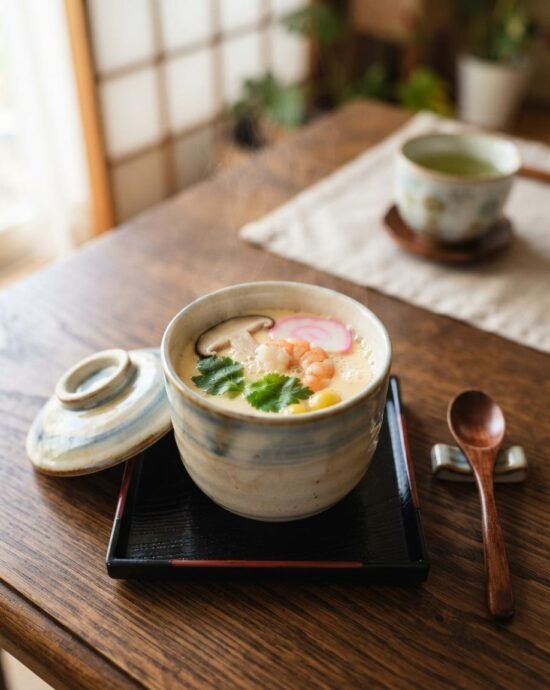

- Step 1. Whisk the Egg Base
Crack the eggs into a bowl and whisk gently, being careful not to incorporate too much air, which can create unwanted bubbles in the finished custard. Whisk in the dashi stock, soy sauce, mirin, and salt until fully combined. Strain the mixture through a fine mesh sieve into another bowl to remove any remaining egg strands, which ensures an especially smooth, silky final texture.
- Step 2. Prepare the Fillings
Season the diced chicken breast lightly with a pinch of salt. Divide the shrimp, chicken, sliced shiitake mushroom, and kamaboko fish cake evenly among four small heatproof cups or traditional chawanmushi bowls. These savory fillings sit at the bottom of each cup and become a flavorful surprise once you dig into the finished custard.
- Step 3. Add the Egg Mixture
Carefully pour the strained egg and dashi mixture into each prepared cup, filling them about three-quarters full and gently distributing the mixture evenly over the fillings. Skim off any surface bubbles with a spoon, since these can create small holes in the finished custard if left untouched, disrupting its otherwise smooth surface.
- Step 4. Set Up the Steamer
Cover each cup loosely with foil or a small lid, which helps prevent condensation from dripping into the custard as it steams. Arrange the cups in a steamer basket set over a pot of simmering water, making sure the water level stays below the bottom of the cups themselves.
- Step 5. Steam Gently
Steam the custards over low to medium heat for 12 to 15 minutes, keeping the heat gentle throughout, since chawanmushi requires slow, low steaming rather than vigorous heat to achieve its signature silky texture. Check for doneness by inserting a toothpick into the center; it should come out mostly clean with a small amount of clear liquid, not raw egg.
- Step 6. Garnish and Serve
Once set, carefully remove the cups from the steamer. Garnish each custard with a sprig of mitsuba or a few spinach leaves and a couple of ginkgo nuts if using. Serve chawanmushi warm, directly in its steaming cup, with a small spoon, as a delicate starter or side dish alongside a larger Japanese meal.
- Calories:160 kcal8%
- Protein:16 g32%
- Carbohydrates:4 g1%
- Sugar:1 g1%
- Energy:670 kJ8%
- Salt:1.3 g22%
- Fat:8 g11%
What is Chawanmushi?
Chawanmushi is a delicate Japanese steamed egg custard, savory rather than sweet, made from a light dashi-infused egg mixture steamed together with a small selection of ingredients like shrimp, chicken, and mushroom nestled at the bottom of the cup as a flavorful surprise. The name translates literally to steamed in a tea bowl, referring to the small, lidded cups traditionally used to both cook and serve the dish, a detail that reflects chawanmushi's refined, delicate presentation compared to heartier Japanese fare. Unlike Western-style savory custards, which often rely on cream and higher fat content, chawanmushi achieves its remarkably smooth, silky texture through a careful ratio of egg to dashi stock and, critically, a gentle, low-temperature steaming process, since higher heat causes the delicate egg proteins to curdle and develop unwanted air pockets rather than setting into a uniform, custardy consistency. Considered one of the more technically demanding dishes in traditional Japanese kaiseki cuisine, a multi-course dining style emphasizing seasonal, carefully balanced dishes, chawanmushi is often included as a course specifically meant to showcase a chef's precision and control over subtle cooking techniques. Despite its refined reputation, chawanmushi has also become a beloved comfort food enjoyed in home kitchens and casual restaurants throughout Japan, valued for its warm, gentle flavor and soothing, custardy texture. Typically served as an appetizer or a small side dish within a larger meal, chawanmushi exemplifies the meticulous attention to texture and subtlety that defines much of traditional Japanese culinary artistry.
Ingredient Notes
- Dashi Stock: This savory kombu and bonito-based stock is essential to chawanmushi's delicate umami flavor; instant dashi powder dissolved in water works well as a convenient substitute.
- Large Eggs: Fresh, room-temperature eggs whisk more smoothly and result in a more even, silky custard once strained and steamed.
- Small Shrimp: Choose small, tender shrimp that cook through gently during the steaming process without becoming tough or rubbery.
- Kamaboko Fish Cake: This steamed fish cake adds a mild, slightly sweet flavor and a visually distinctive pop of pink and white to the finished dish.
- Ginkgo Nuts: A traditional, slightly bitter garnish in classic chawanmushi; they can be omitted if unavailable without significantly affecting the dish's overall flavor.
Ingredient Suggestions
- Crab meat: A luxurious addition that pairs beautifully with the delicate egg custard and dashi flavor.
- Enoki mushrooms: A more delicate mushroom alternative that adds a pleasant, mild texture to the filling.
- Yuzu zest: A small amount grated over the top just before serving adds a bright, citrusy aroma.
- Extra mitsuba: This herb, sometimes called Japanese parsley, adds a distinctive, slightly peppery freshness as a garnish.
- Chicken thigh instead of breast: A slightly richer, more flavorful protein option for the filling.
Helpful Tips & Pro Tips
- If your chawanmushi turns out rubbery or full of holes, it was likely steamed at too high a temperature; keep the heat low and gentle throughout the entire steaming process.
- Strain the egg and dashi mixture before pouring it into the cups, which removes any egg strands and results in a much smoother, silkier final texture.
- Skim any surface bubbles from the egg mixture before steaming, since these can create unattractive holes in the finished custard.
- Cover each cup loosely rather than tightly, which helps prevent condensation from dripping down and disturbing the surface of the custard as it steams.
- Check for doneness with a toothpick rather than relying solely on time, since steaming times can vary slightly depending on your equipment and cup size.
How to Serve and Store
Serve chawanmushi warm, directly in its steaming cup with a small spoon, as a delicate starter or side dish within a larger Japanese meal. Because the dish's appeal relies heavily on its fresh, silky texture, it is best enjoyed immediately after steaming rather than stored for later; leftovers can be kept in an airtight container in the refrigerator for up to 2 days, though the texture will become noticeably firmer once chilled. Reheat gently by steaming again briefly, since microwaving can cause the delicate custard to become rubbery or overcooked. Chawanmushi is not suitable for freezing, as the egg custard's structure breaks down and becomes watery once thawed.
Substitutions
- Eggs → This dish cannot easily be made vegan given eggs are its defining ingredient — Consider a savory tofu-based steamed custard as an alternative dish entirely for a plant-based option. (Vegan)
- Soy Sauce → Tamari — Keeps the seasoning gluten-free while still adding savory depth. (Gluten-Free)
- Shrimp And Chicken → Just mushrooms and fish cake — A more budget-friendly filling option that still provides good flavor and texture. (Budget-Friendly)
- Dashi Stock → Chicken stock with a small piece of kombu simmered in — A reasonable substitute that still provides a savory, umami-rich base.
- Ginkgo Nuts → Omit or substitute a small piece of cooked edamame — A widely available alternative when ginkgo nuts are not on hand.
Suggested Recipes
- Miso Soup: A comforting, savory soup that pairs naturally alongside a delicate serving of chawanmushi.
- Sushi & Sashimi: A raw fish-based meal that benefits from chawanmushi's warm, custardy contrast as a starter course.
- Tempura: Crispy fried shrimp and vegetables that make a satisfying textural counterpart to chawanmushi's silky custard.
- Udon & Soba: Noodle soups that share chawanmushi's foundation of savory dashi stock.

Jeff Smith
"Cooking is the intersection of history, science, and emotion."
For me, the kitchen has always been a laboratory of culture. With a background deeply rooted in digital strategy and precision, I approach the culinary arts with the same rigor I apply to the digital landscape—analyzing flavors, perfecting techniques, and documenting the nuance that makes Filipino cuisine truly world-class.
Findme Recipe was born from a desire to bridge the gap between traditional heritage and the modern home cook. Whether it is mastering the perfect balance of acidity in a classic Adobo or simplifying complex regional dishes for everyday kitchens, my mission is to preserve our culinary identity through accessible, data-backed, and delicious content.
I am not just building a database; I am cultivating a community where every Filipino kitchen feels empowered, every ingredient is celebrated, and every family heirloom recipe finds a place to thrive.
Join me as we translate the soul of our islands into recipes for the next generation.