
- Step 1. Cook the Salmon
Season the salmon fillet lightly with a pinch of salt and pan-fry or bake it until fully cooked through, about 4 to 5 minutes per side in a skillet over medium heat or 12 minutes at 400 degrees Fahrenheit in the oven. Once cooked, flake the salmon into small pieces with a fork, discarding the skin and any bones, and set aside to use as one of the onigiri fillings.
- Step 2. Make the Tuna Mayo Filling
In a small bowl, combine the drained canned tuna with the Japanese mayonnaise and soy sauce, mixing well until evenly combined. This simple, creamy filling is one of the most popular onigiri varieties and comes together in just a couple of minutes, making it convenient for quick preparation alongside the other fillings.
- Step 3. Prepare Your Hands and Rice
Keep a small bowl of water with a pinch of salt dissolved in it nearby, along with the freshly cooked, still-warm rice. Wetting your hands with this salted water before shaping each onigiri prevents the rice from sticking excessively to your palms while also seasoning the outer layer of the rice ball lightly and evenly.
- Step 4. Shape the Onigiri
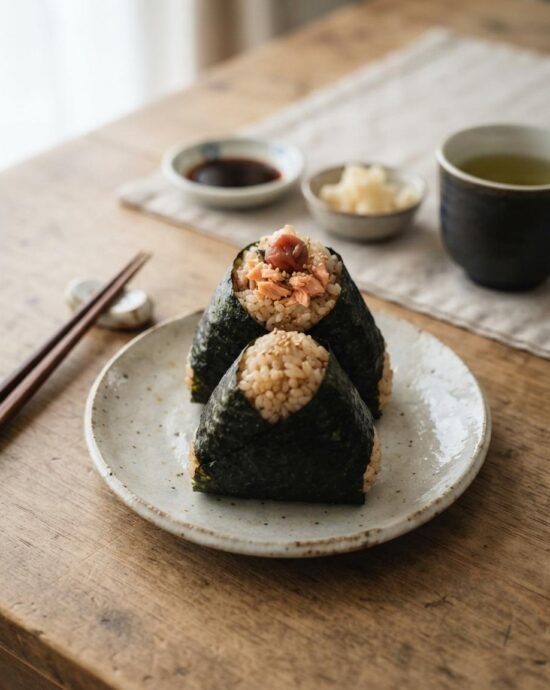
Scoop about three-quarters of a cup of warm rice into your wet, cupped palm and make a small indentation in the center with your thumb. Add a spoonful of your chosen filling, whether flaked salmon, tuna mayo, or a whole umeboshi, into the indentation, then cover with a bit more rice to fully enclose the filling.
- Step 5. Form the Triangle Shape
Gently press and shape the rice into a triangular form using both hands, applying firm but gentle pressure from three sides to create defined edges and corners. Rotate the rice ball as needed, compacting it enough to hold together firmly without pressing so hard that the texture becomes overly dense or compressed.
- Step 6. Wrap and Serve
Wrap a strip of nori around the base or one side of each finished onigiri, which adds a savory, crisp element and makes the rice ball easier to hold without your fingers touching the rice directly. Sprinkle with toasted sesame seeds if desired, and serve immediately or wrap individually for a portable lunch or snack.
- Calories:260 kcal13%
- Protein:10 g20%
- Carbohydrates:42 g15%
- Sugar:1 g1%
- Energy:1088 kJ13%
- Salt:1.4 g23%
- Fat:5 g7%
What is Onigiri?
Onigiri are Japanese rice balls, typically shaped into a triangle or cylinder and often wrapped in a strip of crisp nori, filled with a savory ingredient such as flaked salted salmon, tangy pickled plum, or creamy tuna mayonnaise nestled inside the seasoned rice. Among the most enduring and beloved foods in Japanese daily life, onigiri date back over a thousand years, with early versions consisting of simply salted rice balls carried by travelers and soldiers as a convenient, portable meal long before refrigeration or modern food packaging existed. The dish's continued popularity today owes much to its remarkable practicality, requiring no utensils to eat and holding up well at room temperature for several hours, making onigiri a staple of Japanese lunchboxes, convenience store shelves, and picnics alike. What defines a well-made onigiri is the balance between compact, cohesive shaping and a light touch, since rice packed too tightly becomes dense and unpleasant, while rice shaped too loosely falls apart before it can be eaten. The choice of filling carries its own cultural significance, with certain combinations like umeboshi and rice tracing back centuries, valued historically both for flavor and for the plum's natural preservative qualities that helped keep the rice fresh longer in the era before refrigeration. Japanese convenience stores have elevated onigiri into a retail art form, offering dozens of rotating seasonal and regional filling varieties, often cleverly packaged so the nori wrapper stays crisp and separate from the rice until the moment before eating. Loved for its simplicity, portability, and comforting flavor, onigiri remains one of Japan's most iconic and universally cherished foods.
Ingredient Notes
- Short-Grain White Rice: Freshly cooked, warm, slightly sticky short-grain rice is essential for onigiri to hold its shape; day-old, cold rice is far more difficult to compact evenly.
- Umeboshi: These intensely sour, salty pickled plums are a classic onigiri filling, prized historically both for their bold flavor and natural preservative qualities.
- Nori Sheets: Look for nori labeled specifically for onigiri or sushi, which is roasted and sturdy enough to wrap around the rice without tearing.
- Salted Salmon: Lightly salting and cooking the salmon before flaking it gives the filling a concentrated, savory flavor that pairs perfectly with the mild rice.
- Japanese Mayonnaise: This slightly tangier, richer mayonnaise is traditional for the tuna filling; regular mayonnaise can be used in a pinch with a small splash of rice vinegar added.
Ingredient Suggestions
- Furikake seasoning: A savory, often sesame and seaweed-based seasoning mixed directly into the rice adds extra flavor and visual variety.
- Okaka (bonito flakes with soy sauce): A classic, simple onigiri filling that adds a smoky, savory depth.
- Kimchi: A modern, non-traditional filling that adds tangy, spicy flavor for those who enjoy bold combinations.
- Grilled spam: A popular addition inspired by Hawaiian and Okinawan influences, adding a salty, savory element.
- Extra sesame seeds: Mixed directly into the rice rather than just sprinkled on top, sesame seeds add a nutty flavor throughout.
Helpful Tips & Pro Tips
- If your onigiri falls apart while eating, the rice likely was not compacted firmly enough while shaping; use confident, even pressure from all sides.
- Wet your hands with lightly salted water before handling the rice, which prevents excessive sticking while also seasoning the outer layer evenly.
- Use freshly cooked, still-warm rice for shaping, since cold or day-old rice is much harder to mold and compact into a cohesive shape.
- Do not overfill the center with too much filling, since this can make sealing the rice around it difficult and cause the onigiri to fall apart.
- Wrap the nori just before eating if possible, since nori left in contact with the rice for too long will absorb moisture and lose its signature crispness.
How to Serve and Store
Serve onigiri at room temperature or slightly warm, ideal for lunchboxes, picnics, or a quick snack, with the nori wrapped on just before eating for the crispest texture. Onigiri can be stored at room temperature for a few hours if needed for a packed lunch, though for longer storage, keep them wrapped individually in plastic in the refrigerator for up to 1 day; the rice will firm up considerably when chilled. Onigiri does not freeze or reheat particularly well once fully assembled with fillings, as the texture of both the rice and filling can suffer; it is best enjoyed fresh or within a few hours of shaping.
Substitutions
- Salted Salmon Or Tuna Mayo → Sautéed mushrooms, pickled vegetables, or edamame — A satisfying plant-based filling option that still provides good flavor and texture. (Vegan)
- Soy Sauce → Tamari — Keeps any soy-based filling seasoning gluten-free. (Gluten-Free)
- Salted Salmon → Canned tuna or leftover cooked chicken — A more budget-friendly protein option that still works well as an onigiri filling. (Budget-Friendly)
- Short-Grain White Rice → Medium-grain rice — A reasonable substitute that still provides the slight stickiness needed for shaping.
- Japanese Mayonnaise → Regular mayonnaise with a splash of rice vinegar — A close approximation when Japanese mayonnaise is not available.
Suggested Recipes
- Sushi & Sashimi: Shares onigiri's foundation of seasoned rice in a completely different, more elaborate format.
- Miso Soup: A comforting, warm soup that pairs naturally alongside a portable onigiri meal.
- Tonkatsu: A crispy fried pork cutlet that makes a heartier main dish alongside a simple onigiri snack.
- Takoyaki: Another beloved Japanese street food snack that pairs well alongside onigiri for a casual meal.

Jeff Smith
"Cooking is the intersection of history, science, and emotion."
For me, the kitchen has always been a laboratory of culture. With a background deeply rooted in digital strategy and precision, I approach the culinary arts with the same rigor I apply to the digital landscape—analyzing flavors, perfecting techniques, and documenting the nuance that makes Filipino cuisine truly world-class.
Findme Recipe was born from a desire to bridge the gap between traditional heritage and the modern home cook. Whether it is mastering the perfect balance of acidity in a classic Adobo or simplifying complex regional dishes for everyday kitchens, my mission is to preserve our culinary identity through accessible, data-backed, and delicious content.
I am not just building a database; I am cultivating a community where every Filipino kitchen feels empowered, every ingredient is celebrated, and every family heirloom recipe finds a place to thrive.
Join me as we translate the soul of our islands into recipes for the next generation.