
- Step 1. Make the Curry Base
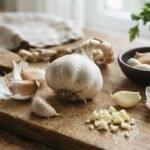
Heat a small amount of oil in a large pot over medium heat and cook the diced onion for 5 minutes, until softened and translucent. Add the carrot, potato, and minced garlic, stirring for another 2 minutes. This slow-cooked vegetable base builds a deep, sweet foundation that is central to the rich flavor of Japanese curry.
- Step 2. Simmer the Curry
Pour the stock into the pot with the vegetables and bring to a boil, then reduce to a simmer and cook for 15 minutes, until the vegetables are tender. Break the curry roux blocks into pieces and add them to the pot, stirring continuously until fully dissolved. Continue simmering for another 5 to 10 minutes, stirring occasionally, until the curry thickens into a smooth, glossy sauce.
- Step 3. Prepare the Pork Cutlets
While the curry simmers, pat the pork chops dry and pound them to an even thickness of about half an inch using a meat mallet. Season both sides with the salt and black pepper. Set up a breading station with the flour in one dish, the beaten eggs in a second, and the panko breadcrumbs in a third.
- Step 4. Bread the Cutlets
Dredge each pork chop in the flour, shaking off any excess, then dip into the beaten egg, letting excess drip off, and finally press firmly into the panko breadcrumbs to coat both sides evenly. Place the breaded cutlets on a clean plate, making sure they do not touch each other before frying.
- Step 5. Fry Until Golden
Heat the vegetable oil in a large, heavy skillet to 340 to 350 degrees Fahrenheit. Fry the breaded cutlets for 3 to 4 minutes per side, until deeply golden brown and the internal temperature reaches 145 degrees Fahrenheit. Transfer to a wire rack to drain and rest for a few minutes before slicing into strips.
- Step 6. Assemble and Serve
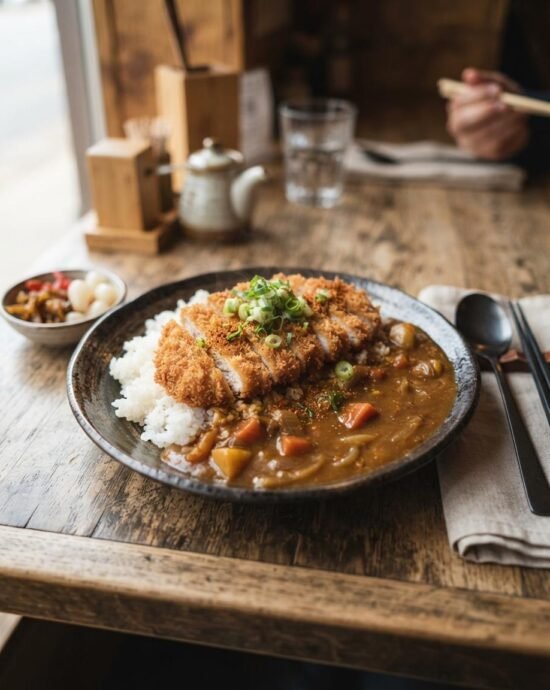
Scoop a generous portion of steamed rice onto one side of each plate and ladle the hot curry sauce over the other side, or directly over the rice if preferred. Arrange the sliced, crispy pork cutlet on top or alongside the rice and curry. Serve immediately while the cutlet is still hot and crisp and the curry is steaming.
- Calories:680 kcal34%
- Protein:36 g72%
- Carbohydrates:72 g26%
- Sugar:9 g10%
- Energy:2846 kJ34%
- Salt:2.4 g40%
- Fat:26 g37%
What is Katsu Curry?
Katsu curry is a beloved Japanese comfort food dish that pairs a crispy, panko-breaded pork cutlet with rich, deeply savory Japanese curry sauce, both served alongside a generous portion of steamed rice. The dish represents a distinctive fusion within Japanese cuisine, combining tonkatsu, itself a Japanese adaptation of a Western breaded cutlet, with curry, which was introduced to Japan by British naval officers in the late nineteenth century and subsequently transformed into something entirely its own, characterized by a thick, mild, and notably sweeter sauce compared to South Asian curry traditions. Japanese curry's distinctive flavor and texture come largely from pre-made roux blocks, a convenient innovation that simplified home cooking by combining flour, fat, curry spices, and often subtle additions like apple or honey into a solid, shelf-stable form that melts directly into simmering broth and vegetables. The pairing of this comforting curry sauce with a freshly fried, crunchy pork cutlet creates a beloved contrast of textures, the crisp exterior of the katsu offering a satisfying crunch against the smooth, thick curry sauce, while the interior of the cutlet remains tender and juicy. Katsu curry has become a defining example of yoshoku cuisine, the broader category of Western-influenced Japanese dishes that have been thoroughly adapted to local tastes over the past century and a half. Found everywhere from home kitchens to specialty curry restaurants and casual chain diners across Japan, katsu curry remains one of the country's most universally beloved and comforting meals.
Ingredient Notes
- Japanese Curry Roux Blocks: These pre-made spice and flour blocks are the foundation of authentic Japanese curry's thick, mild flavor; look for them in the international foods aisle, often labeled with varying spice levels.
- Boneless Pork Loin Chops: Choose chops of even thickness for the most consistent frying results; pounding them slightly also helps tenderize the meat.
- Panko Breadcrumbs: These large, airy Japanese breadcrumbs create tonkatsu's signature light, crunchy crust; standard breadcrumbs result in a denser texture.
- Carrot And Potato: These classic Japanese curry vegetables add natural sweetness and heartiness to the sauce as they slowly soften during simmering.
- Chicken Or Vegetable Stock: A flavorful stock as the curry's liquid base results in a richer, more complex sauce than plain water.
Ingredient Suggestions
- Grated apple: A traditional addition to Japanese curry that deepens its natural sweetness and adds subtle fruity complexity.
- A pat of butter: Stirred into the finished curry, butter adds extra richness and a glossy sheen to the sauce.
- Fukujinzuke pickles: This colorful, sweet pickled relish is a classic accompaniment served alongside Japanese curry rice.
- Extra curry roux: For those who prefer a thicker, more intense curry flavor, an extra block deepens both consistency and taste.
- A soft-boiled egg: Sliced in half and placed alongside the cutlet, a soft egg adds richness reminiscent of katsudon.
Helpful Tips & Pro Tips
- If your curry sauce turns out thin, let it simmer a bit longer uncovered, since Japanese curry roux thickens significantly as it continues to cook.
- Fry the pork cutlet just before serving so it remains as crisp as possible, since the crust softens the longer it sits, especially once curry sauce is added nearby.
- Maintain a steady oil temperature between 340 and 350 degrees Fahrenheit while frying, since oil that is too cool results in greasy, soggy breading.
- Let the fried cutlet rest on a wire rack rather than paper towels, which helps keep the bottom crust from steaming and becoming soggy.
- Taste your curry before serving and adjust with a bit more roux or a splash of stock to reach your preferred thickness and flavor intensity.
How to Serve and Store
Serve katsu curry hot, with the freshly fried cutlet sliced and arranged alongside or on top of steamed rice generously covered in curry sauce, ideally with tangy fukujinzuke pickles on the side. The curry sauce keeps very well on its own in an airtight container in the refrigerator for up to 5 days and freezes well for up to 3 months, making it a convenient make-ahead component. However, the fried cutlet is best cooked fresh and eaten immediately, since reheating breaded, fried pork tends to soften the crispy coating; if needed, reheat leftover cutlets in an oven or air fryer rather than a microwave to help restore some crispness.
Substitutions
- Pork Loin → Thick slices of eggplant or firm tofu — A satisfying plant-based version that still achieves a crispy panko crust. (Vegan)
- Panko Breadcrumbs And Curry Roux → Gluten-free panko and a gluten-free curry roux or homemade curry powder base — Allows those avoiding gluten to enjoy a similar dish, though some curry roux brands contain wheat, so check labels carefully. (Gluten-Free)
- Pork Loin Chops → Chicken breast, pounded thin — A more affordable protein option that works just as well with the same breading and frying technique. (Budget-Friendly)
- Japanese Curry Roux Blocks → Homemade curry powder, flour, and butter roux — A from-scratch alternative when pre-made roux blocks are unavailable.
- Chicken Stock → Vegetable stock — A vegetarian-friendly base that still supports the curry's rich flavor.
Suggested Recipes
- Tonkatsu: The foundational fried pork cutlet dish that katsu curry builds upon, served here with tangy tonkatsu sauce instead of curry.
- Miso Soup: A traditional, comforting starter that is almost always served alongside a bowl of Japanese curry.
- Udon & Soba: Japanese noodle dishes that offer a lighter alternative to katsu curry's rich, hearty flavor.
- Gyoza: Pan-fried dumplings that make a satisfying side dish alongside a comforting bowl of katsu curry.

Jeff Smith
"Cooking is the intersection of history, science, and emotion."
For me, the kitchen has always been a laboratory of culture. With a background deeply rooted in digital strategy and precision, I approach the culinary arts with the same rigor I apply to the digital landscape—analyzing flavors, perfecting techniques, and documenting the nuance that makes Filipino cuisine truly world-class.
Findme Recipe was born from a desire to bridge the gap between traditional heritage and the modern home cook. Whether it is mastering the perfect balance of acidity in a classic Adobo or simplifying complex regional dishes for everyday kitchens, my mission is to preserve our culinary identity through accessible, data-backed, and delicious content.
I am not just building a database; I am cultivating a community where every Filipino kitchen feels empowered, every ingredient is celebrated, and every family heirloom recipe finds a place to thrive.
Join me as we translate the soul of our islands into recipes for the next generation.