
- The Initial Parboil and Cleanse
Begin by placing the beef skin and oxtail in a large heavy-bottomed pot filled with cold water. Bring this to a rolling boil for roughly fifteen minutes to draw out impurities and excess surface oils. Once the water turns cloudy and gray, drain the meat immediately and rinse each piece thoroughly under cold running water. Use a sharp knife to scrape away any remaining hair or debris from the beef skin. This step is absolutely crucial for ensuring a clean, pleasant flavor and a clear broth later. Clean the pot itself before returning the meat to it. Cover the beef with fresh water, adding a pinch of salt and peppercorns, then simmer gently until the proteins are just starting to soften.
- Aromatic Sauté and Base Building
In a separate large wok or heavy Dutch oven, heat a generous splash of neutral cooking oil over medium heat. Add the minced garlic, diced red onions, and julienned ginger, sautéing them until the onions turn translucent and the ginger releases its pungent, spicy aroma. Toss in the bruised lemongrass stalks and the star anise, stirring constantly to prevent burning while the oils from the spices infuse the base. This aromatic foundation is what gives Balbacua its signature depth. Once the mixture is fragrant and golden, pour in the strained annatto water, which provides that iconic deep orange hue. Stir the mixture well to combine all the flavors before introducing the parboiled beef and oxtail into the fragrant pot.
- Slow Braising for Texture Perfection
Pour in the reserved beef stock from the initial boiling process until the meat is fully submerged. Bring the liquid to a gentle boil, then immediately reduce the heat to a very low simmer. This slow-cooking phase is essential for breaking down the tough collagen in the skin and connective tissues, transforming them into a buttery, gelatinous texture. Depending on the age of the beef, this process can take anywhere from three to five hours on a stovetop. If you notice the liquid evaporating too quickly, replenish it with warm water to keep the meat covered. The goal is a thick, slightly sticky broth that coats the back of a spoon, indicating the collagen has successfully melted into the sauce
- Incorporating Umami and Texture Layers
Once the beef skin is tender enough to be cut with a spoon, it is time to introduce the complex flavor components. Stir in the rinsed salted black beans and the unsweetened peanut butter. The peanut butter acts as a thickening agent, adding a subtle nuttiness and a creamy mouthfeel that balances the saltiness of the beans. Ensure the peanut butter is fully dissolved into the broth to avoid any unsightly clumps. Let the pot simmer for another twenty minutes, allowing the beef to absorb the savory, fermented notes of the tausi. At this stage, the aroma should be incredibly rich, filling your entire kitchen with a scent that is uniquely Filipino, savory, sweet, and earthy all at once.
- Final Seasoning and Elegant Presentation
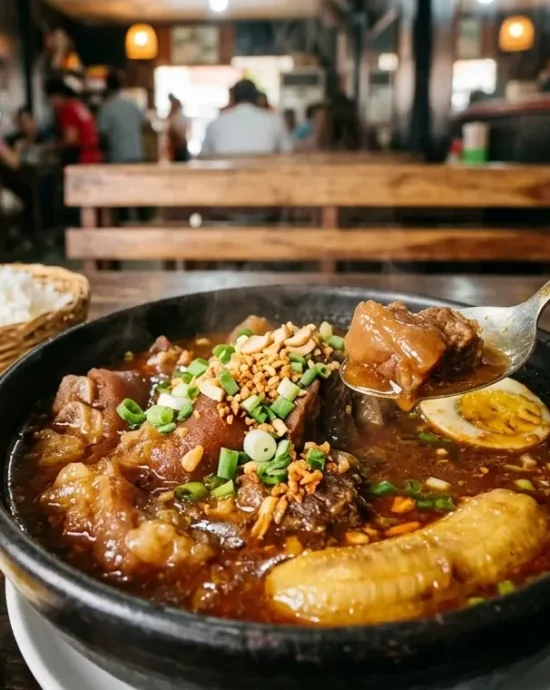
For the final touch, taste the broth and adjust the seasoning using fish sauce or a pinch of salt if necessary. The flavor should be robust and deeply savory, with a hint of spice from the ginger. If the sauce is too thin, simmer it uncovered for a few more minutes to concentrate the flavors. Once satisfied, ladle the steaming Balbacua into deep ceramic bowls, ensuring every guest receives a generous portion of both the tender meat and the gelatinous skin. Garnish the dish with a vibrant sprinkle of chopped spring onions and a handful of golden toasted garlic bits. Serve it immediately alongside a bowl of warm white rice or some crusty bread to soak up every drop.
- Calories:485 kcal24%
- Protein:38 g76%
- Carbohydrates:12 g4%
- Sugar:3 g6%
- Salt:1,150 mg50%
- Fat:32 g41%
Beef Balbacua is a culinary treasure hailing from the Visayas and Mindanao regions, specifically synonymous with the vibrant street food culture of Cebu and Davao. Unlike the more famous Kare-Kare, which relies heavily on a distinct peanut profile, Balbacua is defined by its gelatinous consistency and the intricate marriage of star anise, ginger, and salted black beans. Historically, this dish was a clever way to utilize “low-value” cuts like beef skin and oxtail, which require hours of patient simmering to become palatable. The name itself is believed to be derived from the Spanish word “barbacoa,” reflecting the long history of colonial influence on Filipino cooking techniques, though the flavor profile remains quintessentially Southeast Asian.
What makes Balbacua a must-try is its unique “lip-sticking” quality. As the skin breaks down, it releases massive amounts of collagen, creating a broth so rich and viscous that it feels like silk on the palate. The annatto provides a warm, earthy visual appeal, while the ginger and lemongrass cut through the inherent heaviness of the fat, providing a necessary brightness. It is often enjoyed as a “sabaw” (soup) during the early morning hours by workers seeking energy or as a restorative late-night meal. To eat Balbacua is to experience the Filipino philosophy of patience in the kitchen—where time is the most important ingredient of all. It is a soul-warming stew that offers a deep, savory embrace, representing the rustic, resourceful, and incredibly flavorful heart of Southern Philippine island gastronomy.