
- The Ilocano Master Braise

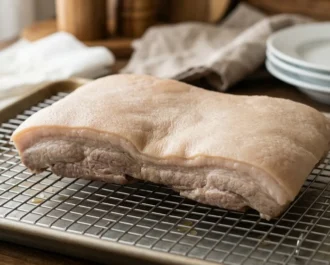
Begin by placing the whole pork belly slab into a large, heavy pot. Submerge the meat in two liters of water, ensuring the slab is fully covered. Add the sea salt, whole black peppercorns, crushed garlic, and dried bay leaves. Bring the water to a vigorous boil over high heat, then immediately lower the flame to a steady, gentle simmer. Allow the pork to braise for approximately sixty to ninety minutes. This step is critical for tenderizing the meat and infusing the fat layers with the savory aromatics. The goal is to cook the pork until the skin is soft and easily pierced with a fork, but the slab remains intact. Carefully lift the tenderized meat from the stockpot and drain well.
- Essential Surface Drying
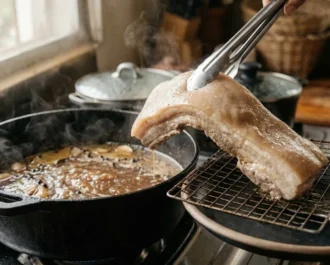
Place the boiled pork belly on a wire cooling rack and pat the skin extremely dry with paper towels. In the traditional Ilocano method, the meat is often left to air-dry for several hours or even under the sun. For a modern kitchen, you can place it in front of a fan or leave it uncovered in the refrigerator for at least three hours. This drying phase is non-negotiable for achieving the legendary Bagnet crunch. Removing surface moisture prevents the oil from splattering and allows the skin to blister effectively during the frying stages. A dry skin surface ensures that the heat of the oil is used for crisping rather than evaporating water, leading to a much more consistent and airy crackling.
- The First "Deep-Flash" Fry
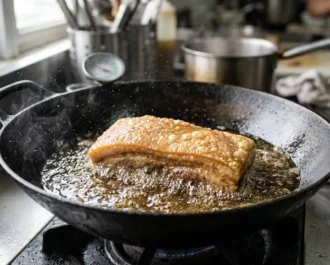
In a deep wok or heavy pot, heat the lard or neutral cooking oil to a medium temperature of 325°F. Carefully lower the dried pork slab into the hot oil. Fry the meat for about fifteen to twenty minutes. During this first fry, the fat renders further and the skin begins to turn a light golden color and starts to harden. You are not looking for a full crunch yet; rather, you are "pre-cooking" the exterior to prepare it for the final high-heat transformation. Once the meat is golden and the skin feels firm to the touch, remove the slab from the oil and let it rest on a rack to cool down completely.
- Resting and Skin Pricking
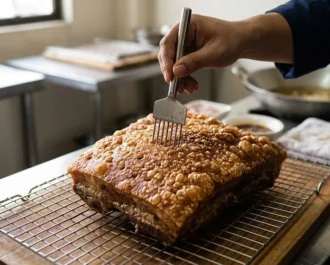
While the pork is cooling after its first fry, take a sharp fork or a dedicated meat pricking tool and gently poke numerous small holes across the surface of the skin. This mechanical step allows any trapped steam to escape and creates tiny channels for the hot oil to enter during the second fry. Be careful not to go too deep into the meat. The resting period is equally important, as it allows the internal temperatures to stabilize, which prevents the meat from drying out when it hits the high-heat oil again. This "double-fry" technique is the secret behind Bagnet's unique texture—a skin that is significantly thicker and more blistered than standard fried pork belly.
- The Final Golden Transformation
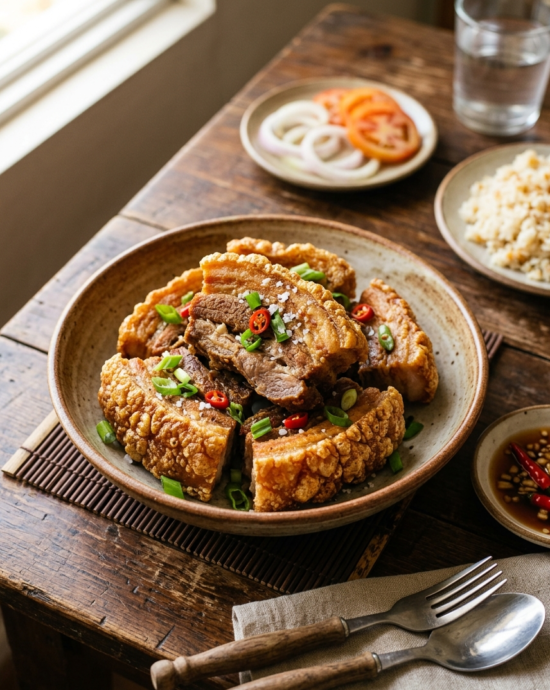
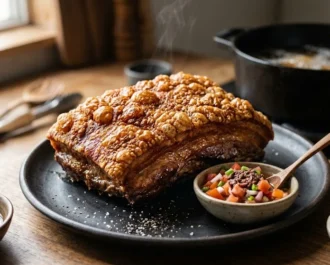
Increase the heat of the oil to a high temperature of 375°F. Submerge the rested pork slab back into the hot oil for the final fry. This stage should only take about five to eight minutes. The high heat will cause the skin to expand and blister rapidly, creating the signature "puffed" and shatteringly crisp exterior that Bagnet is famous for. Watch closely as the skin turns a deep, beautiful mahogany gold. Once the entire slab is perfectly crisped, remove it from the oil and let it rest for ten minutes before chopping into bite-sized pieces. Serve hot with a side of "KBL" (Kamatis, Bagoong, at Lasona) or a spicy vinegar dip to balance the rich, decadent fats.
- Calories:780 kcal39%
- Protein:22 g44%
- Carbohydrates:g
- Sugar:g
- Salt:1,050 mg46%
- Fat:76 g97%
Table of Contents
What Is Bagnet?
Bagnet is a traditional Ilocano Filipino dish made from pork belly that is boiled, dried, and twice deep-fried to produce an extraordinarily crispy, deeply golden crackling exterior encasing meltingly tender, flavorful meat inside. It is widely regarded as the Ilocano counterpart to the more nationally known lechon kawali, but distinguishes itself through the double-frying technique and the mandatory extended air-drying process that produces a uniquely puffed, blistered skin with an unparalleled shatteringly crisp texture.
Bagnet originates from the Ilocos region in Northern Luzon, Philippines, an area celebrated for its bold, no-nonsense culinary traditions. The dish reflects the Ilocano cultural value of resourcefulness and patience — the lengthy preparation process, including the overnight drying step, requires planning and discipline but yields a result that no shortcut can replicate. Bagnet is a centerpiece dish at Ilocano festivals, family reunions, and celebratory gatherings, where it is often displayed whole before being dramatically chopped tableside.
The flavor profile of authentic Bagnet is defined by the contrast between the salty, shatteringly crisp crackling exterior and the juicy, rich, slightly gamey pork belly meat beneath. The initial boiling infuses aromatic depth from the garlic, onion, and peppercorn, while the double fry caramelizes the exterior into a complex, roasted-pork sweetness. Most importantly, Bagnet is never eaten alone — it is always accompanied by Ilocano sukang Iloko vinegar dipping sauce, whose sharp acidity cuts through the richness and refreshes the palate between bites.
For food enthusiasts passionate about crackling textures and deep-fried mastery, Bagnet stands among the finest examples of Filipino culinary technique and regional pride, representing centuries of Ilocano cooking wisdom distilled into one spectacular dish.
Ingredient Notes
- Pork Belly: Pork belly is the only cut for authentic Bagnet — the optimal ratio of fat, meat, and skin is essential for producing the characteristic layered texture and flavor. Choose the best pork belly for Bagnet by selecting a slab approximately 2–3 inches thick with an even, white fat layer and taut skin free of hair or blemishes.
- Salt: Salt performs double duty in Bagnet — it seasons the boiling liquid and, critically, draws moisture out of the skin during the drying phase to enable crackling formation. Use coarse sea salt or rock salt for the exterior rub, as its larger crystals are more effective at drawing out moisture than fine table salt.
- Garlic and Onion: Garlic and onion in the boiling liquid act as aromatic infusers, adding subtle savory depth to the meat that you taste in every bite beneath the crackling exterior. Use a full head of garlic halved crosswise to expose maximum surface area for flavor release during the long simmer.
- Cooking Oil: A neutral, high smoke-point oil is essential for the extreme temperatures required in the second fry of Bagnet. The best oil for frying Bagnet is refined coconut oil, lard, or refined palm oil — all traditional Ilocano choices — though refined canola or sunflower oil works well for a more accessible modern option.
Ingredient Suggestions
- Lemongrass Stalks — Adding two bruised lemongrass stalks to the boiling liquid imparts a subtle citrusy, herbal note to the meat that pairs beautifully with the vinegar dipping sauce.
- Star Anise — One or two star anise pods in the boil introduce a faint anise sweetness that enriches the pork’s flavor without overwhelming Bagnet’s clean, pure character.
- Fish Sauce Glaze — Brushing the skin lightly with fish sauce before drying intensifies the umami and helps develop deeper color during frying.
- Chili Flakes — Adding dried chili flakes to the vinegar dipping sauce creates a spicy sukang Iloko variation popular among heat-lovers.
Helpful Tips & Pro Tips
- The single most important step for crackling success is the drying phase. Overnight refrigeration uncovered on a wire rack achieves far superior results compared to a one-hour room-temperature dry; plan ahead and refrigerate the boiled pork belly the night before you intend to fry.
- Why is my Bagnet skin not puffing up? The oil was not hot enough for the second fry. The second fry temperature must reach 190–200°C (375–390°F) minimum. Use a kitchen thermometer for accuracy rather than estimating by sight alone.
- Always use a deep, heavy pot for frying to minimize the danger of oil overflow when the pork is added. The oil will bubble aggressively upon contact with the pork — never use a shallow pan.
- Do not cover the pot while frying — covering traps steam, which is the enemy of crispiness. Keep the pot completely open to allow moisture to escape freely during both frying stages.
- For reheating leftover Bagnet without sacrificing crackling, use an air fryer at 200°C for five to seven minutes or re-fry briefly in very hot oil — never microwave, as this makes the skin rubbery and soft.
How to Serve and Store
Bagnet is best served immediately after the second fry while the crackling is at peak crispiness, accompanied by a small bowl of Ilocano sukang Iloko vinegar dipping sauce and steamed white rice. It pairs magnificently with a warm bowl of pinakbet Ilocano for a complete regional spread. Leftover Bagnet can be stored in an airtight container in the refrigerator for up to 3 days, though the crackling will soften during storage. For freezing, wrap individual portions tightly in plastic wrap and store in a freezer bag for up to 1 month. Reheat in an air fryer or conventional oven at 200°C to restore crackling crispiness; avoid microwaving under any circumstances.
Substitutions
- Pork Belly → Pork Shoulder — Provides a slightly leaner result with less fat rendering but still produces good crackling; ideal for those seeking a less rich version.
- Sugarcane Vinegar Dip → Apple Cider Vinegar — A gluten-free, widely available alternative that approximates the sharp, clean acidity of Ilocano sukang Iloko.
- Lard for Frying → Refined Coconut Oil — A more widely available alternative with a similarly high smoke point and neutral flavor ideal for deep frying at extreme temperatures.
- Salt Rub → Soy Sauce and Salt Rub — Mixing soy sauce with salt for the exterior rub adds umami depth and encourages deeper browning during frying.
Suggested Recipes
- Lechon Kawali — The Tagalog counterpart to Bagnet, this crispy deep-fried pork belly skips the double-fry technique but delivers a similarly satisfying crunch that Bagnet lovers will appreciate.
- Pork Igado — A natural Ilocano pairing dish, Igado’s tangy braised liver and pork complement Bagnet’s rich, crispy profile beautifully on a festive Ilocano table.
- Pinakbet Ilocano — The classic Ilocano vegetable stew, traditionally cooked with bagnet pieces for flavor, is the most traditional and beloved accompaniment to freshly fried Bagnet.
- Crispy Pata — For crackling enthusiasts, the deep-fried pork knuckle dish shares the same love of shattering pork skin and is a worthy exploration after mastering Bagnet.