
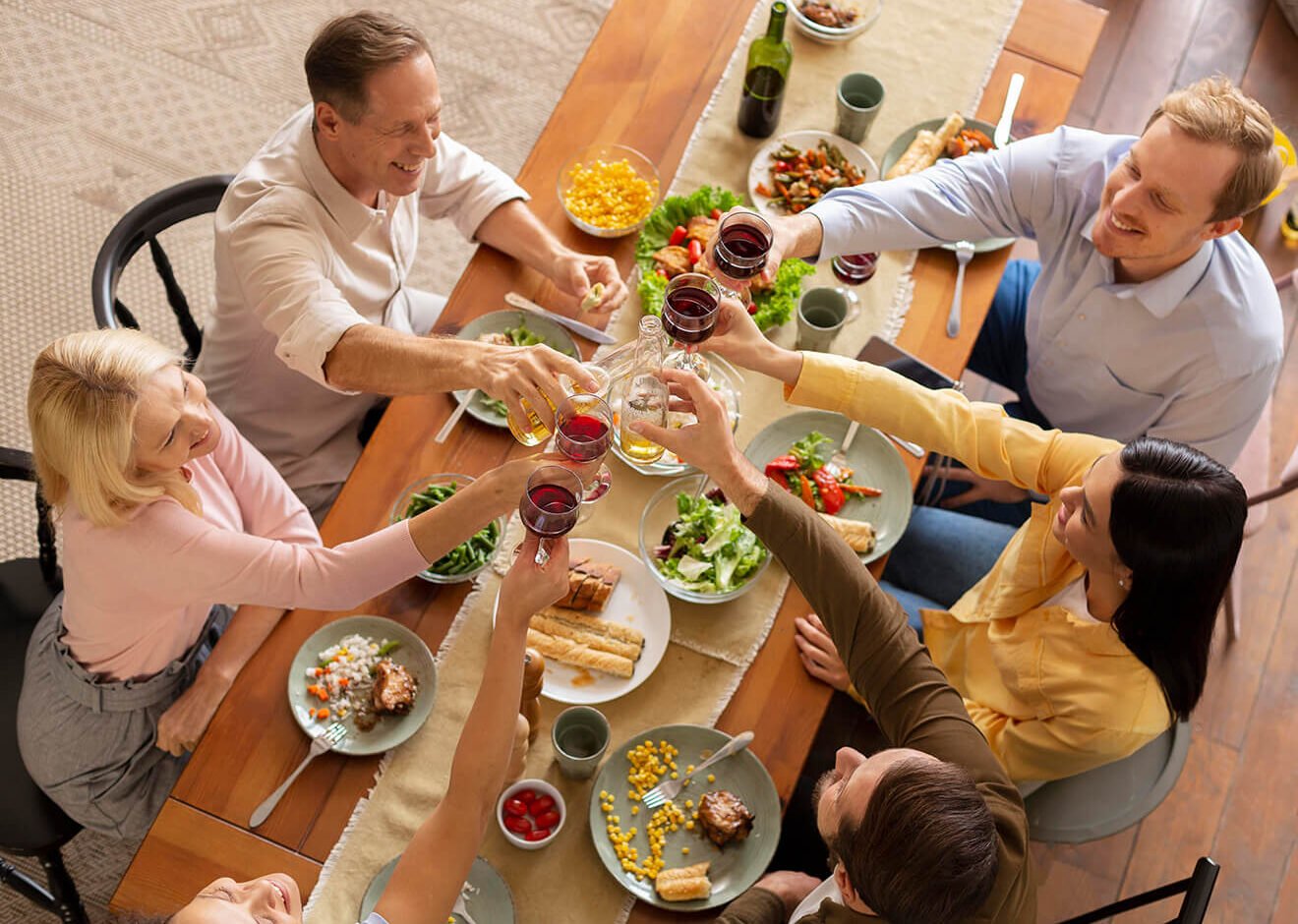
Ask most adults about their favorite childhood memory involving food, and it’s rarely about the food itself. It’s the burnt garlic bread nobody would admit to making, the same argument every Thanksgiving about whether the stuffing needs more sage, the grandmother who refused to sit down until everyone else had a full plate. The table is where families actually happen. The meal is just the excuse to be there.
If you’re hoping to build that same kind of memory bank for your own family, the good news is it doesn’t require elaborate cooking or a picture-perfect table setting. It requires showing up, on purpose, more often than not.
Why the Table Matters More Than the Menu
Researchers who study family rituals keep landing on the same finding: it’s the regularity of shared meals, not their complexity, that builds a child’s sense of belonging. A Tuesday night with reheated leftovers and everyone actually present does more for family connection than a lavish dinner eaten in front of separate screens.
That’s a relief, honestly. You don’t need a themed menu or a spotless dining room. You need forks, a few chairs pulled up close together, and phones somewhere else.
Build a Ritual, Not Just a Routine
A routine is something you do because you have to. A ritual is something you do because it means something. The difference between the two is usually one small, repeated detail. Maybe it’s the same question asked every night – ‘best part of your day, worst part of your day.’ Maybe it’s a specific dish that only shows up on birthdays, so it becomes shorthand for celebration. Maybe it’s simply who sits where, a small piece of order that somehow makes the whole meal feel like home.
Pick one small ritual and stick with it longer than feels necessary. The magic isn’t in the ritual itself – it’s in the repetition. Kids especially remember the thing that happened every single time, not the one time it was extra special.
The stuffing argument in my own family has been going on for eleven years. Nobody’s mind has changed once. It’s somehow become the best part of the meal.
Let the Table Be a Little Imperfect
Some of the most repeated family stories come from things that went wrong – the pie that never set, the turkey that came out an hour late, the year the power went out mid-dinner and everyone ate by candlelight anyway. Perfection isn’t memorable. Character is.
This is genuinely good news if you’re not a confident cook. A slightly overdone roast, served with everyone laughing about it, becomes the story told for years. A flawless meal eaten in silence rarely gets mentioned again.
Involve Everyone in the Making, Not Just the Eating
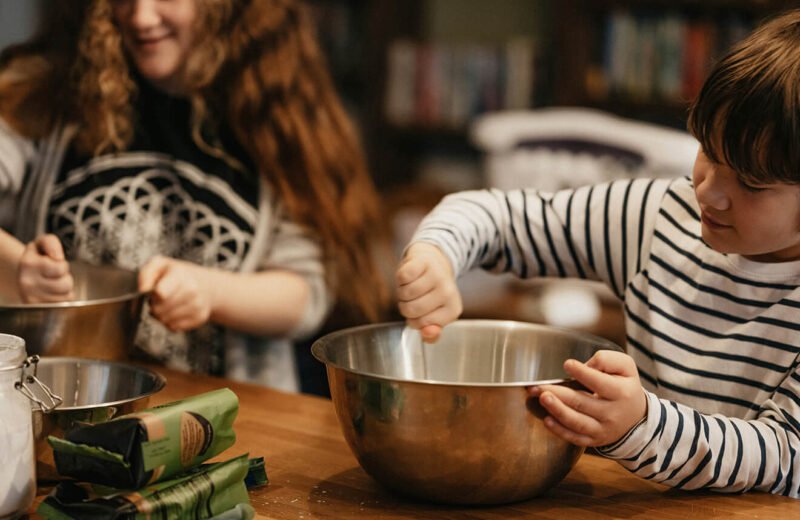
Memories form faster around shared effort than shared consumption. Handing a child a task – even something as small as setting the table or stirring a pot under supervision – gives them ownership over the meal, and ownership sticks in memory far longer than just being served.
This works for adults too. A meal where two people cooked together, bumping elbows in a small kitchen, tends to be remembered more fondly than one where only one person did all the work while everyone else waited.
None of this needs to be complicated to work. The families who report the strongest sense of connection around meals aren’t the ones with the most elaborate traditions – they’re the ones who simply kept showing up to the table, week after week, long enough for it to become part of how the family defines itself.
Protect the Table From Distraction
This one’s blunt, because it needs to be: phones at the table quietly erase the conversations that would have otherwise become memories. It doesn’t need to be a strict rule enforced with lectures – a shared basket by the door where phones go during dinner works fine, and it removes the temptation without a fight.
The goal isn’t a screen-free household. It’s one hour, most days, where the people at the table are actually the most interesting thing in the room.
Food Itself Can Carry the Memory
There’s a reason certain smells send people straight back to their childhood kitchen. A specific spice blend, a particular way of browning butter, the smell of a pot roast on a Sunday afternoon – food memory is tied directly to scent and taste in a way few other senses manage. If there’s a dish that’s been passed down in your family, cooking it regularly does more than feed everyone. It keeps a specific memory alive and, eventually, hands it down to the next person who learns to make it.
This is also why writing down a family recipe matters more than it seems to in the moment. A recipe card in a grandmother’s handwriting, stained and slightly illegible in places, ends up being one of the more treasured objects a family passes along – far more meaningful than the dish would have been if it were just eaten and forgotten.
Keep the Table Alive Through Seasons of Change
Family tables evolve – kids grow up, move out, come back with partners of their own. The ritual that worked when your kids were six won’t look the same when they’re twenty-six, and that’s fine. What matters is that the table stays a fixed point, even as the people around it and the food on it change shape over the years.
Pro Tips for Making Meals Memorable
- Ask a real question, not a status update. ‘What made you laugh today?’ opens up more than ‘how was school.’
- Keep one dish constant across years. A recurring recipe becomes a marker of time passing, in a good way.
- Let kids help however their age allows – stirring, plating, setting the table. Small jobs build big memories.
Create a phone basket by the table. Removing the option beats relying on willpower.
Frequently Asked Questions

Jeff Smith
"Cooking is the intersection of history, science, and emotion."
For me, the kitchen has always been a laboratory of culture. With a background deeply rooted in digital strategy and precision, I approach the culinary arts with the same rigor I apply to the digital landscape—analyzing flavors, perfecting techniques, and documenting the nuance that makes Filipino cuisine truly world-class.
Findme Recipe was born from a desire to bridge the gap between traditional heritage and the modern home cook. Whether it is mastering the perfect balance of acidity in a classic Adobo or simplifying complex regional dishes for everyday kitchens, my mission is to preserve our culinary identity through accessible, data-backed, and delicious content.
I am not just building a database; I am cultivating a community where every Filipino kitchen feels empowered, every ingredient is celebrated, and every family heirloom recipe finds a place to thrive.
Join me as we translate the soul of our islands into recipes for the next generation.





















































4 Comments
I loved reading this! The tips were incredibly practical and easy to follow. My kitchen routine just got a major upgrade! I’ve already started incorporating these suggestions into my daily cooking, and it’s made such a difference. Cooking used to feel like a chore, but now it’s something I genuinely enjoy. Thanks for making it so accessible and fun!
Great insights! I especially appreciated the detailed breakdown of each step. It made complex recipes feel so much more approachable. Sometimes, the thought of cooking a complicated meal can be intimidating, but this blog explained everything so clearly. I feel much more confident in trying out new techniques and dishes. Truly helpful content!
Very informative and well-written! The ingredient spotlights were my favorite part — I learned so much about things I already had in my pantry. It’s amazing how little changes in how you use ingredients can make such a big difference in flavor. This blog made me excited to use my kitchen staples creatively.
This post was super inspiring. The ideas and suggestions gave me the motivation to try new dishes I usually avoid. Thank you! I’ve been in a bit of a cooking rut, but this blog gave me the push I needed to experiment with new flavors. Now, I look forward to cooking and exploring different cuisines every week.