
- Step 1: Prepare and Slice the Pork

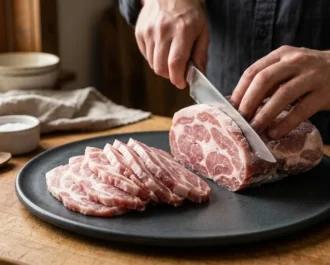
Select a well-chilled, ideally partially frozen pork shoulder or belly slab — meat that is cold and slightly firm is significantly easier to slice thinly and uniformly than room-temperature meat, which compresses under the knife rather than slicing cleanly. Using a sharp, long slicing knife, cut the pork against the grain into slices of approximately 5 millimeters thick — thin enough to cook through quickly without drying out, but substantial enough to develop a caramelized, lacquered exterior rather than curling into tough, dry wisps. Uniform slicing produces more consistent curing and more even caramelization during cooking. Place the sliced pork in a large, clean mixing bowl and set aside while you prepare the curing mixture in the next step.
- Step 2: Mix the Curing Blend
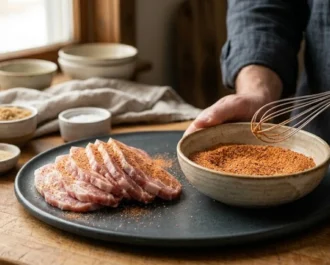
In a small bowl, combine the white sugar, brown sugar, salt, curing salt if using, ground black pepper, garlic powder, and annatto powder. Whisk together thoroughly until all the dry ingredients are evenly blended — no visible clumps of salt or sugar should remain in the mixture. The sugar is the single most important ingredient in tocino's curing blend and the source of its characteristic sweet, caramelized flavor. The combination of white and brown sugar creates both immediate sweetness and a deeper molasses complexity during the caramelization that occurs during cooking. The annatto powder provides the vivid orange-red color that is tocino's most visually distinctive characteristic — without it, the finished tocino will be pale and unappetizing rather than the deep, burnished red that signals proper curing and cooking.
- Step 3: Cure the Pork
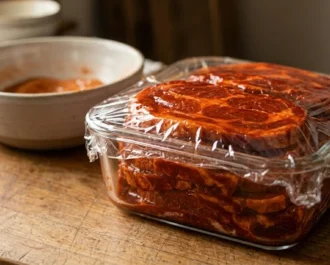
Sprinkle the curing blend evenly over the pork slices in the bowl, using your clean hands to massage the mixture into every surface of every slice thoroughly. Ensure every slice is completely coated on both sides with no patches of dry meat visible — uniform coating produces uniform curing, uniform color, and ultimately uniform caramelization during cooking. Layer the coated pork slices in a clean glass or ceramic container, pressing them firmly together. Cover tightly with plastic wrap or a fitted lid. Refrigerate for a minimum of 24 hours — though 48 hours produces the most deeply flavored, most vibrant red tocino with the clearest sweet-savory profile. The curing process draws moisture from the pork, dissolves the sugar and salt into a glaze, and the annatto penetrates and colors the meat throughout.
- Step 4: Rinse and Inspect the Cured Pork
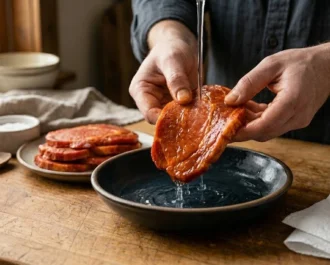
After the curing period, remove the pork tocino from the refrigerator. The slices should be noticeably firmer than fresh pork, deeply stained a vivid orange-red throughout, and coated in a thick, glossy glaze from the dissolved sugar cure. Inspect each slice — properly cured tocino should feel dry-tacky rather than wet-slimy on its surface. If any slices appear grayish rather than red or smell off, discard them. You may rinse the cured slices briefly under cold water to remove any excess surface sugar that might burn prematurely during cooking — this step is optional but recommended if you prefer a less intensely sweet result. Pat rinsed slices gently dry with paper towels before proceeding to cooking.
- Step 5: Cook the Tocino
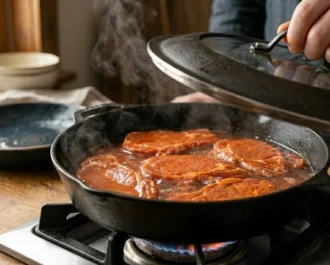
Place the cured pork tocino slices in a single layer in a large, non-stick or well-seasoned cast-iron pan. Add the half cup of water to the pan — the water serves a crucial two-stage cooking function: it initially steams and cooks the pork through gently without burning the sugar-based cure, ensuring the meat is fully cooked before the caramelization phase begins. Bring to a simmer over medium heat and cook, partially covered, for 8 to 10 minutes until the water has completely evaporated and the pan is dry. Once the water evaporates, the rendered pork fat and residual cooking liquid begin to sizzle and the sugar starts caramelizing directly against the pan surface — you will hear the cooking sound change dramatically from gentle simmering to an active, energetic sizzle.
- Step 6: Caramelize and Serve
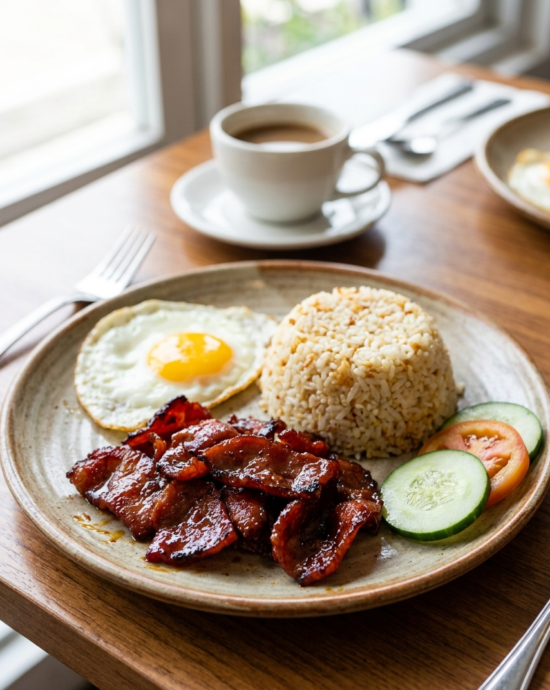
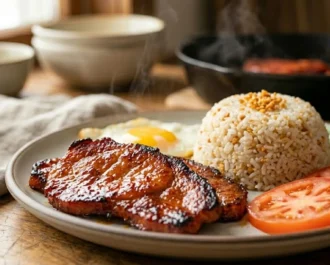
Once the water has fully evaporated, add the cooking oil to the pan and continue cooking the tocino over medium heat, turning the slices every 1 to 2 minutes. The sugar in the cure caramelizes against the hot pan surface, coating each slice in a deeply burnished, sticky, lacquered glaze of extraordinary sweetness and complexity. This caramelization takes 4 to 6 minutes — watch attentively, as the high sugar content makes tocino prone to burning in a matter of seconds once the caramel reaches its peak. The finished tocino should be deeply, evenly golden-red, slightly sticky to the touch, and fragrant with the irresistible aroma of caramelized pork. Remove from heat and serve immediately as part of tosilog — tocino, sinangag, and itlog — with sliced tomatoes and spiced vinegar.
- Calories:370 kcal19%
- Energy:1,548 kJ19%
- Protein:24 g48%
- Carbohydrates:22 g8%
- Sugar:18 g20%
- Fat:20 g26%
- Salt:1.0 g17%
Table of Contents
What Is Pork Tocino?
Pork tocino is a Filipino sweet-cured pork dish made by marinating thin slices of pork shoulder or belly in a mixture of sugar, salt, and annatto for 24 to 48 hours before pan-frying until caramelized, sticky, and lacquered in a brilliant orange-red glaze — one of the most beloved, most instantly recognizable, and most deeply nostalgic dishes in the Filipino breakfast tradition. The word tocino derives from the Spanish word for cured or preserved meat, reflecting the Spanish colonial heritage that introduced curing techniques to Filipino cooking. Over centuries, Filipino cooks developed their own distinctly sweet interpretation of cured pork that bears little resemblance to its Spanish origins — the Filipino version is dramatically sweeter, more vibrantly colored, and more deeply caramelized than any European cured pork tradition.
Pork tocino is most famous as the star of tosilog — one of the most beloved Filipino portmanteau meal concepts, combining tocino (cured pork) with sinangag (garlic fried rice) and itlog (fried egg) into the quintessential Filipino breakfast plate. This holy trinity of sweet, fatty tocino, garlicky fried rice, and a runny-yolked fried egg is eaten for breakfast in Filipino households, roadside tapsilugan restaurants, and fast-food chains across the country at any hour of the day or night — proof that Filipinos regard breakfast food as too good to be confined to a single meal.
The defining characteristic of pork tocino is its extreme sweetness — a boldness of sugar that surprises those encountering it for the first time but is entirely natural and deeply satisfying within the Filipino breakfast context. The spiced vinegar served alongside cuts through the sweetness with a sharp, refreshing contrast that makes the pairing irresistible.
Ingredient Notes
- Pork Shoulder (Kasim): Pork shoulder is the preferred cut for tocino because its moderate fat content produces caramelized, slightly crispy-edged slices with juicy interiors — not so lean that they dry out during caramelization, and not so fatty that they become greasy. Thinly sliced pork belly also works beautifully with more fat and a richer finished flavor.
- White and Brown Sugar: The combination of both sugars in the cure is what gives tocino its complex sweetness — white sugar provides clean, bright sweetness that caramelizes quickly, while brown sugar contributes molasses depth that darkens the caramelization more slowly. Never reduce the sugar quantity; the sweetness is tocino’s defining characteristic, not a component to be minimized.
- Annatto (Achuete): The non-negotiable color agent that gives tocino its signature orange-red hue. Without annatto, tocino cures to a pale, unappetizing beige that bears no visual resemblance to the dish. Annatto also contributes a faint earthy, peppery flavor note that rounds the sweetness. Use powder for the most even, thorough coloring through the meat.
- Prague Powder No. 1 (Curing Salt): Optional but traditional — sodium nitrite in curing salt preserves the pork’s color, extends shelf life, and contributes the characteristic “cured” flavor note that distinguishes commercially made tocino. For home preparation without it, reduce curing time to 24 hours and store in the refrigerator for no more than 3 days.
- Garlic Powder: Added to the cure for a background savory depth that prevents the tocino from tasting purely sweet. Use garlic powder rather than fresh garlic in the cure — fresh garlic’s moisture content can cause premature fermentation during the curing period.
Ingredient Suggestions
- Pineapple juice (2 tbsp in the cure) — A splash of pineapple juice added to the curing mixture introduces a tropical fruitiness and mild enzyme tenderizing effect that produces particularly juicy, flavored tocino.
- Sprite or 7-Up (2 tbsp) — A beloved shortcut used by many Filipino home cooks that adds extra sweetness and a subtle carbonated tenderizing effect to the cure.
- Red food coloring — Used alongside or instead of annatto in commercially made tocino for an even more vivid, intensely red color; use sparingly.
- Lemon zest or calamansi zest — A small amount added to the curing blend introduces a citrusy brightness that cuts through the sweetness and adds a fragrant dimension to the finished tocino.
- Five-spice powder — A tiny pinch in the cure introduces a warm, anise-forward Chinese-influenced note that pairs beautifully with the sweet pork and garlic flavors.
Helpful Tips & Pro Tips
- Always start cooking with water, not oil. The water-first cooking technique is non-negotiable for properly cooked tocino — the water cooks the pork through gently before the caramelization phase begins. Cooking tocino directly in oil without water causes the sugar to burn violently before the interior is cooked, producing blackened, bitter tocino with raw centers.
- Watch the caramelization stage obsessively. Tocino can go from perfectly caramelized to irreversibly burnt in under 30 seconds. Once the water evaporates and the caramelization begins, stay at the stove, watch the pan constantly, and turn the slices every 60 to 90 seconds. The cooking sound changes from simmering to active sizzling — this is your cue to watch closely.
- Why is my tocino not red? Pale tocino almost always results from insufficient annatto in the cure or from annatto that is old and has lost its color potency. Use fresh, vibrantly red annatto powder and ensure each slice is thoroughly coated with the cure. More annatto powder does not affect flavor significantly but improves color dramatically.
- Cure for the full 48 hours when possible. A 24-hour cure produces good tocino, but 48 hours produces noticeably more deeply flavored, more vibrantly colored tocino with a more complex sweet-savory profile. The additional curing time allows the sugar to penetrate more deeply into the meat rather than coating just the surface.
- Slice against the grain for more tender tocino. Identifying and slicing across the muscle fibers of the pork shoulder produces more tender, less chewy finished tocino. Slicing with the grain produces longer, more intact fibers that can become tough and stringy when caramelized.
How to Serve and Store
Serve pork tocino immediately after cooking as the centerpiece of tosilog — the beloved Filipino breakfast plate of tocino, garlic fried rice (sinangag), and a fried egg (itlog). Accompany with sliced fresh tomatoes, cucumber, and spiced vinegar (sukang may sili) for dipping. The sharp, spiced vinegar is not optional — it provides the essential acidic counterpoint to the tocino’s extraordinary sweetness that makes the combination irresistible.
Store uncured tocino in the refrigerator for up to 3 days before cooking. Cured, uncooked tocino keeps in the refrigerator for 5 to 7 days when made with curing salt, or 3 days without it. Store in an airtight container with slices separated by parchment to prevent sticking. Freeze cured, uncooked tocino for up to 2 months; thaw overnight in the refrigerator and cook directly without re-freezing.
Substitutions
- Pork shoulder → Pork belly — A fattier, richer substitute that produces more caramelized edges and a more indulgent result; equally traditional.
- Annatto powder → ½ tsp turmeric + 1 tsp sweet paprika — An imperfect color substitute that approximates the orange-red hue without annatto’s specific flavor contribution.
- White + brown sugar → Muscovado sugar — A single-sugar substitute with deep molasses complexity; use 5 tbsp total for comparable sweetness.
- Pork → Chicken breast or thighs — A leaner chicken tocino variation popular as a lighter alternative; slice thinly and use the same cure with 30-minute cooking time.
- Curing salt → Additional table salt (½ tsp) — A curing salt-free alternative that reduces shelf life; store for a maximum of 3 days and consume quickly.
- Garlic powder → 1 tsp granulated garlic — An equivalent budget-friendly pantry substitute with comparable flavor contribution to the cure.
Suggested Recipes
- Pork Longganisa — The other great Filipino cured pork breakfast staple; shares tocino’s sweet-savory cured pork character in a sausage format, essential for completing the full Filipino breakfast spread.
- Garlic Fried Rice (Sinangag) — The essential tocino accompaniment; making sinangag from day-old rice with generous garlic is a craft in itself and inseparable from the tosilog experience.
- Tapa (Beef Tapsilog) — The beef version of cured breakfast meat using a similar sweet-savory cure; a natural comparison and complement to pork tocino.
- Chicken Inasal — Shares tocino’s annatto coloring and sweet-savory marinade philosophy in a grilled chicken format that showcases annatto’s versatility in Filipino cooking.