
- Step 1: Prepare the Marinade
In a large bowl, combine the calamansi juice, palm vinegar, finely minced lemongrass, minced garlic, brown sugar, ground black pepper, salt, and annatto powder. Whisk everything together vigorously until the sugar and salt dissolve completely and the annatto stains the marinade a vivid, deep orange-red color. The marinade should smell intensely citrusy, herbal, and sharp — this is the foundation of inasal's distinctive, irreplaceable flavor profile. Make sure the lemongrass is minced very finely rather than left in large pieces; coarse lemongrass will not adhere properly to the chicken and can burn during grilling. Taste the marinade before adding the chicken — it should be pleasantly tart, gently sweet, and deeply aromatic, with the lemongrass fragrance dominant above everything else.
- Step 2: Marinate the Chicken
Add the chicken pieces to the marinade and toss aggressively to coat every surface of every piece thoroughly with the vivid orange marinade. Press the minced lemongrass and garlic firmly against the chicken skin, ensuring maximum adherence. Transfer everything to a zip-lock bag or cover the bowl tightly with plastic wrap, pressing the marinade into close contact with the chicken. Refrigerate for a minimum of 4 hours — though overnight marinating for 12 hours produces dramatically more flavorful, deeply aromatic results that are immediately noticeable in the finished grilled chicken. The calamansi and vinegar in the marinade will gently denature the protein on the chicken's surface during this time, effectively beginning the tenderizing process before any heat is applied, which contributes significantly to inasal's characteristic juicy, tender texture.
- Step 3: Prepare the Basting Sauce
While the chicken marinates, prepare the annatto basting sauce that is the other signature element of authentic chicken inasal. Melt the butter in a small saucepan over low heat. Add the minced garlic and cook for 1 minute until fragrant and just golden — do not let the garlic brown. Remove from heat and stir in the annatto oil, calamansi juice, and a pinch of salt. The annatto oil bleeds its vivid orange-red color into the butter immediately, creating a strikingly beautiful, deeply aromatic basting sauce that will be applied generously to the chicken throughout grilling. The butter carries the annatto color and garlic flavor directly into the chicken skin, creating the characteristic orange, lacquered exterior that makes inasal one of the most visually distinctive grilled chicken dishes in all of Southeast Asian cuisine.
- Step 4: Grill the Chicken — First Side
Prepare your grill for medium to medium-high direct heat — charcoal is strongly preferred for authentic inasal as it imparts the characteristic smoky complexity that gas grilling cannot fully replicate. Remove the chicken from the marinade, shaking off any excess, and place the pieces skin-side down on the hot, lightly oiled grates. Grill undisturbed for 8 to 10 minutes until the skin develops a beautifully charred, deeply colored exterior with clear grill marks. Resist the urge to move the chicken during this initial period — leaving it undisturbed allows proper caramelization of the marinade sugars and the development of the signature smoky char that defines authentic inasal. Begin basting the exposed top surface generously with the annatto-butter sauce during this first side.
- Step 5: Flip, Baste, and Continue Grilling
Carefully flip the chicken pieces and baste the freshly exposed, grilled side immediately and generously with the annatto-butter sauce. Continue grilling the second side for another 8 to 10 minutes, basting every 3 to 4 minutes throughout the entire grilling process. The frequent basting is not optional — it is the technique that creates inasal's characteristic glossy, deeply orange, intensely flavored exterior layer. Each basting application adds another layer of annatto color, butter richness, and garlic-calamansi flavor to the chicken surface, building a lacquered finish that is both visually stunning and extraordinarily delicious. Monitor the heat carefully; if flare-ups occur from dripping butter, move the chicken to a cooler section of the grill briefly to prevent burning.
- Step 6: Rest and Serve
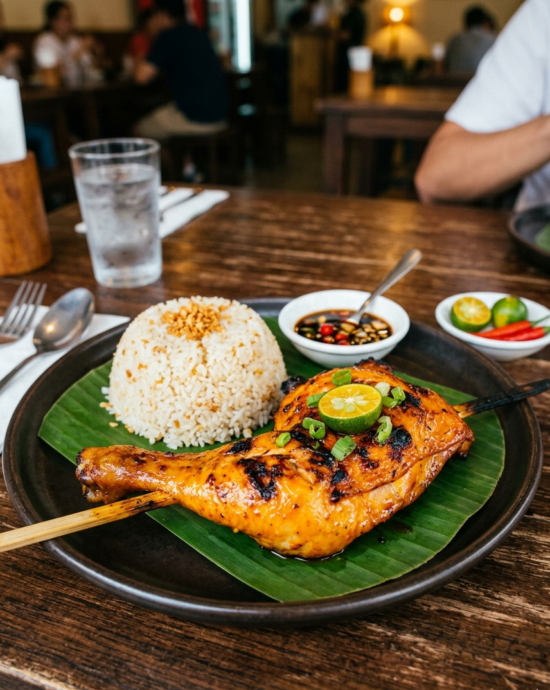
The chicken is done when the internal temperature reaches 74°C (165°F) at the thickest part — or when the juices run completely clear when pierced with a skewer. Remove the chicken from the grill and allow it to rest for 5 minutes before serving; this critical resting period allows the juices to redistribute evenly throughout the meat. Serve the inasal on skewers or plated, accompanied by a generous mound of steaming white rice and a small bowl of sinamak — spiced coconut vinegar — for dipping. Scatter chopped spring onions generously over the finished chicken and offer extra basting sauce on the side for drizzling directly over the rice, a beloved inasal tradition that creates the iconic inasal rice experience.
Table of Contents
What Is Chicken Inasal?
Chicken inasal is a Filipino grilled chicken dish marinated in calamansi juice, palm vinegar, lemongrass, and annatto — originating from the city of Bacolod in Negros Occidental and now considered one of the most iconic regional dishes in the entire Philippine archipelago. The word inasal comes from the Hiligaynon (Ilonggo) language, meaning “to grill” or “grilled over coals” — a simple description that understates the extraordinary technique and flavor complexity involved in producing authentic inasal at its best. Bacolod City, the undisputed capital of inasal, is so synonymous with the dish that it has earned the unofficial title “Chicken Inasal Capital of the Philippines.”
What makes inasal categorically different from ordinary Filipino grilled chicken is the marinade’s unique combination of ingredients. Calamansi — the small, intensely aromatic Filipino citrus — provides a sharp, floral acidity that no other citrus can fully replicate. Palm vinegar (sukang maasim) adds a gentler, secondary sourness. Lemongrass, finely minced and pressed into the meat, contributes a citrusy, herbal complexity that perfumes the entire chicken during marinating and grilling. Brown sugar caramelizes beautifully over the coals, creating the characteristic charred sweetness on the surface. And annatto — both in the marinade and in the butter-based basting sauce applied throughout grilling — gives inasal its unmistakable vivid orange-red color, one of the most visually striking presentations in Filipino cuisine.
The experience of eating chicken inasal authentically is inseparable from its accompaniments: steaming white rice drenched in the leftover annatto-butter basting sauce, spiced coconut vinegar for dipping, and the communal, hands-on ritual of eating from a shared platter. It is Filipino food at its most joyful, most generous, and most deeply satisfying.
Ingredient Notes
- Calamansi: The irreplaceable citrus of chicken inasal — its flavor is uniquely floral, aromatic, and tart in a way that lime or lemon juice can only approximate. Use freshly squeezed calamansi whenever possible; bottled calamansi juice loses the volatile aromatics that make it special. You will need approximately 20 to 25 calamansi for half a cup of juice.
- Lemongrass (Tanglad): Use only the white, lower portion of the stalk — the green upper sections are too fibrous and woody to contribute flavor effectively. Mince extremely finely so it adheres to the chicken skin during grilling rather than falling off onto the grates. Fresh lemongrass provides a complexity that dried or powdered versions cannot match.
- Annatto (Achuete): Annatto seeds or powder provide inasal’s signature orange-red color and a faintly earthy, peppery flavor. To make annatto oil, heat 3 tbsp of cooking oil with 1 tbsp of annatto seeds over low heat for 2 minutes, then strain. Look for seeds that are deeply red and fragrant rather than pale and odorless, which indicates age and loss of potency.
- Palm Vinegar (Sukang Maasim): This native Filipino vinegar made from fermented coconut palm sap has a gentler, sweeter acidity than cane vinegar and is the most authentic choice for inasal’s marinade. Datu Puti coconut vinegar or any Filipino palm vinegar works beautifully.
- Butter (Basting): Use real butter — not margarine — for the most flavorful basting sauce. The milk solids in butter caramelize beautifully during basting, contributing additional depth and richness to the finished exterior of the chicken.
Ingredient Suggestions
- Lemon basil (sangig) — A traditional Ilonggo addition to the marinade that introduces a sweet, anise-like herbal note unique to authentic Bacolod inasal.
- Galangal (langkawas) — A small amount of minced young galangal added to the marinade contributes a floral, peppery warmth that deepens the marinade’s aromatic complexity.
- Coconut vinegar sinamak — Making your own spiced vinegar dipping sauce with garlic, chilies, and ginger dramatically elevates the eating experience beyond plain vinegar.
- Banana leaf wrapping — Briefly marinating the chicken wrapped in banana leaves imparts a subtle, grassy, vegetal fragrance that is deeply characteristic of traditional inasal preparation methods.
- Chili flakes in the basting sauce — A small pinch of bird’s eye chili flakes added to the annatto-butter basting sauce introduces a welcome, building heat to the finished chicken.
Helpful Tips & Pro Tips
- Charcoal is non-negotiable for authentic inasal. Gas grilling produces a competent result, but charcoal grilling imparts the subtle smoky complexity from the lemongrass and sugar caramelization that defines authentic Bacolod inasal. Use hardwood charcoal rather than briquettes for a cleaner, more aromatic smoke.
- Marinate for the full 12 hours. A 4-hour marinade produces acceptable results, but overnight marinating produces a dramatically more deeply flavored, more tender, more aromatically complex result. The difference is immediately noticeable and worth the advance planning.
- Why is my inasal not orange? Pale inasal is almost always caused by insufficient annatto in either the marinade or the basting sauce, or by not basting frequently enough during grilling. Apply the annatto-butter basting sauce at minimum every 3 to 4 minutes throughout the entire grilling process.
- Baste constantly and generously. The basting sauce is applied not once but throughout the entire cooking process, building layers of color and flavor with each application. Prepare more basting sauce than you think you need — you should use it all.
- Rest the chicken before serving. Five minutes of resting after removal from the grill allows the internal juices to redistribute throughout the meat. Cutting immediately causes the juices to pour out, resulting in drier, less flavorful inasal. Patience at this final stage is always rewarded.
How to Serve and Store
Serve chicken inasal on skewers or plated whole, accompanied by steaming white rice, a small bowl of sinamak (spiced coconut vinegar) for dipping, and a generous drizzle of the remaining annatto-butter basting sauce over the rice — this inasal rice is an essential part of the eating experience. Sliced tomatoes with salted egg on the side complete the traditional Bacolod presentation.
Store leftover inasal in an airtight container in the refrigerator for up to 3 days. Reheat on a grill or grill pan over medium heat rather than microwaving to restore some of the charred exterior texture and smoky aroma. Leftover inasal is also excellent shredded and served over garlic rice for an outstanding breakfast. Do not freeze cooked inasal; the texture and flavor degrade significantly upon thawing.
Substitutions
- Calamansi → Lime juice + 1 drop orange juice — The closest approximation of calamansi’s unique floral-tart flavor profile available outside the Philippines.
- Palm vinegar → Apple cider vinegar — A similarly mild, slightly fruity acidity that works well in the marinade without overpowering the lemongrass.
- Annatto powder → Turmeric + sweet paprika (1:1) — A widely available substitute that replicates the orange-red color without capturing the annatto’s specific earthy flavor.
- Butter (basting) → Coconut oil — A dairy-free alternative for the basting sauce; adds a faint tropical sweetness that complements the lemongrass nicely.
- Chicken → Firm tofu, skewered — A vegan adaptation; marinate for 2 hours and grill over medium heat; the annatto basting produces a beautiful color.
- Lemongrass → Lemon zest + kaffir lime leaves — An acceptable substitute when fresh tanglad is unavailable; adds citrusy complexity without the exact lemongrass character.
Suggested Recipes
- Chicken Inihaw sa Palayok — Another Filipino grilled chicken preparation, slow-cooked in a clay pot over coals for a deeply smoky, rural character distinctly different from inasal.
- Chicken Binakol — Shares inasal’s lemongrass aromatics but in a completely different format — a clear, nourishing Visayan coconut water soup.
- BBQ Pork Belly (Liempo) — Uses a similar sweet-sour-smoky marinade philosophy applied to pork; the natural companion dish to inasal on any Filipino grill spread.
- Pancit Molo — A classic Ilonggo soup from the same Visayan culinary tradition as inasal; a perfect starter before a full inasal meal.
Frequently Asked Questions

Jeff Smith
"Cooking is the intersection of history, science, and emotion."
For me, the kitchen has always been a laboratory of culture. With a background deeply rooted in digital strategy and precision, I approach the culinary arts with the same rigor I apply to the digital landscape—analyzing flavors, perfecting techniques, and documenting the nuance that makes Filipino cuisine truly world-class.
Findme Recipe was born from a desire to bridge the gap between traditional heritage and the modern home cook. Whether it is mastering the perfect balance of acidity in a classic Adobo or simplifying complex regional dishes for everyday kitchens, my mission is to preserve our culinary identity through accessible, data-backed, and delicious content.
I am not just building a database; I am cultivating a community where every Filipino kitchen feels empowered, every ingredient is celebrated, and every family heirloom recipe finds a place to thrive.
Join me as we translate the soul of our islands into recipes for the next generation.