
- Step 1: Clean and Prepare the Squid
Begin by thoroughly cleaning each squid under cold running water. Remove the transparent quill (gladius) from inside the body tube, pulling it out gently to avoid breaking it. Carefully detach the ink sac from each squid using your fingers, placing all intact ink sacs into a small bowl — these will be added to the braising liquid later to create the distinctive jet-black sauce that makes Adobong Pusit visually iconic. Remove the beak, which is the hard, round cartilage found at the base of the tentacles. Peel off the thin, purplish outer membrane from the body tube. Cut the cleaned body tubes into rings approximately one centimeter thick and leave the tentacle clusters whole. Pat all pieces dry with paper towels to ensure better browning.
- Step 2: Sauté Aromatics
Heat two tablespoons of cooking oil in a wide wok or heavy skillet over medium heat. Once the oil shimmers, add the minced garlic and cook for approximately 30 to 45 seconds, stirring constantly until fragrant and beginning to turn golden at the edges. Add the sliced onion and continue sautéing for another two to three minutes until the onion turns soft, translucent, and slightly sweet-smelling. This aromatic foundation is critical for the flavor depth of the finished Adobong Pusit — rushing this step results in a flat, sharp-tasting dish rather than the smooth, deeply savory profile you are aiming to achieve. Season the aromatics lightly with a small pinch of salt to draw out moisture from the onion and develop its sweetness more quickly.
- Step 3: Add Squid and Sear Briefly
Increase the heat to medium-high. Add the cleaned squid rings and tentacles to the sautéed aromatics in the pan. Spread them out in a single layer as much as possible and allow them to sear undisturbed for approximately one to two minutes — do not stir immediately. Squid releases a significant amount of liquid when exposed to heat, and allowing initial contact with the hot pan surface before stirring promotes a brief but effective Maillard browning that adds flavor complexity. Stir everything together and cook for another minute. At this stage the squid will have turned opaque and may appear slightly overcooked — this is normal, as the subsequent braising step will further tenderize it. Do not cook the squid for more than three minutes total at this stage.
- Step 4: Add Liquids and Ink
Pour the soy sauce, white cane vinegar, and water into the pan with the squid. Add the bay leaves and whole black peppercorns and stir to combine. Now carefully puncture each reserved ink sac over the pan, squeezing out all the dark ink directly into the braising liquid — this is the step that transforms Adobong Pusit from a simple squid adobo into something extraordinary. The squid ink adds a briny, oceanic depth and umami richness that is entirely unique, as well as the dramatic jet-black color that makes the dish immediately recognizable. Stir everything gently to disperse the ink evenly throughout the braising liquid before bringing it to a boil. Add a small pinch of sugar at this point if you prefer a slightly mellowed acidity.
- Step 5: Braise Until Tender
Bring the braising liquid to a boil over high heat, then immediately reduce the heat to medium-low. Partially cover the pan and allow the squid to braise gently in the inky soy-vinegar sauce for approximately 15 to 20 minutes, stirring occasionally. Monitor the squid carefully during this time — squid has a notorious textural window where it is either tender or rubbery, and the goal is to cook it past the initial tough-rubber stage (which occurs around the 5-minute mark) into the secondary tenderness that comes after sustained cooking at around 15 to 20 minutes. Test a ring with a fork — it should offer minimal resistance and almost melt on the palate. Adjust heat as needed to maintain a gentle, steady simmer rather than a rapid boil.
- Step 6: Reduce the Sauce
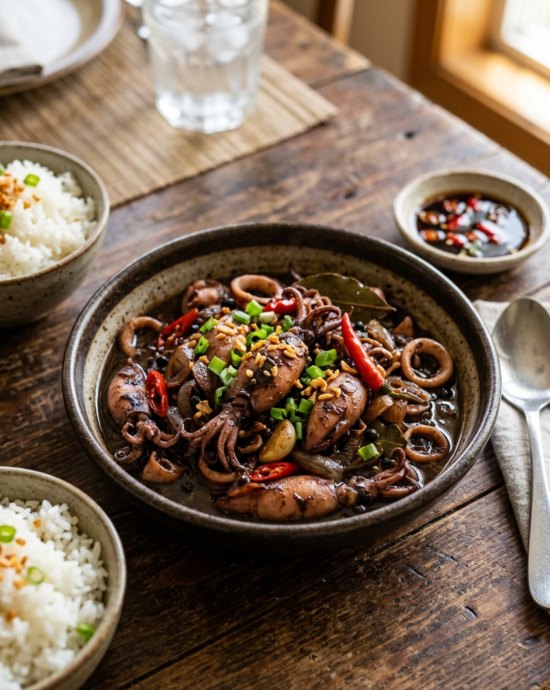
Once the squid is tender, remove the lid and increase the heat to medium. Allow the braising liquid to reduce for approximately five to eight minutes, stirring regularly, until the sauce thickens to a glossy, coating consistency that clings to each piece of squid. The finished sauce should be intensely black, glossy, and deeply concentrated in flavor. Taste and adjust seasoning — add salt if needed, additional vinegar for more brightness, or soy sauce for deeper saltiness. Remove and discard the bay leaves. The sauce should have a harmonious sour-salty-briny balance with the squid ink contributing an unmistakable oceanic depth that no other ingredient can replicate. If the sauce is too thick, add a splash of water to loosen it slightly.
- Step 7: Plate and Serve
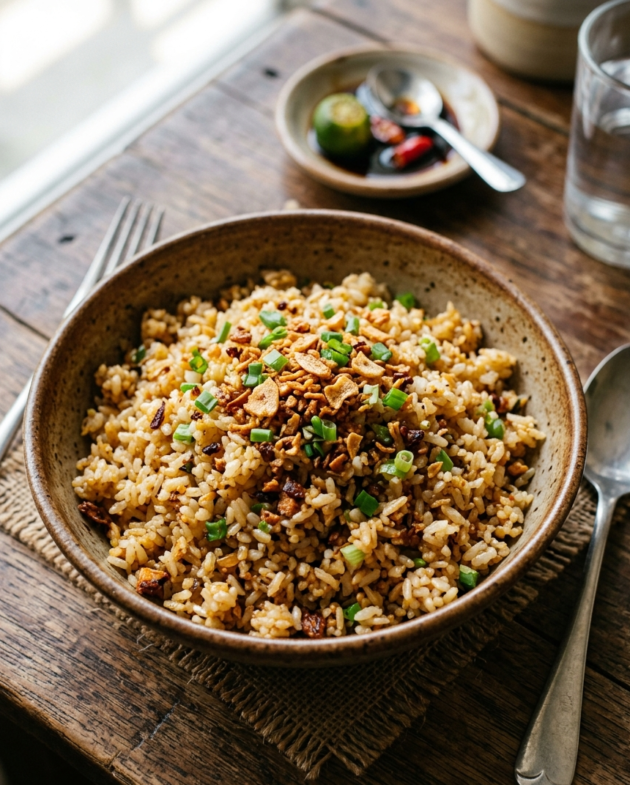
Transfer the finished Adobong Pusit to a wide serving bowl, arranging the squid rings and tentacle clusters so they are prominently displayed. Spoon the glossy black sauce generously over all the pieces, ensuring everything glistens beautifully. Garnish with a few rings of fresh red chili or a scattering of thinly sliced green onions for a pop of color against the dramatic black backdrop. Serve immediately alongside large portions of steamed white rice — the contrast of the jet-black, intensely flavored sauce against the white rice is one of the most iconic visual pairings in Filipino cuisine. Adobong Pusit is also excellent served with sinangag (garlic fried rice) for a more substantial, aromatic accompaniment.
- Calories:210 kcal11%
- Protein:28 g56%
- Carbohydrates:8 g3%
- Sugar:2 g2%
- Fat:7 g9%
- Salt (Sodium):820 mg36%
- Energy:879 kJ11%
Table of Contents
What Is Adobong Pusit?
Adobong Pusit is a classic Filipino braised squid dish made by cooking fresh squid in its own ink together with soy sauce, vinegar, garlic, and aromatics, producing a dramatically jet-black sauce with a uniquely briny, oceanic depth that distinguishes it from all other Filipino adobo variations. It is celebrated throughout the Philippines as one of the most distinctive and visually striking dishes in the national culinary repertoire.
The dish belongs to the vast adobo family — the cornerstone cooking technique of Philippine cuisine characterized by the braising of proteins in a soy sauce and vinegar base with garlic and bay leaves. What elevates Adobong Pusit above a standard squid adobo is the deliberate addition of the squid’s own ink sacs directly into the braising liquid, a technique that transforms the dish’s flavor profile from familiar and savory into something genuinely complex, oceanic, and unforgettable.
Squid ink has been used in cuisines worldwide, from Spanish arroz negro to Italian pasta al nero di seppia, but the Filipino approach of combining ink with the sour-salty vinegar-soy adobo base is entirely original and produces a flavor combination unlike anything in global cooking. The ink contributes intense umami, a subtle brininess reminiscent of the sea, and a slightly mineral quality that pairs perfectly with steamed white rice.
Adobong Pusit is a dish that appears in Filipino homes and carinderia (small eateries) alike, beloved for its simplicity, bold flavors, and the ease with which fresh squid — abundant in Philippine coastal waters — transforms into something extraordinary. It represents the Filipino philosophy of maximizing ingredient potential by using every component of the squid, including what most other cuisines would discard.
Ingredient Notes
- Fresh Squid (Pusit) Fresh squid with intact ink sacs is the only choice for authentic Adobong Pusit — the ink is irreplaceable and defines the dish. Choose the best squid for Adobong Pusit by selecting specimens with bright, clear eyes, firm flesh, a clean ocean smell (not fishy or sour), and ink sacs that appear full and unruptured.
- White Cane Vinegar: Philippine white cane vinegar provides the clean, sharp acidity that balances the ink’s brininess and the soy sauce’s saltiness. Sukang Paombong (nipa palm vinegar) is an excellent traditional alternative with a slightly rounder, more complex acidity that many cooks prefer for seafood adobo preparations.
- Soy Sauce: Regular Filipino soy sauce contributes the savory-salty backbone. Use a naturally brewed variety for the most complex flavor — the soy sauce’s umami compounds interact with the squid ink to create additional flavor depth that a chemically produced soy sauce cannot achieve.
Ingredient Suggestions
- Fresh Tomatoes — Adding two diced ripe tomatoes while sautéing the aromatics introduces a bright acidity and subtle sweetness that beautifully balances the ink’s brininess.
- Bird’s Eye Chili — Adding two to three sliced siling labuyo introduces a sharp heat spike that plays well against the oceanic umami of the squid ink sauce.
- Coconut Milk — Replacing half the water with coconut milk creates a rich, creamy black coconut-squid ink sauce reminiscent of Bicolano cooking traditions.
- Ginger — Adding two thin slices of fresh ginger with the aromatics neutralizes any residual fishiness and adds a subtle warming note to the finished dish.
Helpful Tips & Pro Tips
- Keep the ink sacs intact during cleaning by working carefully and slowly — ruptured ink sacs release ink into your work surface and make cleanup difficult. Work over a bowl of cold water to contain any accidental ruptures.
- Why is my Adobong Pusit rubbery? The squid was either undercooked (removed during the initial tough rubber stage at 3–8 minutes) or the cooking temperature was too high. Either cook for under 3 minutes total or braise for a full 15–20 minutes at a gentle simmer for true tenderness.
- Adding a teaspoon of sugar to the braising liquid is optional but highly recommended — it rounds the sharp vinegar edge and creates a more balanced, harmonious sauce without making the dish perceptibly sweet.
- Do not cook Adobong Pusit in a reactive aluminum pan — the combination of vinegar and squid ink reacts with aluminum to produce an unpleasant metallic taste; use stainless steel, cast iron, or non-stick cookware exclusively.
How to Serve and Store
Serve Adobong Pusit immediately after cooking while the sauce is at its glossiest and most intensely flavored, alongside steamed white rice. Leftover Adobong Pusit keeps well in an airtight container in the refrigerator for up to 3 days and actually improves in flavor overnight as the sauce penetrates deeper into the squid. Reheat gently on the stovetop over low heat, adding a small splash of water if the sauce has thickened too much. Adobong Pusit can be frozen for up to 1 month, though the texture of the squid softens slightly upon thawing; freeze in portion-sized containers and thaw in the refrigerator before reheating.
Substitutions
- Squid → Cuttlefish — Cuttlefish has a similar flavor and ink profile, and its slightly meatier texture holds up beautifully through the braising process.
- White Cane Vinegar → Rice Vinegar — A mild, slightly sweet gluten-free alternative that works well with seafood and maintains the dish’s essential acidity.
- Soy Sauce → Coconut Aminos — Soy-free and gluten-free; slightly sweeter but provides comparable umami depth for those with dietary restrictions.
- Squid Ink → Squid Ink Packets — If fresh squid ink sacs are unavailable, packaged squid ink (found in specialty stores) can be used at 2 teaspoons per serving.
Suggested Recipes
- Adobong Tahong — A fellow shellfish adobo using mussels that shares the same briny Filipino adobo spirit but with a sweeter, more delicate flavor profile.
- Calamares — For squid lovers who prefer a crispy preparation, this deep-fried squid rings dish is the natural counterpoint to the braised Adobong Pusit.
- Sinigang na Hipon — A sour shrimp soup that showcases another dimension of Filipino seafood cooking through tamarind-based sourness rather than vinegar.
- Ginataang Alimango — A coconut milk crab dish that demonstrates the richness of Filipino coastal cooking from a completely different flavoring tradition.
Frequently Asked Questions

Jeff Smith
"Cooking is the intersection of history, science, and emotion."
For me, the kitchen has always been a laboratory of culture. With a background deeply rooted in digital strategy and precision, I approach the culinary arts with the same rigor I apply to the digital landscape—analyzing flavors, perfecting techniques, and documenting the nuance that makes Filipino cuisine truly world-class.
Findme Recipe was born from a desire to bridge the gap between traditional heritage and the modern home cook. Whether it is mastering the perfect balance of acidity in a classic Adobo or simplifying complex regional dishes for everyday kitchens, my mission is to preserve our culinary identity through accessible, data-backed, and delicious content.
I am not just building a database; I am cultivating a community where every Filipino kitchen feels empowered, every ingredient is celebrated, and every family heirloom recipe finds a place to thrive.
Join me as we translate the soul of our islands into recipes for the next generation.