
- Step 1: Simmer the Chicken and Make the Broth
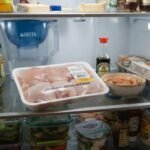
Place the chicken pieces in a large stockpot and cover with six cups of cold water. Add the sliced ginger to the water along with a generous pinch of salt. Bring to a boil over high heat, then reduce to a steady simmer. Skim off any grey foam and impurities that rise to the surface during the first ten minutes of cooking using a ladle or large spoon — thorough skimming is essential for a clean-tasting, clear broth. Simmer the chicken for twenty-five to thirty minutes until completely cooked through and the meat pulls easily from the bone. Remove the chicken pieces from the broth and set aside to cool slightly. Strain the broth through a fine-mesh sieve and reserve. Once the chicken is cool enough to handle, shred the meat from the bones into bite-sized pieces and discard the bones and skin. The broth and shredded chicken are your two primary building blocks.
- Step 2: Sauté the Aromatics and Build Flavor
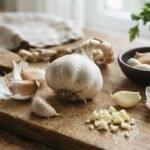
Heat vegetable oil in the same pot over medium heat. Add the minced garlic and cook for one to two minutes until golden and fragrant. Add the minced onion and cook for another two to three minutes until soft and translucent. If using annatto, pour the dissolved annatto water into the aromatics and stir to combine — it will give the soup a warm, inviting golden-orange color that is characteristic of many Filipino sotanghon recipes and signals richness and depth. Pour the reserved chicken broth back into the pot over the sautéed aromatics, stir to combine, and bring to a gentle simmer. Season with fish sauce, soy sauce, salt, and white pepper. Taste the broth carefully — it should be well-seasoned, clearly chickeny, and pleasantly savory. A properly seasoned broth before the noodles and vegetables are added is essential, as the noodles will dilute the flavor slightly as they cook.
- Step 3: Add Mushrooms, Carrots, and Shredded Chicken
Add the pre-soaked, drained, and sliced wood ear mushrooms to the simmering broth. The mushrooms will contribute an earthy, slightly gelatinous quality to the soup that adds body to the broth and an interesting textural element. Add the diagonally sliced carrots to the pot and cook for five minutes until they begin to soften but retain a slight firmness — tender carrots rather than mushy ones are the goal. Return the shredded chicken to the pot and stir gently to incorporate it into the soup. Allow the soup to return to a steady simmer and cook for another two to three minutes. Taste again and adjust the seasoning as needed. The broth should now be deeply flavored from all the components working together — the chicken, ginger, aromatics, and mushrooms creating a layered, complex base that the noodles will absorb beautifully.
- Step 4: Add the Sotanghon Noodles
Add the pre-soaked and drained sotanghon glass noodles directly to the simmering broth. The translucent noodles will absorb the broth quickly and expand significantly in volume — they cook in just two to three minutes in the hot soup. Stir gently as the noodles cook to prevent them from tangling or sticking together. If the soup appears too thick or the noodles absorb too much liquid, add a cup of hot water or additional chicken broth to restore the desired consistency. Taste the broth once more after the noodles have cooked, as sotanghon absorbs a significant amount of the soup's saltiness along with the liquid. Adjust seasoning with additional fish sauce, salt, or white pepper if needed. The noodles should be completely tender and translucent, no longer cloudy, and have taken on the golden color of the broth.
- Step 5: Add Cabbage and Final Assembly
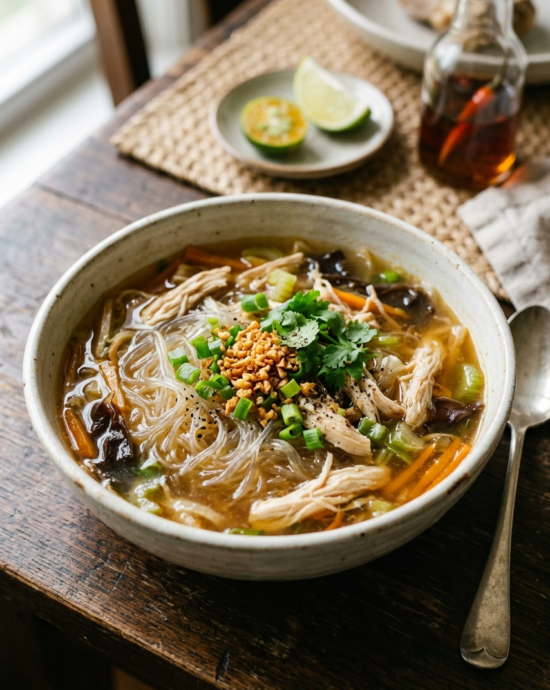
Add the shredded cabbage to the soup and stir gently for one to two minutes until the cabbage wilts slightly but still retains a pleasant freshness and gentle crunch. The cabbage cooks very quickly in the hot broth and should not be overcooked to limpness — it provides a necessary textural contrast to the silky glass noodles. Give the soup a final taste and make the last adjustments to the seasoning. The finished sotanghon soup should have a clean, well-seasoned, golden broth with tender shredded chicken, silky glass noodles, slightly crunchy vegetables, and earthy mushrooms. Ladle generously into deep bowls, ensuring each serving has a good distribution of all the components. Garnish with a scattering of chopped green onions and a generous spoonful of crispy fried garlic chips. Serve immediately with calamansi on the side for each diner to squeeze over their bowl.
- Calories:310 kcal15.5%
- Protein:22 g44%
- Carbohydrates:28 g9%
- Sugar:2 g2%
- Energy:1297 kJ15.5%
- Fat:11 g15%
Table of Contents
What Is Sotanghon Soup?
Sotanghon Soup is a classic Filipino noodle soup made with glass noodles, also known as cellophane noodles or sotanghon, simmered in a clear, golden chicken broth enriched with aromatics and garnished with shredded chicken, vegetables, toasted garlic, and green onions. The sotanghon noodles are made from mung bean starch, which gives them their characteristic translucent, glassy appearance when cooked and a slippery, silky, almost gelatinous texture that makes the soup uniquely satisfying to eat. Sotanghon Soup occupies a special place in Filipino culinary and emotional memory — it is the soup given to the sick and recovering, served at baptisms and celebrations, prepared for cold rainy evenings, and ladled into bowls to comfort anyone in need of warmth and nourishment. The dish reflects the Chinese culinary influence that has permeated Filipino food culture for centuries, as glass noodles and clear broth soups are staples of Chinese cooking that were adapted into the Filipino pantry and palate. Many Filipino families have a treasured personal version of sotanghon soup — some add annatto for color, others include pork meatballs or tokwa, and nearly all insist on a generous topping of fried garlic and a squeeze of calamansi as the final, essential touch. The soup’s appeal transcends seasons and occasions, making it arguably the single most comforting and universally beloved noodle soup in the Philippine culinary repertoire.
Ingredient Notes
- Sotanghon (Glass Noodles): Look for sotanghon made from 100 percent mung bean starch, labeled as bean thread vermicelli or glass noodles at Asian grocery stores. Soak in cold water for ten to fifteen minutes until soft and pliable before adding to the soup; do not soak in hot water, as this makes the noodles overly soft and prone to breaking during cooking.
- Wood Ear Mushrooms (Tenga ng Daga): Dried wood ear mushrooms should be rehydrated in warm water for twenty minutes until they expand dramatically and become soft and pliable. After rehydrating, slice them into thin strips; they add a distinctive gelatinous, slightly crunchy texture and a subtle earthy flavor that is characteristic of Filipino sotanghon soup.
- Whole Chicken: Using a whole chicken simmered in water produces a far superior broth than using pre-cut chicken pieces or store-bought stock. The bones, cartilage, and skin of a whole chicken release collagen, minerals, and gelatin that create a rich, full-bodied broth with remarkable depth of flavor.
- Ginger: Fresh ginger sliced thin and simmered in the broth from the beginning is essential for the clean, warm, subtly spiced quality of authentic sotanghon broth. Choose firm, smooth ginger with tight skin and a strong, fresh aroma; old or shriveled ginger will produce a dull, flat flavor.
Ingredient Suggestions
- Chicken Meatballs — Small, seasoned chicken or pork meatballs simmered directly in the broth add extra protein and a festive, abundant quality to the soup.
- Tokwa (Firm Tofu) — Pan-fried cubed tofu added to the soup provides a protein-rich vegetarian addition that absorbs the flavorful broth beautifully.
- Corn on the Cob — Sections of corn cob added to the broth during simmering add natural sweetness and make the presentation more visually substantial for larger gatherings.
- Patola (Sponge Gourd) — Sliced patola is a traditional vegetable addition in Filipino soups that cooks quickly, has a mild flavor, and adds a pleasant spongy texture.
Helpful Tips & Pro Tips
- Skim the broth thoroughly during the first ten minutes of simmering the chicken. Impurities and foam rising to the surface during this period are the primary cause of a cloudy, slightly bitter-tasting broth — removing them diligently produces a cleaner, clearer, more beautiful soup.
- Do not add the sotanghon noodles too early in the cooking process. The glass noodles absorb broth very rapidly and will continue to expand and soften even after the soup is removed from heat. Add them only in the final three minutes of cooking to prevent them from becoming overly soft and breaking up in the pot.
- Add the cabbage in the very last minute of cooking. Overcooked cabbage releases sulfurous compounds and loses its fresh flavor, becoming an unpleasant, soggy element rather than the refreshing textural contrast it should provide.
- Why is my Sotanghon Soup bland? The most common cause is insufficient salt and an under-simmered broth. The chicken must simmer long enough to release its full flavor into the water. Season in layers — season the broth before the noodles and vegetables are added, and taste and adjust again just before serving.
- Make a concentrated version of the soup by simmering with less water initially and adjusting later. A more concentrated broth can always be diluted, but a thin, watery broth cannot be enriched without additional simmering time.
How to Serve and Store
Sotanghon Soup stores well in the refrigerator for up to three days in an airtight container, but the noodles will continue to absorb the broth as they sit, becoming very thick and soft. When reheating, thin the soup with additional hot water or chicken broth to restore the desired consistency and adjust the seasoning accordingly. For longer storage, keep the soup and noodles separately — store cooked noodles in a separate container and add fresh ones to the reheated broth, or add pre-soaked raw noodles directly to the hot soup and cook for two to three minutes before serving. The soup base without noodles freezes excellently for up to two months; thaw overnight in the refrigerator and reheat with freshly cooked noodles.
Substitutions
- Sotanghon Noodles → Rice Vermicelli — a slightly firmer, less translucent noodle that works well in the soup and is widely available in most grocery stores.
- Chicken → Pork Ribs — simmered pork ribs produce an equally flavorful broth with a richer, meatier depth; cook for 45 minutes for properly tender meat.
- Fish Sauce → Soy Sauce — maintains savory saltiness for those who prefer to avoid fish sauce; the flavor will be slightly less complex but equally pleasing.
- Wood Ear Mushrooms → Button Mushrooms — widely available and produce a milder, less gelatinous but pleasantly earthy result.
- Fresh Chicken → Rotisserie Chicken — tear pre-cooked rotisserie chicken and use store-bought chicken broth for a significantly faster version of this soup.
- Cabbage → Bok Choy — halved baby bok choy is an excellent substitute that adds a more delicate, slightly bitter leafy green element to the soup.
Suggested Recipes
- Arroz Caldo — a thick Filipino rice porridge with similar warming, comforting qualities, also served with fried garlic and calamansi.
- Lomi — a thick egg noodle soup with a starchy, cornstarch-thickened broth that shares sotanghon soup’s status as a beloved cold-weather Filipino comfort food.
- Misua with Patola — a delicate Filipino noodle soup using fine wheat noodles and sponge gourd, often compared to sotanghon for its clean, simple broth.
- Chicken Tinola — a ginger-based Filipino chicken soup with green papaya and moringa leaves that shares the same warming, health-giving reputation as sotanghon soup.
Frequently Asked Questions

Jeff Smith
"Cooking is the intersection of history, science, and emotion."
For me, the kitchen has always been a laboratory of culture. With a background deeply rooted in digital strategy and precision, I approach the culinary arts with the same rigor I apply to the digital landscape—analyzing flavors, perfecting techniques, and documenting the nuance that makes Filipino cuisine truly world-class.
Findme Recipe was born from a desire to bridge the gap between traditional heritage and the modern home cook. Whether it is mastering the perfect balance of acidity in a classic Adobo or simplifying complex regional dishes for everyday kitchens, my mission is to preserve our culinary identity through accessible, data-backed, and delicious content.
I am not just building a database; I am cultivating a community where every Filipino kitchen feels empowered, every ingredient is celebrated, and every family heirloom recipe finds a place to thrive.
Join me as we translate the soul of our islands into recipes for the next generation.