
- Step 1: Prepare the Shrimp Broth and Cook Shrimp
Simmer the reserved shrimp heads and shells in three and a half cups of water with a pinch of salt for fifteen to twenty minutes. The shells release a remarkable amount of flavor and natural sweetness during simmering — do not skip this step, as it is the flavor foundation of the entire palabok sauce. Strain the broth through a fine-mesh sieve and press the solids to extract maximum flavor. You should have approximately three cups of rich, golden broth. Set it aside to cool slightly. In a separate pan, quickly sauté the peeled shrimp in a little oil with garlic for two minutes per side until just pink. Season lightly with salt. Remove and set aside for topping. The shrimp should be slightly undercooked at this point — they will be placed over the hot sauced noodles just before serving, where residual heat will finish them perfectly.
- Step 2: Build the Annatto Palabok Sauce
Dissolve the annatto powder in a quarter cup of warm water and add to the shrimp broth, stirring until the liquid turns a deep, vivid orange. Heat vegetable oil in a saucepan over medium heat and add the minced garlic, cooking until fragrant and lightly golden, about one minute. Pour in the annatto-shrimp broth and bring to a gentle simmer. Season with fish sauce and taste the sauce — it should be boldly savory with a subtle brininess from the shrimp broth. Stir the cornstarch slurry once more to recombine any settled starch, then pour it slowly into the simmering broth while stirring constantly. The sauce will thicken quickly and dramatically — continue stirring until it reaches a silky, gravy-like consistency that coats the back of a spoon. Remove from heat.
- Step 3: Cook the Bihon Noodles
Bring a large pot of salted water to a full rolling boil. Add the pre-soaked and drained bihon rice noodles and cook for two to three minutes until just tender but still firm — the noodles cook extremely quickly and overcooking by even thirty seconds produces an unpleasantly mushy result. Drain the noodles immediately through a fine-mesh strainer and rinse briefly with cold water to stop cooking. For serving individual portions, place a serving of noodles in a bowl or on a banana leaf and ladle the sauce over generously. For a platter presentation, arrange all the noodles on a large serving plate, pour the sauce over, and immediately arrange the toppings before the sauce sets. Work quickly after cooking the noodles, as they begin to stick together within minutes of draining.
- Step 4: Arrange the Toppings in the Traditional Style
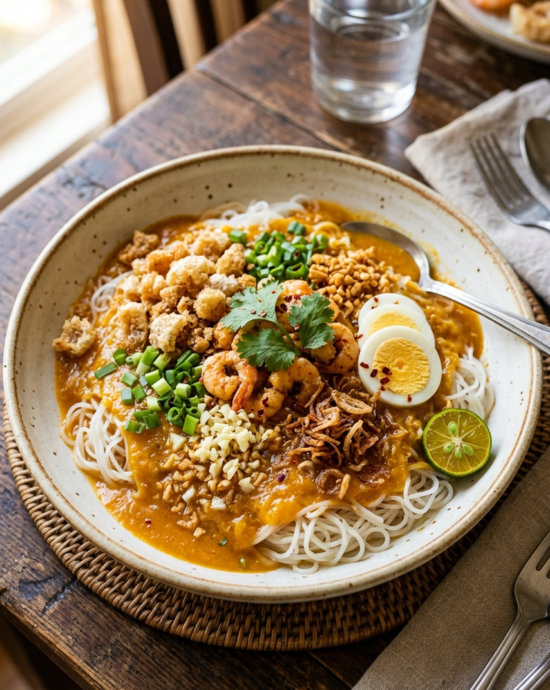
The topping arrangement for Pancit Palabok is both traditional and strategic — each element is placed thoughtfully to ensure every serving receives an equal portion of all toppings. Begin by arranging the sautéed shrimp in a circular pattern around the outer edge of the platter, tails pointing outward for a dramatic presentation. Place the sliced hard-boiled eggs between the shrimp in the ring around the perimeter. Scatter the tinapa flakes generously across the center of the sauced noodles. Sprinkle the cooked ground pork over the middle. Finish with a generous heap of crushed chicharron across the top — this topping should be added at the very last moment before serving, as it softens rapidly in the moist sauce. Scatter toasted garlic and chopped green onions over everything as the final aromatic garnish.
- Step 5: Serve with Traditional Accompaniments
Place the assembled Pancit Palabok platter at the center of the table for communal serving. Provide each diner with a halved calamansi to squeeze over their individual portion just before eating — the bright citrus acidity is an essential counterpoint to the rich, thick sauce and smoky toppings. Serve a small bowl of bagoong alamang on the side for those who want additional salty, fermented depth — many dedicated palabok eaters consider a small smear of bagoong on each bite non-negotiable. Remind diners to eat the palabok promptly after plating, as the chicharron begins softening within five to ten minutes and the noodles will continue to absorb the sauce, making the dish drier the longer it sits. Palabok is at its absolute best eaten the moment it leaves the platter.
- Calories:390 kcal19.5%
- Protein:22 g44%
- Carbohydrates:55 g18%
- Sugar:1 g1%
- Energy:1632 kJ19.5%
- Fat:9 g13%
Table of Contents
What Is Pancit Palabok?
Pancit Palabok is a festive Filipino rice noodle dish blanketed in a vivid annatto-orange sauce and crowned with a spectacular array of toppings that include shrimp, smoked fish flakes, ground pork, crushed chicharron, hard-boiled eggs, toasted garlic, and green onions. The dish is most closely associated with the province of Pampanga, the acknowledged culinary heartland of the Philippines, though versions of it are found throughout the archipelago, particularly in the National Capital Region. The word palabok refers to the sauce itself — a thick, deeply colored, shrimp broth-based gravy thickened with cornstarch and colored with annatto that coats every strand of the thin bihon rice noodles in a layer of bold, savory, slightly smoky flavor. Like Pancit Malabon, which it closely resembles, Pancit Palabok is a celebration dish, reserved for birthdays and special occasions where its elaborate, visually abundant presentation signals generosity and festive spirit. The dish is culturally significant as a birthday noodle, where the long, unbroken rice noodles carry the traditional Filipino symbolism of longevity and good fortune for the celebrant. The combination of flavors in a single bite of Pancit Palabok is revelatory — the silky noodles, rich annatto sauce, briny shrimp, smoky tinapa, salty chicharron, and the bright finish of calamansi create a complexity that is uniquely Filipino and immediately recognizable as one of the country’s most celebrated culinary achievements.
Ingredient Notes
- Bihon (Thin Rice Noodles): The best bihon for palabok is thin, white, and translucent when properly soaked. Soak in cold water for fifteen to twenty minutes until pliable but still firm, drain completely, and cook in boiling water for no more than two to three minutes to prevent mushiness.
- Annatto Powder: Choose vibrant deep-orange annatto powder with no clumping or discoloration. Fresh annatto powder dissolved in warm water produces a brighter, more vivid sauce color than aged or improperly stored powder.
- Tinapa (Smoked Fish): Select bangus tinapa with deeply golden skin, firm flesh, and a strong, clean smoky aroma. Flake the fish carefully by hand after removing all bones — this is time-consuming but essential for safety and proper texture in the finished dish.
- Chicharron: For the crunchiest palabok topping, buy freshly made chicharron from a local store and crush it coarsely just before serving. Pre-packaged chicharron loses its crunch quickly; adding it to the hot sauce even minutes before eating significantly diminishes its textural contribution.
Ingredient Suggestions
- Squid Rings — Briefly sautéed squid adds a seafood depth that complements the shrimp and reflects the coastal origins of the dish.
- Kikiam — Sliced, pan-fried fish rolls are a classic palabok topping addition that add a savory, bouncy contrast to the silky noodles.
- Crispy Fried Tofu — Cubed and deep-fried tofu absorbs the annatto sauce beautifully and provides a vegetarian protein element that keeps well on the platter.
- Tahong (Green Mussels) — Steamed green mussels added as a topping enhance the seafood profile and add a dramatic, visually striking element to the platter.
Helpful Tips & Pro Tips
- Thicken the sauce gradually by adding the cornstarch slurry in a slow, steady stream while stirring constantly. Dumping all the cornstarch at once creates lumps that are very difficult to whisk smooth once formed.
- Season the sauce with fish sauce rather than regular salt — the patis adds both salinity and the distinctive umami depth that is characteristic of authentic Pancit Palabok. Regular salt produces a flatter, less complex flavor.
- Separate the noodle cooking and sauce making into two simultaneous operations if possible. The noodles cool and clump within minutes of draining, so timing the sauce and noodles to be ready at exactly the same moment is the key to a perfect final dish.
- Why is my Pancit Palabok sauce lumpy? Lumps in cornstarch sauces form when the slurry is added too quickly to the boiling liquid. Always stir the slurry immediately before adding it and pour it in a thin, steady stream while whisking the sauce continuously.
- Use high-quality tinapa for the topping rather than substituting with canned tuna or other smoked fish. The distinctive flavor of bangus tinapa — simultaneously smoky, slightly salty, and richly fatty — is irreplaceable and defines the flavor profile of authentic palabok.
How to Serve and Store
Pancit Palabok is ideally served immediately after assembly. Leftovers can be stored with sauce and noodles combined in an airtight container in the refrigerator for up to two days; the noodles will absorb the sauce and the texture will change significantly. Reheat gently over medium heat with a splash of water or shrimp broth to loosen the sauce and prevent burning. Chicharron topping should be replaced with fresh pieces upon reheating, as stored chicharron becomes completely soft. This dish is not recommended for freezing. Prepare fresh toppings when serving reheated leftovers for the best possible experience.
Substitutions
- Bihon Noodles → Vermicelli — very thin wheat vermicelli provides a similar delicate texture for those who cannot find rice bihon.
- Shrimp Broth → Fish Broth or Seafood Stock — maintains the oceanic depth of the sauce without requiring fresh shrimp heads.
- Cornstarch → Arrowroot Powder — a gluten-free thickener that produces a clearer, slightly more delicate sauce; use in equal quantities.
- Tinapa → Smoked Mackerel Flakes — a widely available substitute with a similar smoky, oily character that works well in the topping.
- Chicharron → Toasted Breadcrumbs — provides a satisfying crunch at much lower cost; toast in butter with garlic for maximum flavor.
- Pork Rinds → Crispy Shallots — a no-pork alternative topping that adds crunch and a sweet allium flavor to each bite.
Suggested Recipes
- Pancit Malabon — a closely related dish using thicker noodles and a more heavily garnished presentation; the two are often compared as the greatest Filipino noodle dishes.
- Pancit Bihon Guisado — a simpler, stir-fried version using the same bihon noodles without the thick sauce, ideal for everyday cooking.
- Lugaw — a comforting Filipino rice porridge that shares the same cultural tradition of being a celebration and communal gathering food.
- Kare-Kare — another elaborate, celebration-grade Filipino dish that, like Palabok, requires time and care but rewards the effort magnificently.
Frequently Asked Questions

Jeff Smith
"Cooking is the intersection of history, science, and emotion."
For me, the kitchen has always been a laboratory of culture. With a background deeply rooted in digital strategy and precision, I approach the culinary arts with the same rigor I apply to the digital landscape—analyzing flavors, perfecting techniques, and documenting the nuance that makes Filipino cuisine truly world-class.
Findme Recipe was born from a desire to bridge the gap between traditional heritage and the modern home cook. Whether it is mastering the perfect balance of acidity in a classic Adobo or simplifying complex regional dishes for everyday kitchens, my mission is to preserve our culinary identity through accessible, data-backed, and delicious content.
I am not just building a database; I am cultivating a community where every Filipino kitchen feels empowered, every ingredient is celebrated, and every family heirloom recipe finds a place to thrive.
Join me as we translate the soul of our islands into recipes for the next generation.