
- Step 1: Prepare the Day-Old Rice
The single most important ingredient in Khao Pad is day-old, refrigerated jasmine rice. Freshly cooked rice contains too much moisture and will clump together in the wok, producing a steamed, sticky result rather than the dry, separate grains that define great fried rice. Cook the jasmine rice the day before, spread it on a baking sheet to cool rapidly, then refrigerate uncovered overnight. Cold, dry rice grains fry individually rather than steaming against each other in the wok. If you need to make fried rice with fresh rice, spread it in a thin layer and refrigerate for at least two hours or freeze for thirty minutes to dry the surface. Break up any large clumps in the cold rice with clean hands before adding to the wok — individual, separate grains are the goal before the wok is even turned on.
- Step 2: Prepare the Sauce
Combine the soy sauce, oyster sauce, fish sauce, and white sugar in a small bowl and whisk together until the sugar dissolves and all the elements are well integrated. Set this sauce mixture directly next to the stove, as the actual cooking process happens so quickly that reaching for individual bottles while stir-frying results in burned garlic and overcooked protein. Season the prepared sauce carefully before cooking — add a little more soy sauce for salt, a tiny pinch more sugar for balance, or a drop more fish sauce for depth. Having the sauce pre-mixed and measured is the professional mise en place approach that separates competent fried rice from truly excellent fried rice. The sauce should taste salty, slightly sweet, and savory — quite strong and concentrated, as it will be distributed across four cups of rice and diluted to perfect seasoning during cooking.
- Step 3: Stir-Fry the Aromatics and Protein
Heat a wok or large skillet over the highest possible heat setting for a full two minutes before adding any oil. The wok must be genuinely, fearlessly hot — the oil should shimmer and ripple immediately upon contact with the pan. Add two tablespoons of vegetable oil and swirl to coat the surface. Add the minced garlic and diced onion simultaneously and stir-fry for thirty seconds until fragrant and beginning to turn golden. Add the diced chicken or shrimp to the wok and spread in a single layer. Cook without stirring for sixty to ninety seconds to allow the protein to develop a slight golden sear, then stir vigorously and cook for another minute until just cooked through. Push the protein and aromatics to one side of the wok, creating a clear empty space for the eggs.
- Step 4: Scramble the Eggs
Add the remaining tablespoon of oil to the empty space in the wok. Crack the three eggs directly into the cleared space and immediately begin scrambling them with a spatula, breaking the yolks and moving them in rapid circular motions. Cook for approximately thirty to forty-five seconds until the eggs are about 80 percent set — still slightly wet and glossy rather than fully cooked and dry. Immediately begin folding the semi-cooked eggs into the protein and aromatics on the other side of the wok, mixing everything together in swift tossing motions. The slightly underdone eggs will finish cooking with the residual heat as you add the rice, creating that characteristic coating of egg on each grain that makes excellent fried rice slightly richer and more cohesive than its individual components suggest.
- Step 5: Add Rice and Sauce
Add the cold, separated day-old jasmine rice to the wok all at once, breaking up any remaining clumps quickly with the spatula as the rice hits the hot surface. Pour the pre-mixed sauce evenly over the rice and toss everything vigorously — combining rice, eggs, protein, and aromatics — for two to three minutes. Use the flat of the spatula to press the rice against the hot wok surface periodically, allowing individual grains to toast and develop a slight golden color and faint char. This wok caramelization creates a subtle smoky, slightly nutty flavor called wok hei that elevates fried rice beyond simple reheated leftovers. Add the mixed vegetables in the final minute of stir-frying and toss vigorously to heat through without overcooking. Season with white pepper, tasting and adjusting the sauce balance if needed.
- Step 6: Finish and Serve
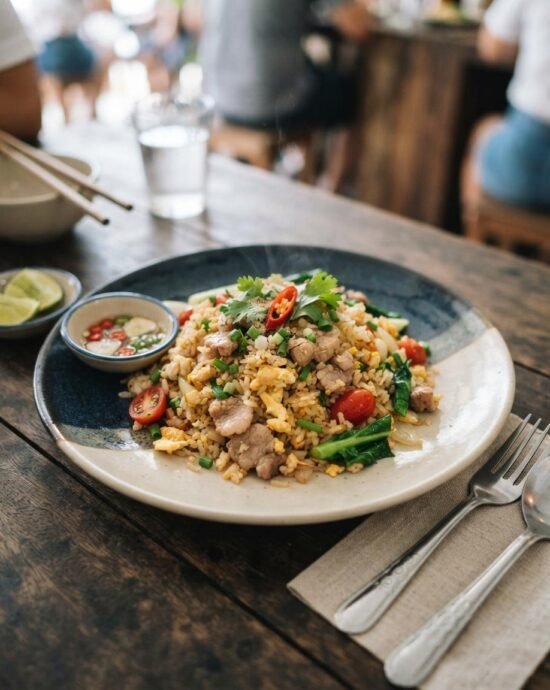
Remove the Khao Pad from heat immediately when the rice is evenly coated, heated through, and shows some golden spots from wok contact. Taste once more and adjust seasoning with a splash more fish sauce, a pinch of sugar, or a squeeze of lime juice if needed. Divide into individual plates or bowls, mounding the rice attractively. Scatter sliced green onions over each portion for freshness and color. Arrange fresh cucumber slices around or beside the rice — cucumber is the traditional, essential accompaniment for Khao Pad in Thailand, providing a cool, refreshing crunch that balances the warm, savory fried rice beautifully. Serve with lime wedges for squeezing and provide additional condiments at the table: white vinegar with sliced chilies, fish sauce, chili powder, and sugar — the classic Thai four-condiment set for customizing each bowl.
- Calories:440 kcal22%
- Protein:26 g52%
- Carbohydrates:55 g20%
- Sugar:4 g4%
- Fat:12 g15%
- Salt:1.8 g30%
- Energy:1841 kJ22%
Table of Contents
What Is Khao Pad?
Khao Pad is Thailand’s universally beloved fried rice — a deceptively simple, endlessly versatile stir-fried rice dish cooked at blistering heat in a wok with garlic, eggs, vegetables, and a choice of protein, seasoned with a combination of soy sauce, oyster sauce, and fish sauce. The name translates directly as “fried rice” — khao meaning rice and pad meaning to stir-fry — and the dish is eaten at every meal occasion from casual street breakfast to late-night after-club suppers, making it among the most consumed dishes in the entire country. While the concept of stir-fried rice is shared across many Asian cuisines, Thai Khao Pad has a distinct character defined by the unique Thai seasoning combination of fish sauce and oyster sauce alongside soy, which gives the rice a savory depth and faint funky complexity absent from Chinese or Japanese fried rice traditions. The dish is believed to have been introduced to Thailand through Chinese immigrants, particularly those from Guangdong province who brought wok cooking techniques with them during the nineteenth century as they established communities in Bangkok and other Thai cities. Thai cooks adopted the technique but adapted the flavor profile to local ingredients and preferences, creating a distinctly Thai version that quickly became a national staple. The dish’s genius lies in its adaptability — every household and street vendor has a slightly different version based on whatever protein, vegetables, and condiments are available, making Khao Pad an expression of both Thai resourcefulness and the remarkable flavor-building capacity of the Thai pantry.
Ingredient Notes
- Day-Old Jasmine Rice: Day-old cold rice is non-negotiable for excellent Khao Pad. The refrigeration dries the surface of each grain and firms the starch structure, preventing clumping. The best rice for Thai fried rice is long-grain jasmine with at least 12 hours of refrigeration.
- Fish Sauce: Thai fish sauce adds an irreplaceable savory depth and umami complexity distinct from soy sauce alone. Select a quality Thai brand such as Tiparos and use it sparingly — its potent salty funkiness should season without dominating.
- White Pepper: White pepper rather than black pepper is the authentic Thai fried rice seasoning. It delivers a softer, more earthy heat and integrates into the fried rice without the visible black specks that would be considered aesthetically unpleasant in a Thai kitchen.
Ingredient Suggestions
- Crab Meat (Khao Pad Pu): Thai crab fried rice is one of the most luxurious and popular variations — fresh lump crab meat stirred through the rice just before serving delivers an incredible sweetness and richness.
- Pineapple (Khao Pad Saparot): Adding diced fresh pineapple creates the celebrated Thai pineapple fried rice served in a pineapple shell — the tropical sweetness and acidity complements the savory rice beautifully.
- Basil: Stirring through a handful of Thai basil leaves at the very end creates a basil fried rice variation with an aromatic, herbal freshness that elevates the dish significantly.
Helpful Tips & Pro Tips
- Use the highest heat your stove allows. Fried rice cooked over insufficient heat steams rather than fries, producing soggy, clumped rice. The wok should be hot enough that the rice sizzles and pops immediately upon contact.
- Never add liquid to fried rice during cooking. If the rice is sticking, the wok is not hot enough or you added too much rice at once. Remove excess rice rather than adding water, which makes the remaining rice soggy.
- Why is my Khao Pad mushy? Fresh rice with high moisture content is the most common cause. Always use rice that was cooked and refrigerated at least overnight. Spreading fresh-cooked rice on a baking sheet and refrigerating for two hours is the minimum acceptable workaround.
- Season in stages. Taste after adding the sauce and adjust with individual condiments before serving — every brand of soy sauce, oyster sauce, and fish sauce varies significantly in saltiness and concentration.
How to Serve and Store
Khao Pad can be refrigerated in an airtight container for up to two days. Reheat in a hot wok or skillet with a small drizzle of oil rather than a microwave, which creates uneven heating and steam that makes the rice mushy again. Fried rice does not freeze well, as the egg coating on the rice grains becomes watery and the texture deteriorates significantly upon thawing.
Substitutions
- Chicken → Tofu, Tempeh, or Mushrooms — all excellent protein bases for vegetarian and vegan versions of Khao Pad.
- Fish Sauce → Soy Sauce plus a pinch of salt — maintains the savory depth without fish-derived ingredients.
- Oyster Sauce → Mushroom Oyster Sauce — a vegetarian-friendly alternative with comparable sweetness and body.
- Eggs → Silken Tofu scrambled — approximates the egg’s binding role in a fully vegan fried rice.
- Jasmine Rice → Brown Jasmine Rice — adds fiber and a nutty quality; requires slightly longer stir-frying time to heat through.
Suggested Recipes
- Tom Yum Goong: Thai fried rice and Tom Yum soup together form the quintessential Thai comfort meal combination, each complementing the other’s contrasting flavors.
- Som Tum: The cool, crunchy, sour papaya salad is a perfect textural and flavor counterpoint to warm, savory fried rice — a classic Thai pairing.
- Pad Krapow Moo: Thai basil pork stir-fry served over fried rice is one of Thailand’s most popular street food meals — a natural and delicious extension of the Khao Pad experience.
Frequently Asked Questions

Jeff Smith
"Cooking is the intersection of history, science, and emotion."
For me, the kitchen has always been a laboratory of culture. With a background deeply rooted in digital strategy and precision, I approach the culinary arts with the same rigor I apply to the digital landscape—analyzing flavors, perfecting techniques, and documenting the nuance that makes Filipino cuisine truly world-class.
Findme Recipe was born from a desire to bridge the gap between traditional heritage and the modern home cook. Whether it is mastering the perfect balance of acidity in a classic Adobo or simplifying complex regional dishes for everyday kitchens, my mission is to preserve our culinary identity through accessible, data-backed, and delicious content.
I am not just building a database; I am cultivating a community where every Filipino kitchen feels empowered, every ingredient is celebrated, and every family heirloom recipe finds a place to thrive.
Join me as we translate the soul of our islands into recipes for the next generation.