
- Step 1. Fry the curry paste
Heat the vegetable oil in a wok or heavy-bottomed pot over medium heat. Once shimmering, add the red curry paste and fry it continuously for 3 to 4 minutes, stirring to prevent sticking or burning. The paste will become deeply fragrant as the chilies, lemongrass, and spices toast in the oil, releasing their essential oils. This step builds the foundational depth of the curry, so don't rush past it; the paste should darken slightly and smell rich and toasty before moving forward.
- Step 2. Add the thick coconut cream
Spoon in the thicker, creamier portion from the top of one coconut milk can, reserving the thinner liquid for later. Stir this cream into the fried curry paste, continuing to cook over medium heat until the oil begins to separate and pool slightly at the surface, a sign called 'breaking the curry.' This visual cue, taking about 4 to 5 minutes, indicates the paste and fat have fully melded, intensifying the curry's color and aroma before any liquid is added.
- Step 3. Cook the chicken
Add the sliced chicken to the pot, stirring to coat each piece evenly in the fragrant curry base. Cook for 4 to 5 minutes, until the chicken turns opaque on the outside and begins to firm up. This searing in concentrated curry paste allows the meat to absorb deep flavor before the broth dilutes the intensity, giving the final dish a richer, more developed taste throughout every bite of chicken.
- Step 4. Add remaining coconut milk and vegetables
Pour in the remaining coconut milk along with the Thai eggplant, bamboo shoots, and torn kaffir lime leaves. Stir well to combine and bring the curry to a gentle simmer. Let it cook for 10 to 12 minutes, until the eggplant softens and the chicken is fully cooked through. Stir occasionally to prevent sticking, and keep the heat moderate to avoid breaking the coconut milk into an oily, separated texture.
- Step 5. Season to taste
Stir in the fish sauce and palm sugar, tasting and adjusting until the curry achieves a balanced profile of salty, sweet, and spicy with a rich coconut backbone. The sweetness should be subtle, rounding out the heat rather than dominating it. Continue simmering for 2 to 3 minutes after seasoning to let the flavors meld together fully before removing the pot from the heat for garnishing and plating.
- Step 6. Garnish and serve
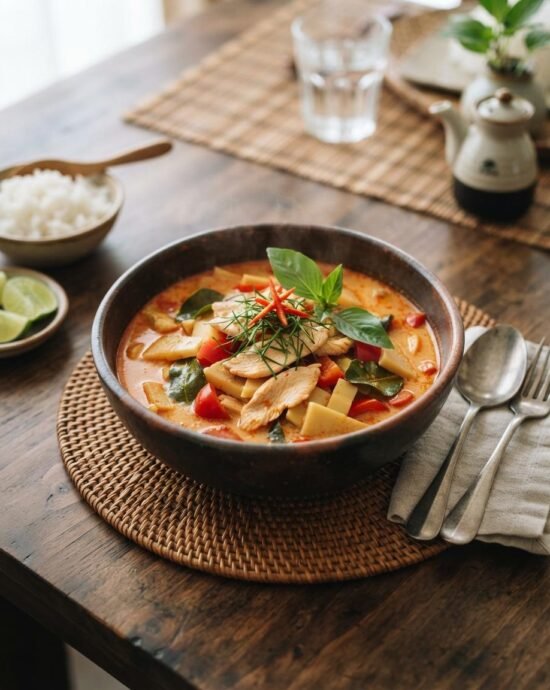
Ladle the curry into a serving bowl and top with sliced red chilies and a generous handful of fresh Thai basil leaves, which will wilt slightly from the residual heat and release their distinctive anise-like aroma. Serve immediately with steamed jasmine rice on the side. The curry's deep red color, glossy coconut sheen, and fragrant herbs make for an inviting presentation that signals the rich, complex flavors waiting underneath.
- Calories:390 kcal20%
- Protein:24 g48%
- Carbohydrates:12 g4%
- Sugar:5 g6%
- Energy:1632 kJ19%
- Salt:1.6 g27%
- Fat:28 g40%
Table of Contents
What Is Gaeng Daeng?
Gaeng Daeng, or Thai red curry, is a rich, coconut-based curry built on a paste of dried red chilies, lemongrass, galangal, and garlic, simmered with protein and vegetables until deeply flavorful. The name translates directly to ‘red curry,’ referencing the vivid hue produced by dried red chilies pounded into the paste base, distinguishing it visually and texturally from the herbaceous green curry or the nuttier panaeng. Gaeng Daeng holds a central place in Thai home cooking, often prepared with chicken, beef, or duck, and balanced with the slightly bitter, spongy texture of Thai eggplant alongside crunchy bamboo shoots. The dish’s character comes from a careful layering technique: frying the curry paste until aromatic, then ‘breaking’ it with thick coconut cream to intensify color and fragrance before diluting with broth or more coconut milk. This method, found across many Thai curries, ensures the final dish carries concentrated flavor rather than a watered-down taste. Kaffir lime leaves and Thai basil contribute essential top notes, cutting through the richness of coconut fat with citrus and anise brightness. While red curry paste varies regionally in heat intensity, the dish generally sits at a moderate spice level that’s adaptable to taste by adjusting the amount of paste used. Gaeng Daeng is typically served alongside steamed jasmine rice, which soaks up the glossy, fragrant sauce, making it a satisfying centerpiece for any Thai meal. Its accessibility, depth of flavor, and relatively short cooking time have made it one of the most popular Thai curries enjoyed both in Thailand and around the world.
Ingredient Notes
- Red curry paste: Look for a paste with a vivid red-orange color and a short ingredient list dominated by dried chilies, lemongrass, and galangal. Homemade or refrigerated fresh paste delivers noticeably more depth than shelf-stable jarred versions.
- Coconut milk: Use a full-fat, unsweetened coconut milk and don’t shake the can before opening if you want to separate the thick cream from the thinner liquid for the ‘breaking’ technique.
- Thai eggplant: These small, round green-and-white eggplants have a firmer, slightly bitter bite compared to Western eggplant varieties. Choose firm, unblemished ones for the best texture in the finished curry.
- Kaffir lime leaves: Essential for the curry’s distinctive citrus aroma, fresh or frozen leaves work far better than dried, which lose most of their fragrant oils during the drying process.
- Thai basil: Distinct from sweet or holy basil, Thai basil has a purple stem and an anise-like flavor that holds up well to the curry’s heat without wilting into blandness.
Ingredient Suggestions
- Bell peppers: Sliced bell peppers add color and a mild sweetness that balances the curry’s spice without overpowering the existing flavors.
- Pineapple chunks: A handful of fresh pineapple introduces a tropical sweetness that pairs beautifully with the rich coconut and chili base.
- Crispy fried shallots: Sprinkling these on top before serving adds crunch and a deeper savory layer to each bite.
- Extra red curry paste: For those who love heat, stirring in an additional spoonful intensifies both the spice and aromatic complexity.
- Roasted peanuts, crushed: A light scatter of crushed peanuts adds texture and a subtle nutty richness reminiscent of panaeng-style curries.
Helpful Tips & Pro Tips
- Always fry the curry paste in oil before adding any liquid, since this step is essential for unlocking the full aromatic potential of the dried chilies and herbs.
- Use the thick cream from the top of the coconut milk can first to ‘break’ the curry properly; skipping this step results in a thinner, less vibrant final sauce.
- Why is my curry too thin? You may have added all the coconut milk at once instead of breaking the paste with cream first, which prevents proper flavor concentration.
- Keep the simmer gentle once coconut milk is added in full, since vigorous boiling can cause the fat to separate unevenly and create a greasy texture.
- Add Thai basil at the very end of cooking, off the heat if possible, to preserve its delicate aroma and prevent it from turning dark and bitter.
- Taste and adjust seasoning gradually, since red curry paste brands vary significantly in saltiness and heat, affecting how much additional fish sauce or sugar you’ll need.
How to Serve and Store
Serve Gaeng Daeng hot over steamed jasmine rice, allowing the fragrant sauce to soak into each grain. It pairs well with a simple cucumber salad on the side to cut through the richness of the coconut milk. Store leftovers in an airtight container in the refrigerator for up to 4 days, as the flavors often deepen and improve overnight. Reheat gently on the stovetop over low heat, stirring occasionally, and avoid microwaving at high power to prevent the coconut milk from separating into an oily texture.
Substitutions
- Chicken → Extra-firm tofu or mixed vegetables — transforms the curry into a fully plant-based dish while still absorbing the rich sauce. (Vegan)
- Fish sauce → Soy sauce or coconut aminos — preserves the savory depth without animal-derived ingredients. (Vegan)
- Red curry paste → Homemade paste using rice flour-free brands — ensures the dish remains gluten-free, since some commercial pastes contain trace gluten fillers. (Gluten-Free)
- Thai eggplant → Zucchini or regular eggplant — offers a more budget-friendly and widely available vegetable substitute. (Budget-Friendly)
- Bamboo shoots → Sliced green beans — provides a similar crunchy texture when bamboo shoots aren’t available.
- Palm sugar → Brown sugar — delivers a comparable caramel sweetness from a common pantry ingredient.
Suggested Recipes
- Panaeng Curry: A close cousin of Gaeng Daeng with a thicker, nuttier sauce thanks to ground peanuts blended into the paste.
- Tom Kha Gai: Another coconut milk-based dish that showcases similar aromatics in a lighter, soup-based format.
- Satay: Grilled skewered meat with peanut sauce that complements the curry’s richness as part of a larger spread.
- Khao Man Gai: A simple, comforting chicken and rice dish that balances out a meal alongside the bold flavors of red curry.
Frequently Asked Questions

Jeff Smith
"Cooking is the intersection of history, science, and emotion."
For me, the kitchen has always been a laboratory of culture. With a background deeply rooted in digital strategy and precision, I approach the culinary arts with the same rigor I apply to the digital landscape—analyzing flavors, perfecting techniques, and documenting the nuance that makes Filipino cuisine truly world-class.
Findme Recipe was born from a desire to bridge the gap between traditional heritage and the modern home cook. Whether it is mastering the perfect balance of acidity in a classic Adobo or simplifying complex regional dishes for everyday kitchens, my mission is to preserve our culinary identity through accessible, data-backed, and delicious content.
I am not just building a database; I am cultivating a community where every Filipino kitchen feels empowered, every ingredient is celebrated, and every family heirloom recipe finds a place to thrive.
Join me as we translate the soul of our islands into recipes for the next generation.