
- Step 1: Soak the Noodles
Begin by placing the flat rice noodles in a large bowl and covering them completely with lukewarm water. Allow the noodles to soak for exactly 20 to 25 minutes until they are pliable and flexible but still slightly firm to the bite — they should bend without snapping. Do not use boiling water, as this causes over-softening before cooking even begins. Once soaked, drain the noodles thoroughly in a colander and shake off any excess water. Pat them lightly with a clean kitchen towel if needed. The noodles will finish cooking in the wok, absorbing the sauce during the stir-fry process. Properly soaked noodles are the single most important factor in achieving that signature Pad Thai texture — never skip or rush this foundational step.
- Step 2: Prepare the Pad Thai Sauce
Whisk together the fish sauce, oyster sauce, tamarind paste, and palm sugar in a small mixing bowl until the sugar dissolves completely and the mixture becomes a smooth, glossy, dark amber liquid. The balance of these four elements defines authentic Pad Thai flavor: fish sauce provides salty umami depth, tamarind delivers a bright fruity sourness, palm sugar adds a gentle caramel sweetness, and oyster sauce contributes rich body. Taste the sauce and adjust the ratio to your preference — more tamarind for tartness, more sugar for sweetness. Set aside within easy reach of the stove. Having your sauce pre-mixed ensures you can add it quickly during the rapid wok cooking, preventing the noodles from drying out or sticking during the high-heat stir-fry.
- Step 3: Cook the Protein and Tofu
Heat a wok over the highest heat setting until it begins to smoke lightly, then add two tablespoons of vegetable oil. Add the cubed tofu pieces first, spreading them in a single layer, and allow them to sear undisturbed for two full minutes until they develop a deep golden crust. Flip and brown on the opposite side. Remove tofu and set aside. In the same wok, add the shrimp in a single layer and cook for approximately 60 seconds per side until they turn pink and curl into a C-shape. Remove shrimp immediately — overcooked shrimp become rubbery and unpleasant. This two-stage protein cooking method ensures both the tofu and shrimp reach their ideal textures rather than steaming each other if crowded together in the pan.
- Step 4: Stir-Fry Aromatics and Noodles
Add the remaining tablespoon of vegetable oil to the wok and reduce heat to medium-high. Add the minced garlic and sliced shallots, stirring constantly for 30 seconds until they release their fragrance and begin to turn translucent and golden at the edges. Add the drained noodles to the wok and pour the prepared Pad Thai sauce evenly over them. Toss vigorously using tongs or chopsticks, ensuring every strand of noodle is coated in the sauce. Stir-fry for two to three minutes, allowing the noodles to caramelize slightly where they contact the hot wok surface. If noodles stick, add a tablespoon of water. Push the noodles to one side of the wok to create space for the next step, which adds crucial protein and egg elements.
- Step 5: Scramble the Eggs
Crack both eggs into the empty space on the side of the wok that you cleared in the previous step. Using a spatula, scramble the eggs rapidly, breaking the yolks immediately and stirring them in quick circular motions. Cook the eggs for about 30 to 45 seconds — they should be about 80 percent set but still have a slightly wet, glossy appearance before you combine them with the noodles. Immediately fold the semi-cooked eggs into the noodles, tossing everything together so the egg coats the strands and creates that characteristic slightly eggy, rich texture authentic Pad Thai is known for. Return the cooked shrimp and tofu to the wok and toss everything together for another 30 seconds to reheat the proteins and meld all the flavors cohesively.
- Step 6: Add Vegetables and Finish
Add the bean sprouts and green onion pieces to the wok and toss everything together for approximately 30 seconds. Bean sprouts should remain slightly crunchy — they are added last precisely to preserve their fresh, watery crunch that provides textural contrast against the soft noodles. The green onions should wilt slightly but retain a bright green color. Remove the wok from heat immediately after this step to prevent the vegetables from overcooking and becoming limp. Transfer the Pad Thai onto a large serving platter or divide into individual bowls. The entire cooking process from wok to table should take no more than 8 to 10 minutes of active cooking, which is why all ingredients must be fully prepped and within arm's reach before you ever turn on the flame.
- Step 7: Garnish and Serve
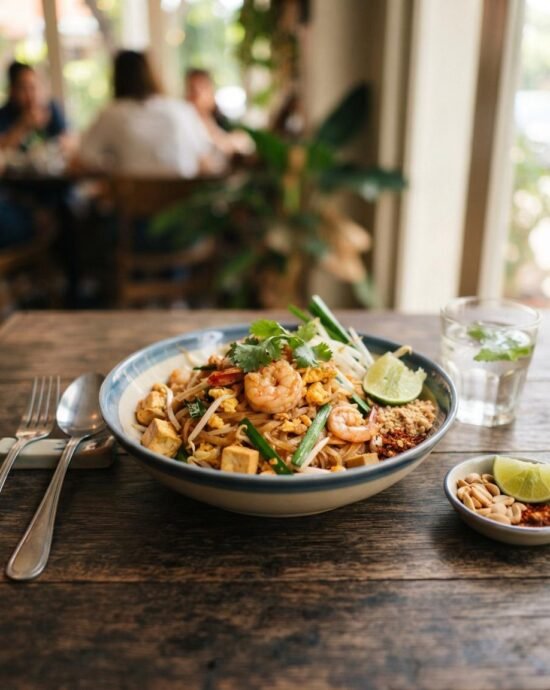
Arrange the finished Pad Thai attractively and garnish generously with the roughly chopped roasted peanuts, which provide essential crunch and nutty richness. Add a small mound of fresh cilantro leaves, a sprinkle of dried chili flakes for heat, and two or three lime wedges on the side of each plate or the serving platter. Present additional condiments in small bowls alongside: extra fish sauce, white sugar, dried chili powder, and white vinegar with sliced chili, which is the traditional Thai four-condiment set called kreung pung that allows each diner to customize their bowl to taste. This tableside personalization is an essential element of the authentic Thai Pad Thai experience, making every plate uniquely suited to the individual diner's preference for sweet, sour, salty, and spicy.
- Calories:520 kcal26%
- Protein:28 g56%
- Carbohydrates:58 g21%
- Sugar:8 g9%
- Fat:18 g23%
- Salt:1.8 g30%
- Energy:2176 kJ26%
Table of Contents
What Is Pad Thai?
Pad Thai is Thailand’s most internationally recognized noodle dish — a harmonious stir-fry of flat rice noodles tossed in a tamarind-based sauce with eggs, tofu, shrimp, and a garnish of peanuts, lime, and fresh bean sprouts. Despite its global fame, Pad Thai has surprisingly modern origins. The dish was promoted across Thailand during the 1930s and 1940s by Prime Minister Plaek Phibunsongkhram as part of a nationalist campaign to create a unified Thai national dish, reduce rice consumption during a grain shortage, and encourage wheat-free noodle use. Recipes were standardized and street vendors were encouraged to sell this dish across the country, cementing its identity as Thailand’s culinary ambassador. The name literally translates to “Thai-style stir-fried noodles,” and its genius lies in its balance of the four pillars of Thai flavor — sweet, sour, salty, and savory — achieved through the combination of tamarind paste, fish sauce, palm sugar, and oyster sauce. Authentic Pad Thai cooked in a screaming-hot wok over a charcoal flame achieves wok hei — a slightly smoky, caramelized char that elevates the dish beyond what most home kitchens can replicate without effort. The dish features a medley of textures: silky noodles, crispy tofu, bouncy shrimp, crunchy peanuts, and fresh bean sprouts. Each garnish served alongside — lime, chili, sugar, vinegar — invites the diner to personalize the flavor to their exact liking, a hallmark of Thai food culture. Whether eaten at a Bangkok street cart or a Manhattan restaurant, Pad Thai remains a timeless gateway into the depth and versatility of Thai cuisine.
Ingredient Notes
- Flat Rice Noodles (Sen Lek): The best flat rice noodles for Pad Thai are dried sen lek, about 3mm wide. Look for noodles made purely from rice flour and water with no additives, which cook more evenly and absorb sauce without becoming gummy.
- Tamarind Paste: Use fresh tamarind paste made from a tamarind block for the most authentic Pad Thai flavor — it has a balanced sweet-sour complexity. Avoid pre-made tamarind concentrates, which can be overly sharp and one-dimensional.
- Fish Sauce: Select a high-quality Thai fish sauce such as Tiparos or Megachef for the best umami depth. The best fish sauce for Pad Thai should be clear amber in color with a clean, briny scent rather than an overwhelming fishy odor.
- Palm Sugar: Palm sugar provides a gentle, caramel-like sweetness distinct from refined white sugar. Choose soft, dark palm sugar discs for the richest flavor — how to choose palm sugar is simple: the darker and softer, the more complex.
- Bean Sprouts: Select the freshest bean sprouts available — they should be crisp, white, and moist with no browning. Fresh bean sprouts for Pad Thai should snap when bent rather than bending limply.
Ingredient Suggestions
- Dried Shrimp: Adding a tablespoon of small dried shrimp deepens the umami profile significantly, which is how many street vendors boost flavor complexity cheaply and effectively.
- Preserved Radish (Chai Poh): Rinsed and chopped preserved radish adds a subtly salty, crunchy element that is present in many authentic Bangkok Pad Thai recipes but often left out in international versions.
- Extra Egg: Adding a third egg creates an even richer, more coating texture on the noodles, which many diners prefer for a creamier, more substantial bowl.
Helpful Tips & Pro Tips
- Use the highest heat your stove allows. Pad Thai cooked over low heat steams the noodles rather than stir-frying them, resulting in a soft, clumping texture. The wok must be genuinely screaming hot before any ingredients are added.
- Never overcrowd the wok. Cook in batches if making more than two servings — too many noodles at once cause steaming instead of frying and the sauce never properly caramelizes onto the noodles.
- Why is my Pad Thai sticky and clumping? This happens when noodles are over-soaked or the wok is not hot enough. Ensure noodles are soaked just until pliable but still slightly firm, and your wok reaches proper smoking temperature before adding oil.
- Rest the lime on the plate rather than squeezing it over the dish in the kitchen. Diners should add lime juice themselves so it stays fresh and bright rather than becoming absorbed and muted during transport to the table.
How to Serve and Store
Pad Thai is best consumed immediately after cooking, as the noodles continue absorbing moisture and become soft when stored. Leftovers can be refrigerated in an airtight container for up to two days. Reheat in a hot wok or skillet with a splash of water rather than a microwave, which makes the noodles rubbery. Do not freeze Pad Thai, as the noodle texture deteriorates completely upon thawing.
Substitutions
- Fish Sauce → Soy Sauce or Coconut Aminos — provides saltiness for a vegan-friendly version without the fish-derived umami.
- Shrimp → Firm Tofu or Tempeh — excellent plant-based protein that absorbs the sauce flavors beautifully.
- Palm Sugar → Brown Sugar or Coconut Sugar — both deliver a similar molasses-like sweetness if palm sugar is unavailable.
- Eggs → Silken Tofu scrambled with turmeric — mimics the soft, custardy egg texture for vegan adaptations.
- Oyster Sauce → Mushroom Oyster Sauce — a gluten-free and vegan-friendly alternative with comparable depth.
Suggested Recipes
- Pad See Ew: Another Thai noodle dish using wide rice noodles, perfect for those who enjoy Pad Thai but want a richer, sweeter soy-based sauce profile.
- Tom Yum Goong: A Thai classic that pairs beautifully with Pad Thai as part of a complete Thai meal, offering bold, sour, and spicy contrasts to the noodles’ sweetness.
- Mango Sticky Rice: The ideal sweet finish after Pad Thai, balancing the savory meal with cool, creamy mango and fragrant coconut sticky rice.
Frequently Asked Questions

Jeff Smith
"Cooking is the intersection of history, science, and emotion."
For me, the kitchen has always been a laboratory of culture. With a background deeply rooted in digital strategy and precision, I approach the culinary arts with the same rigor I apply to the digital landscape—analyzing flavors, perfecting techniques, and documenting the nuance that makes Filipino cuisine truly world-class.
Findme Recipe was born from a desire to bridge the gap between traditional heritage and the modern home cook. Whether it is mastering the perfect balance of acidity in a classic Adobo or simplifying complex regional dishes for everyday kitchens, my mission is to preserve our culinary identity through accessible, data-backed, and delicious content.
I am not just building a database; I am cultivating a community where every Filipino kitchen feels empowered, every ingredient is celebrated, and every family heirloom recipe finds a place to thrive.
Join me as we translate the soul of our islands into recipes for the next generation.