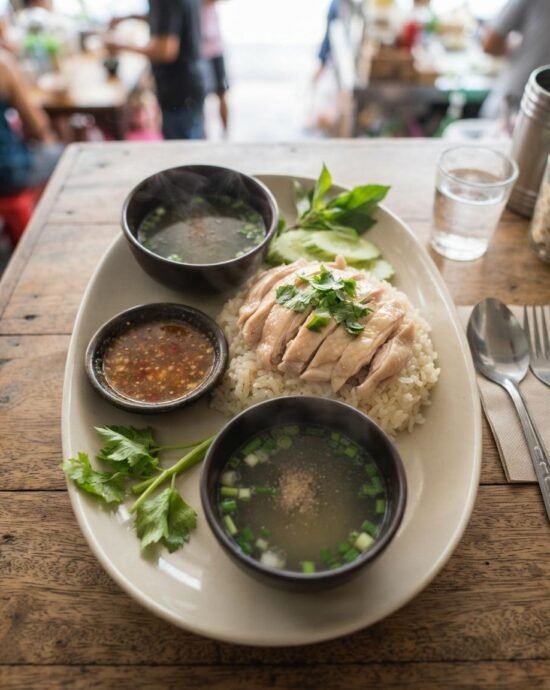

- Step 1. Poach the chicken
Place the whole chicken in a large pot and add enough water to fully submerge it, along with 2 cloves of garlic, sliced ginger, and green onion stalks. Bring to a gentle boil, then immediately reduce to a low simmer. Poach for 25 to 30 minutes, until the chicken reaches a safe internal temperature and the meat is tender and juicy. Maintaining a gentle simmer rather than a rolling boil keeps the chicken moist and prevents the meat from toughening.
- Step 2. Rest and shred or slice the chicken
Once fully cooked, remove the chicken from the pot and transfer it to an ice bath or cold water briefly to stop the cooking process and tighten the skin for a more appealing texture. Reserve the flavorful poaching liquid, as it becomes the base for cooking the rice. Once cooled enough to handle, debone the chicken and slice or shred the meat into serving-sized pieces, keeping the skin intact for added flavor and visual appeal.
- Step 3. Cook the rice
In a pan, heat the chicken fat or vegetable oil over medium heat and sauté the remaining 2 cloves of minced garlic until fragrant and lightly golden, about 1 minute. Add the rinsed jasmine rice, stirring to coat each grain in the fragrant fat for 1 to 2 minutes. Transfer the rice to a rice cooker or pot, then add the reserved poaching liquid in place of plain water, using the standard rice-to-liquid ratio, and cook until fluffy and tender.
- Step 4. Make the dipping sauce
In a bowl, combine the soybean paste, lime juice, light soy sauce, sugar, chopped Thai chilies, and julienned ginger. Whisk or stir thoroughly until the sugar dissolves and the sauce becomes well combined. Taste and adjust the balance of salty, sour, and sweet, since this tangy, slightly funky sauce is what elevates the simple poached chicken and rice into the dish's signature flavor experience.
- Step 5. Strain and reduce extra broth
While the rice cooks, strain the remaining poaching liquid through a fine sieve to remove any solids, then return it to the pot and simmer gently for 5 to 10 minutes to concentrate the flavor slightly. This broth will be served alongside the meal in small bowls, garnished with a touch of green onion, providing a light, savory accompaniment that complements the richness of the chicken and rice.
- Step 6. Plate and serve
Spoon the fragrant rice onto each plate, then arrange the sliced or shredded chicken on top or alongside it. Add sliced cucumber for a fresh, crisp contrast, and serve with a small bowl of the tangy dipping sauce and a cup of the warm broth on the side. Drizzle a little dipping sauce directly over the chicken before eating, or dip each bite individually for a more controlled flavor experience.
- Calories:460 kcal23%
- Protein:32 g64%
- Carbohydrates:52 g19%
- Sugar:4 g4%
- Energy:1925 kJ23%
- Salt:1.9 g32%
- Fat:13 g19%
Table of Contents
What Is Khao Man Gai?
Khao Man Gai is Thailand’s beloved version of Hainanese chicken rice, a comforting dish of tender poached chicken served over fragrant rice cooked in the same flavorful poaching liquid, accompanied by a tangy, slightly spicy dipping sauce. The dish traces its roots to Chinese immigrants from Hainan who settled across Southeast Asia, bringing their chicken rice tradition with them, which Thailand adapted with its own distinct dipping sauce featuring fermented soybean paste, lime, and chili. What makes Khao Man Gai so beloved is its deceptive simplicity: at its core, the dish is just chicken and rice, yet the technique behind each component elevates it into something deeply satisfying and craveable. The chicken is gently poached rather than boiled aggressively, preserving its tenderness and juiciness, while the rice absorbs the rendered chicken fat and poaching broth, becoming rich and aromatic without any heavy seasoning needed on its own. The accompanying sauce, built on fermented soybean paste rather than the more common fish sauce, gives Khao Man Gai its distinctive tangy, umami-forward character that sets it apart from other regional chicken rice variations. Often sold from street carts and casual eateries throughout Thailand, the dish is considered an everyday comfort food, accessible, affordable, and endlessly satisfying regardless of the time of day. A small bowl of warm, savory broth typically accompanies the meal, offering a light palate cleanser between bites of rich chicken and rice. Khao Man Gai’s appeal lies in its balance of textures and subtle layering of flavor, proving that a humble combination of chicken and rice, prepared with care and the right technique, can become one of the most beloved comfort dishes in all of Thai cuisine.
Ingredient Notes
- Whole chicken: A whole chicken yields the most flavorful poaching liquid for the rice, though boneless thighs work as a quicker alternative. Choose a fresh, plump bird for the juiciest results.
- Jasmine rice: Use high-quality jasmine rice for its natural fragrance and slightly sticky texture, which pairs perfectly with the rich poaching broth used to cook it.
- Soybean paste (taucheo): This fermented paste is essential for the dish’s signature tangy, umami-rich dipping sauce; look for it in Asian grocery stores, choosing a brand with visible whole soybeans for the best texture.
- Fresh ginger: Ginger appears both in the poaching liquid for subtle warmth and finely julienned in the sauce for a sharper, fresher bite, so look for firm, smooth-skinned roots.
- Chicken fat: Rendered chicken fat skimmed from the poaching liquid adds incomparable richness to the rice; if unavailable, vegetable oil is an acceptable substitute, though slightly less flavorful.
Ingredient Suggestions
- Crispy fried garlic: Scattering crispy fried garlic over the rice adds a satisfying crunch and deeper savory aroma.
- Chinese broccoli (gai lan): Adding blanched Chinese broccoli on the side rounds out the meal with fresh, slightly bitter greens.
- Extra chili in the sauce: For those who love heat, adding more chopped Thai chilies intensifies the dipping sauce’s signature kick.
- Hard-boiled egg: A halved soft or hard-boiled egg served alongside adds richness and makes the meal more substantial.
- Pickled ginger: A small side of pickled ginger offers a tangy, palate-cleansing contrast between bites of rich chicken and rice.
Helpful Tips & Pro Tips
- Maintain a gentle simmer rather than a rolling boil while poaching the chicken, since aggressive boiling toughens the meat and clouds the broth.
- Always cook the rice in the reserved poaching liquid rather than plain water, since this step is what gives Khao Man Gai its signature rich, savory flavor.
- Why is my chicken rubbery? It was likely overcooked or boiled too vigorously; poach gently and check doneness early to avoid drying out the meat.
- Shock the cooked chicken briefly in ice water after poaching, since this firms up the skin and gives the final dish a more appealing, slightly chewy texture.
- Sauté the rice in chicken fat and garlic before cooking, since this extra step toasts the grains slightly and deepens the overall flavor of the finished rice.
- Taste your dipping sauce before serving and adjust the balance of sour, salty, and sweet, since soybean paste brands vary significantly in saltiness and intensity.
How to Serve and Store
Serve Khao Man Gai warm, with the chicken arranged over fragrant rice, a small bowl of dipping sauce on the side, and a cup of warm broth to sip alongside the meal. Fresh cucumber slices add a cool, crisp contrast to the richness of the dish. Store leftover chicken, rice, and sauce separately in airtight containers in the refrigerator for up to 3 days. Reheat the rice with a splash of water or broth to restore moisture, and warm the chicken gently to avoid drying it out; the sauce can be served cold or at room temperature without reheating.
Substitutions
- Whole chicken → King oyster mushrooms, torn into pieces — creates a satisfying plant-based version that absorbs the savory poaching broth well. (Vegan)
- Chicken fat → Vegetable oil with a splash of soy sauce — replicates richness in the rice without animal-derived fat. (Vegan)
- Soybean paste → A certified gluten-free miso paste — preserves the fermented umami flavor of the dipping sauce without gluten. (Gluten-Free)
- Whole chicken → Bone-in chicken thighs — offers a more budget-friendly cut that still produces flavorful poaching liquid for the rice. (Budget-Friendly)
- Light soy sauce → Tamari — delivers a comparable salty depth as a gluten-free alternative.
- Lime juice → Rice vinegar with a touch of sugar — approximates the bright acidity when fresh lime isn’t available.
Suggested Recipes
- Tom Kha Gai: A creamy coconut chicken soup that pairs beautifully alongside Khao Man Gai’s mild, comforting flavors.
- Gaeng Jued: A light, clear soup that complements the richness of poached chicken and rice with a soothing contrast.
- Larb Moo: A bold, spicy minced pork salad that adds excitement to a meal centered around mild chicken rice.
- Pad Woon Sen: A light glass noodle stir-fry that makes an easy, complementary side dish to Khao Man Gai.
Frequently Asked Questions

Jeff Smith
"Cooking is the intersection of history, science, and emotion."
For me, the kitchen has always been a laboratory of culture. With a background deeply rooted in digital strategy and precision, I approach the culinary arts with the same rigor I apply to the digital landscape—analyzing flavors, perfecting techniques, and documenting the nuance that makes Filipino cuisine truly world-class.
Findme Recipe was born from a desire to bridge the gap between traditional heritage and the modern home cook. Whether it is mastering the perfect balance of acidity in a classic Adobo or simplifying complex regional dishes for everyday kitchens, my mission is to preserve our culinary identity through accessible, data-backed, and delicious content.
I am not just building a database; I am cultivating a community where every Filipino kitchen feels empowered, every ingredient is celebrated, and every family heirloom recipe finds a place to thrive.
Join me as we translate the soul of our islands into recipes for the next generation.