Healthy cooking has a branding problem. Somewhere along the way it got tangled up with bland chicken breast, flavorless steamed broccoli, and the idea that anything good for you can’t also taste good. None of that is actually true. Learning how to cook healthy is really about a handful of small, repeatable habits — how you season, how you cook your proteins, what you keep stocked in your pantry — rather than following some restrictive plan that falls apart by Thursday.
You don’t need to overhaul your entire kitchen or throw out every ingredient you own. You just need a few reliable techniques and the confidence to season food properly, because bland food is what actually kills healthy eating habits, not the vegetables themselves. Most people who say they “can’t stick to healthy eating” aren’t failing at willpower — they’re just cooking food that doesn’t taste good enough to want to eat again. Here’s where to start.
Start With Cooking Methods, Not Just Ingredients
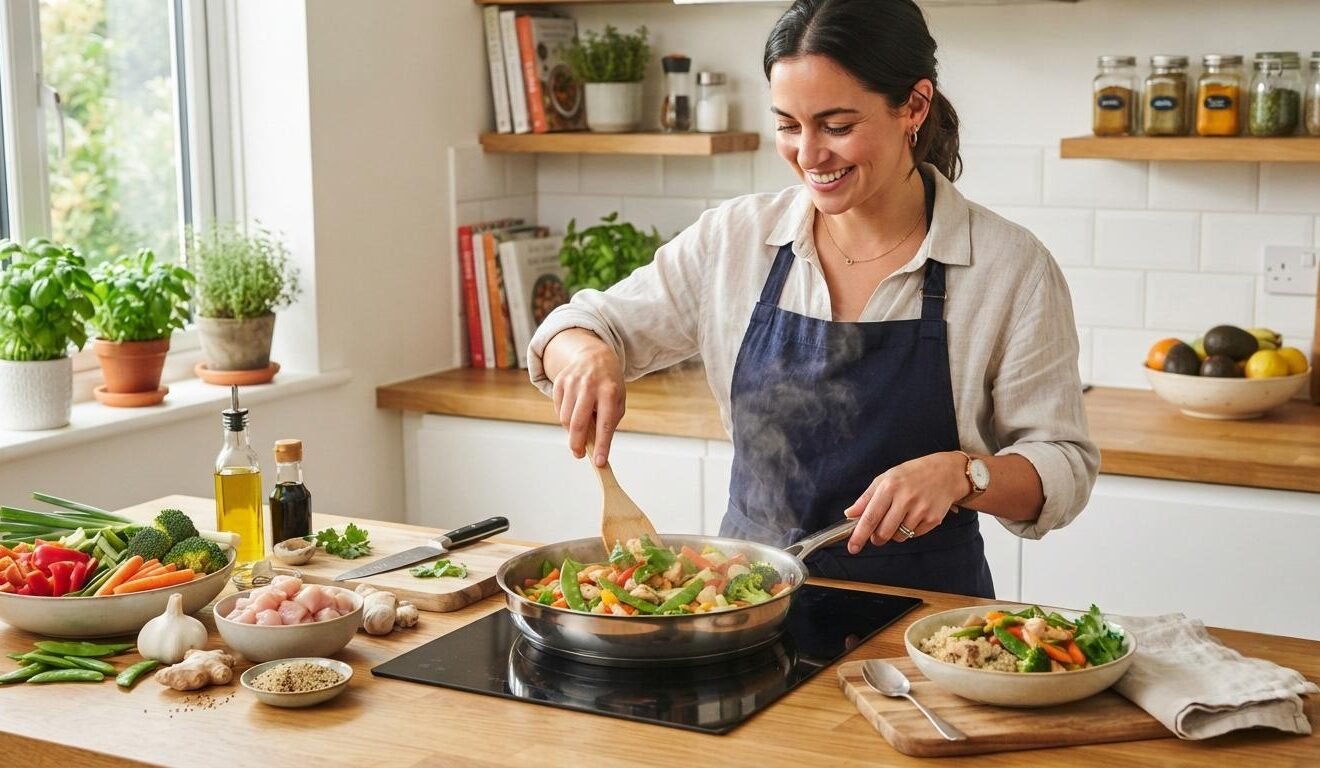
The biggest lever you can pull for healthier cooking isn’t necessarily what you’re cooking — it’s how. Roasting, grilling, steaming, and sautéing with a small amount of oil all let the natural flavor of food come through without drowning it in butter or deep-frying it. Roasting vegetables at a high temperature, for instance, caramelizes their natural sugars and makes them taste noticeably better than boiling ever could.
This matters more than people expect. A roasted sweet potato with a bit of olive oil and salt tastes completely different — and better — than a boiled one, even though the ingredient list barely changed. Once you get comfortable with two or three go-to methods, healthy cooking stops feeling like a compromise.
Build a Flavor Toolkit, Not a Restriction List
This is the part most beginner healthy-eating advice skips entirely. Fresh herbs, citrus zest, good vinegar, garlic, and a well-stocked spice cabinet do more for a healthy meal than any amount of ingredient substitution. A squeeze of lemon over roasted fish or a splash of balsamic vinegar on grilled vegetables adds brightness that makes the dish feel complete, not like it’s missing something.
Keep a rotating stock of at least five or six spices beyond salt and pepper — smoked paprika, cumin, garlic powder, chili flakes, and a good curry powder cover an enormous range of cuisines. Honestly, this is the single change that made the biggest difference for me when I started cooking healthier meals regularly.
Batch a Few Basics So You’re Never Starting From Zero
One of the main reasons healthy cooking falls apart during a busy week is that starting from scratch every single night is exhausting. Cook a big batch of grains, a protein, and roasted vegetables once or twice a week, then mix and match them into different meals — a grain bowl one night, a wrap the next, tossed into a soup after that.
This isn’t the same as rigid meal prep where every meal is identical in a container. It’s more like stocking your fridge with building blocks so that on a Tuesday when you’re tired, dinner is assembly, not a full cooking project.
Rethink Portions Instead of Eliminating Foods
Healthy cooking doesn’t mean cutting out pasta, cheese, or red meat forever — it usually means adjusting how much space they take up on the plate. A pasta dish built around a generous pile of vegetables with a smaller portion of noodles still satisfies the craving without being the entire meal.
This shift in thinking, from elimination to balance, is what actually makes healthy cooking sustainable long term. Diets built on total restriction tend to fail because they fight against how people naturally want to eat, while small proportion changes barely register as a sacrifice. A plate that’s mostly vegetables with a modest serving of pasta still feels like pasta night, just a more balanced version of it.
Keep a Realistic Pantry Stocked
A healthy kitchen isn’t defined by kale and quinoa sitting untouched in the back of the fridge — it’s defined by having a few reliable staples on hand so cooking something decent is always an option. Canned beans, frozen vegetables, whole grains, olive oil, and a couple of proteins in the freezer mean you’re never stuck ordering takeout just because the fresh produce ran out.
Frozen vegetables in particular get an unfair reputation. They’re typically flash-frozen at peak ripeness, which means they often have more retained nutrients than the “fresh” produce that’s been sitting in a truck and a grocery display for a week.
Cook More Than You Need Once in a While
Healthy cooking gets a lot easier once you stop thinking of every meal as a standalone project. When you’re already roasting a tray of vegetables or grilling a couple of chicken breasts, double the batch. The extra effort is minimal, but it gives you a head start on tomorrow’s lunch or dinner without any additional cooking time.
This habit is less about strict meal prep and more about being a little strategic with the cooking you’re already doing. Over a few weeks, it adds up to noticeably less scrambling on weeknights and far fewer moments where a lack of a quick, healthy option leads to takeout instead.
Don’t Underestimate the Power of a Good Sear
One overlooked reason home-cooked healthy meals can taste flat compared to restaurant food comes down to browning. A properly seared piece of chicken, tofu, or fish develops deep, savory flavor through the Maillard reaction — that’s the browning that happens when protein hits a hot, dry pan — and it’s something a lot of home cooks accidentally skip by crowding the pan or flipping too early.
Give your protein space in the pan, pat it dry beforehand, and let it sit undisturbed until it releases easily and has a golden crust. This one habit alone makes a healthy piece of grilled chicken taste like something worth cooking again, instead of the flavorless afterthought it can turn into if it’s just steamed in its own liquid.