
- Step 1: Clean and Prepare the Mussels
Begin by thoroughly cleaning the fresh mussels (tahong) under cold running water, scrubbing the shells vigorously with a stiff-bristled brush to remove any barnacles, sand, and surface debris. Pull off each mussel's beard — the fibrous, thread-like byssus that protrudes from between the shells — by gripping it firmly and pulling sharply toward the hinge end of the shell to detach it cleanly. Discard any mussels with cracked shells or those that remain open and do not close when tapped firmly against the counter — these are dead mussels and are unsafe to eat. Allow the cleaned mussels to soak in fresh cold water for 20 minutes to purge any remaining sand or grit, then drain and set aside. Properly cleaned mussels are the foundation of a grit-free, enjoyable Adobong Tahong.
- Step 2: Steam Open the Mussels
Place the cleaned mussels in a large pot with half a cup of water. Cover the pot tightly with a lid and bring to a boil over high heat. Steam the mussels for approximately three to five minutes, shaking the pot occasionally, just until all the shells have opened. Remove from heat immediately — do not overcook at this stage, as the mussels will cook further in the adobo sauce. Transfer the opened mussels to a bowl using a slotted spoon, discarding any that have not opened after five minutes of steaming. Reserve the steaming liquid, straining it through a fine mesh sieve to remove any sand or grit — this intensely flavored, briny mussel liquor will be used as part of the adobo braising liquid to deepen the seafood flavor.
- Step 3: Remove Half the Shells
Once the steamed mussels are cool enough to handle, remove and discard one shell from each mussel, leaving the mussel meat attached to the remaining shell. This single-shell presentation is traditional for Adobong Tahong — it allows the sauce to coat the mussel meat directly while the shell acts as a natural serving vessel, creating the visually appealing presentation characteristic of this dish. Place the half-shell mussels in a bowl and set aside. Some home cooks prefer to remove all shells and cook the mussel meat loose in the adobo sauce — this is a valid variation that produces a saucier, spoonable result better suited for rice topping, while the half-shell method is more dramatic and restaurant-appropriate.
- Step 4: Sauté Aromatics
Heat two tablespoons of cooking oil in a large wok or wide pan over medium heat. Add the minced garlic and cook for 30 to 45 seconds until fragrant and lightly golden. Add the sliced onion and sauté for two to three minutes until translucent and softened. The goal is a deeply aromatic base — the natural sweetness of cooked garlic and onion will balance the brininess of the mussels and the sourness of the vinegar in the finished sauce. Do not allow the garlic to burn, as burnt garlic imparts a bitter note that cannot be corrected. Add the bay leaves and peppercorns at this stage and cook for another 30 seconds to begin releasing their aromatic oils into the hot oil.
- Step 5: Build the Adobo Sauce
Pour the soy sauce, white cane vinegar, and reserved mussel steaming liquid into the pan with the aromatics. Add the sugar and stir well to dissolve. Bring the sauce to a gentle simmer over medium heat. Taste the sauce at this point and adjust the balance — it should be pleasantly tangy from the vinegar, savory from the soy sauce, and carry the faint ocean brininess from the reserved mussel stock. This is the moment to fine-tune the flavor foundation before the mussels are added, as the mussels themselves will release additional briny liquid into the sauce as they heat through. Add a small splash more vinegar for brightness or soy sauce for depth as needed, remembering that the mussels will contribute further saltiness.
- Step 6: Add Mussels and Finish
Add the half-shell mussels to the simmering adobo sauce, arranging them as best as possible with the open meat-side facing up so the sauce can pool into the shell. Gently stir to coat all the mussels with the sauce. Cook over medium heat for three to five minutes — just long enough to heat the mussels through and allow the sauce to cling to the meat. Do not braise the mussels for longer than five minutes in the sauce, as prolonged cooking turns mussel meat tough, dry, and rubbery. The sauce should reduce slightly during this time, becoming more concentrated and glossy. Taste one final time and adjust seasoning. Remove the bay leaves. The sauce at this stage should beautifully coat the mussels.
- Step 7: Plate and Serve
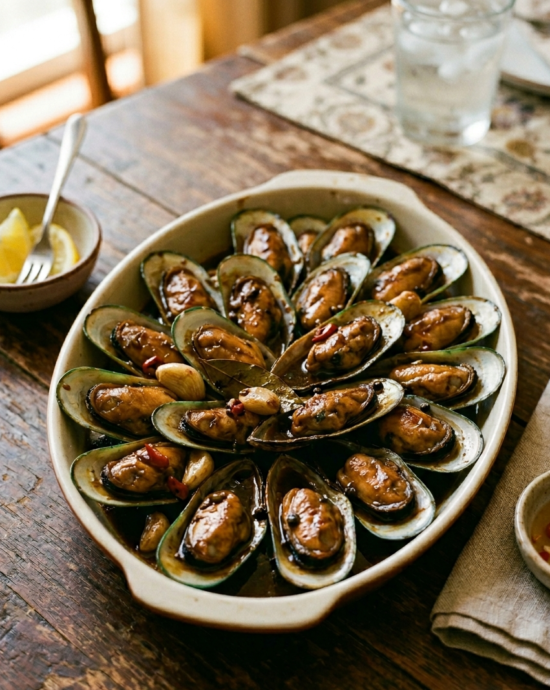
Arrange the sauced Adobong Tahong on a large, wide serving platter with the shells facing up to display the glossy, sauced mussel meat dramatically. Spoon any remaining sauce from the pan generously over the arranged mussels, ensuring every shell carries a pool of the flavorful adobo sauce inside it. Scatter the chopped green onions over the top for a fresh, bright garnish that adds color contrast and a mild sharpness to the first bite. Serve immediately alongside steamed white rice with extra sauce on the side. The dish should smell intensely of garlic, vinegar, and the sea — an irresistible combination that makes Adobong Tahong one of the most beloved budget-friendly Filipino seafood preparations.
- Calories:180 kcal9%
- Protein:22 g44%
- Carbohydrates:7 g3%
- Sugar:2 g2%
- Fat:6 g8%
- Salt (Sodium):680 mg30%
- Energy:753 kJ9%
Table of Contents
What Is Adobong Tahong?
Adobong Tahong is a Filipino braised mussel dish made by cooking fresh mussels in the classic soy sauce and vinegar adobo base with garlic, aromatics, and a touch of sugar, producing a briny, savory, mildly tangy sauce that clings to the half-shell mussels and pairs perfectly with steamed white rice. It is beloved throughout the Philippines for its simplicity, bold flavors, and the outstanding value that fresh mussels offer.
Tahong — the Filipino word for green-lipped mussels — are farmed extensively in Philippine coastal areas, particularly in Bacoor Bay in Cavite and in various Visayan provinces, making them among the most affordable and widely available seafood options in the country. Their natural brininess and sweetness make them an ideal candidate for the adobo treatment, as the vinegar-soy braising liquid provides a complementary savory-sour contrast to the mussel’s inherent oceanic sweetness.
The dish is a fixture in Filipino carinderia culture — the casual eateries that serve home-style Filipino food to working-class communities — where a large platter of Adobong Tahong with rice represents an extremely satisfying and nutritious meal at minimal cost. Despite its humble origins and budget-friendly ingredients, Adobong Tahong is genuinely delicious and showcases the Filipino culinary genius for transforming simple, affordable seafood into something deeply flavorful.
For anyone seeking to explore the breadth of Filipino adobo cooking beyond the familiar pork and chicken preparations, Adobong Tahong is an essential and accessible starting point that reveals how the adobo technique adapts brilliantly to the unique flavor profile of shellfish.
Ingredient Notes
- Fresh Mussels (Tahong) Fresh green-lipped mussels are the star of this dish and their quality determines the outcome entirely. Choose the best mussels for Adobong Tahong by selecting tightly closed shells (or shells that close immediately when tapped), a clean ocean smell, and bright, plump meat visible through any slightly open shells.
- Reserved Mussel Steaming Liquid: The liquid released when steaming the mussels open is packed with concentrated seafood flavor — straining and adding it to the adobo sauce dramatically deepens the oceanic character of the finished dish. Never discard this liquid; it is arguably more flavorful than the mussels themselves.
Ingredient Suggestions
- Fresh Tomatoes — Two diced tomatoes sautéed with the aromatics add brightness and mild acidity that complements the mussels’ natural sweetness beautifully.
- Coconut Milk — Replacing the water with coconut milk creates a rich, creamy coconut-adobo mussel dish with a distinctly Bicolano character.
- Chili Flakes — A pinch of dried chili flakes or fresh bird’s eye chili adds pleasant heat that enhances the briny sweetness of the mussels.
- Butter Finish — Stirring a tablespoon of cold butter into the sauce just before serving creates a glossy, rich sauce with a French-bistro elegance that works surprisingly well with the Filipino flavors.
Helpful Tips & Pro Tips
- Never overcook mussels — they should be added to the adobo sauce only after it has been properly seasoned and reduced, then cooked for just three to five minutes to heat through. Overcooked mussels shrink dramatically and become tough and rubbery.
- Why do some of my mussels not open during steaming? Mussels that remain stubbornly closed after five minutes of steaming should be discarded — they were dead before cooking and are unsafe to eat regardless of how long you continue cooking them.
- Reserve the half-shells for traditional presentation and use them as natural sauce vessels when plating — the shells hold the adobo sauce beautifully and make the dish look restaurant-quality.
How to Serve and Store
Adobong Tahong is best served immediately after cooking while the mussels are at their most tender and the sauce is at peak flavor. Serve with plenty of steamed white rice and a small side of fresh tomato salad to balance the richness. Leftover Adobong Tahong keeps in an airtight container in the refrigerator for up to 2 days — the mussels will toughen slightly upon reheating but the sauce improves in depth. Reheat gently on the stovetop over low heat and serve promptly. Freezing is not recommended as mussel texture degrades significantly upon freezing and thawing.
Substitutions
- Fresh Mussels → Clams (Halaan) — Small Filipino clams offer a similar briny sweetness and respond identically to the adobo treatment; a direct substitution at equal weight.
- White Cane Vinegar → Apple Cider Vinegar — Provides a similar sharp acidity with a slightly fruity undertone that complements the mussels’ oceanic sweetness.
- Soy Sauce → Fish Sauce — Using fish sauce in place of soy sauce amplifies the seafood character of the dish significantly, creating a more intensely oceanic adobo sauce.
Suggested Recipes
- Adobong Pusit — The squid ink adobo cousin that shares the same briny Filipino seafood spirit with a dramatically different visual presentation.
- Baked Tahong — A cheese-topped baked mussel preparation that uses the same tahong but in an entirely different, richer preparation method.
- Halabos na Hipon — Another simple, beloved Filipino shellfish preparation that highlights the natural sweetness of seafood with minimal intervention.
Frequently Asked Questions

Jeff Smith
"Cooking is the intersection of history, science, and emotion."
For me, the kitchen has always been a laboratory of culture. With a background deeply rooted in digital strategy and precision, I approach the culinary arts with the same rigor I apply to the digital landscape—analyzing flavors, perfecting techniques, and documenting the nuance that makes Filipino cuisine truly world-class.
Findme Recipe was born from a desire to bridge the gap between traditional heritage and the modern home cook. Whether it is mastering the perfect balance of acidity in a classic Adobo or simplifying complex regional dishes for everyday kitchens, my mission is to preserve our culinary identity through accessible, data-backed, and delicious content.
I am not just building a database; I am cultivating a community where every Filipino kitchen feels empowered, every ingredient is celebrated, and every family heirloom recipe finds a place to thrive.
Join me as we translate the soul of our islands into recipes for the next generation.