
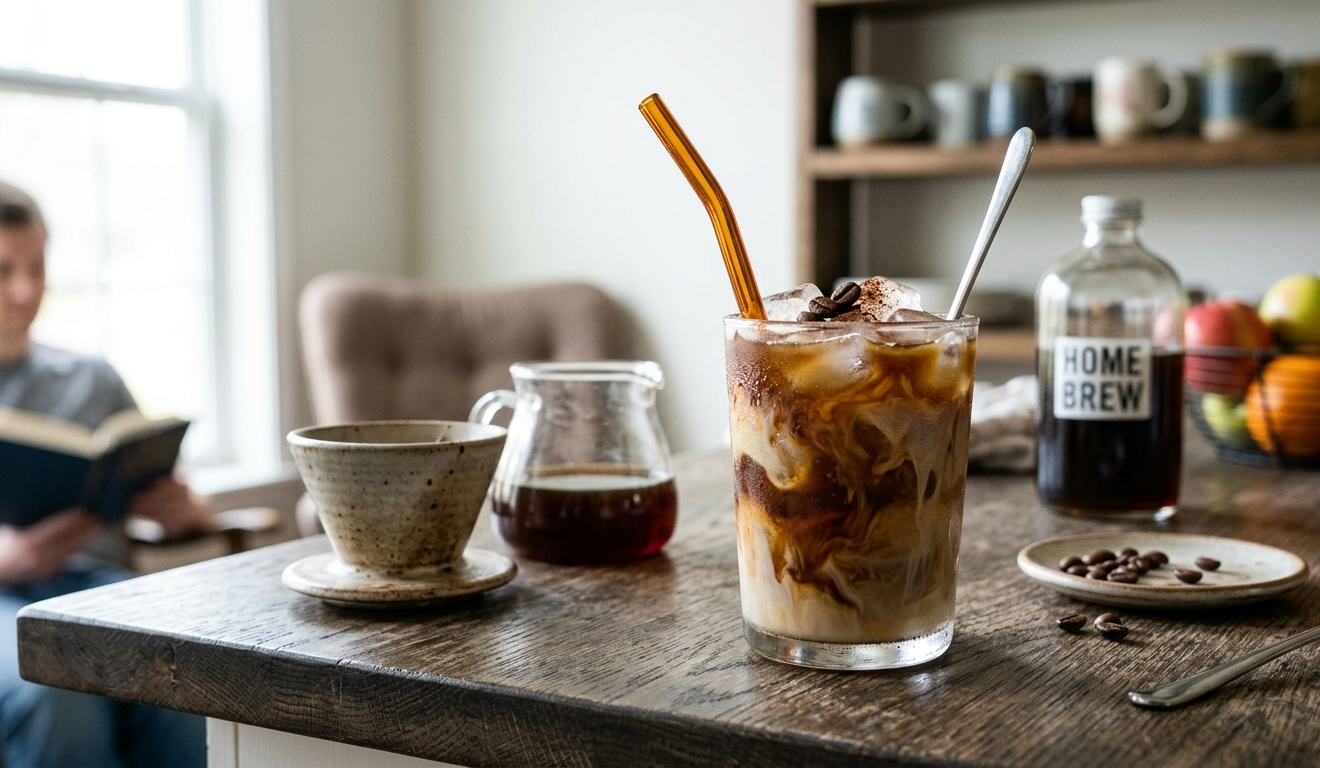
Homemade iced coffee beats coffee shop versions in every way that matters — it’s stronger, cheaper, fresher, and completely under your control. The challenge most people hit isn’t the coffee itself; it’s the ice dilution problem. You brew hot, pour it over ice, and end up with something watery and weak by the time you’re halfway through the glass.
Learning how to make the best iced coffee comes down to choosing the right method for your setup and understanding one key principle: you need to start stronger than you think. This guide covers two foolproof methods, the ratio that eliminates dilution, and every customization worth knowing.
Method 1: Cold Brew (Best for Smoothness)
Cold brew is made by steeping coarsely ground coffee in cold water for 12–24 hours. The result is a coffee concentrate that’s smooth, naturally sweet, and almost completely free of bitterness — because heat is what extracts the acidic compounds.
Ratio: 1 cup coarse ground coffee to 4 cups cold water (this makes a concentrate).
- Combine coffee and cold water in a large jar or pitcher. Stir to ensure all grounds are wet.
- Cover and refrigerate for 12–24 hours. Longer steep = stronger, slightly more bitter.
- Strain through a fine mesh strainer lined with a coffee filter or cheesecloth.
- To serve: dilute with equal parts water or milk over ice. The concentrate is too strong to drink straight.
💡 Pro Tip: Cold brew keeps in the fridge for up to 2 weeks. Make a large batch on Sunday and you have coffee all week.
Method 2: Flash Brew (Best for Speed)
Flash brew (also called Japanese-style iced coffee) brews hot coffee directly onto ice. The ice chills the coffee instantly, locking in bright, complex flavors that cold brew doesn’t develop. It’s ready in minutes.
The key is brewing at double strength so the ice dilution brings it to the right concentration.
- Fill your cup or carafe with ice — you need about half the final volume in ice.
- Brew double-strength coffee: use your normal coffee amount but half the water. For a pour-over or drip machine, this means halving the water while keeping the coffee the same.
- Brew directly onto the ice. The hot coffee melts some ice as it brews — that’s intentional; it dilutes back to normal strength.
- Serve immediately. Flash-brewed iced coffee is best consumed right away.
The Dilution Problem — Solved
The single best upgrade to any iced coffee routine: coffee ice cubes. Brew a pot, let it cool, pour into an ice cube tray, and freeze. Use these instead of regular ice and your coffee never gets watered down — it gets more concentrated as the cubes melt.
Customizations Worth Making
Classic iced latte: Cold brew concentrate + milk (oat, whole, or almond) over ice.
Vanilla sweet cream: Make simple syrup with vanilla bean; top with a pour of heavy cream.
Brown sugar shaken: Combine cold brew, brown sugar syrup, and cinnamon in a jar with ice. Shake vigorously, strain over fresh ice.
Mocha iced coffee: Add 1–2 tbsp chocolate syrup to cold brew before adding milk.
Choosing the Right Coffee
Medium or medium-dark roasts work best for iced coffee — they have enough body to hold up to ice and milk without turning sharp or bitter. Light roasts can taste thin and acidic when cold. Whatever you use, grind fresh if possible: pre-ground coffee goes stale faster and produces noticeably flatter iced coffee.
- Cold brew: coarse grind (like raw sugar)
- Flash brew: medium-fine grind (like table salt)
- Best roasts: medium, medium-dark, or any espresso blend
Frequently Asked Questions

Jeff Smith
"Cooking is the intersection of history, science, and emotion."
For me, the kitchen has always been a laboratory of culture. With a background deeply rooted in digital strategy and precision, I approach the culinary arts with the same rigor I apply to the digital landscape—analyzing flavors, perfecting techniques, and documenting the nuance that makes Filipino cuisine truly world-class.
Findme Recipe was born from a desire to bridge the gap between traditional heritage and the modern home cook. Whether it is mastering the perfect balance of acidity in a classic Adobo or simplifying complex regional dishes for everyday kitchens, my mission is to preserve our culinary identity through accessible, data-backed, and delicious content.
I am not just building a database; I am cultivating a community where every Filipino kitchen feels empowered, every ingredient is celebrated, and every family heirloom recipe finds a place to thrive.
Join me as we translate the soul of our islands into recipes for the next generation.