
- Marinate the chicken
Cut the chicken thighs into bite-size pieces and toss with a teaspoon of soy sauce and a pinch of white pepper. Let it sit at room temperature for about ten minutes while you prepare the remaining ingredients. This quick marinade seasons the chicken from the inside and helps it brown more evenly once it hits the hot wok, rather than steaming from excess surface moisture.
- Toast the cashews and chilies
Heat a tablespoon of oil in a wok over medium heat and add the cashew nuts, stirring constantly until they turn golden and fragrant, about two minutes. Remove them to a plate. In the same wok, quickly fry the dried Thai chilies for about fifteen seconds until they darken slightly and turn fragrant, then remove them as well, being careful not to let them burn and turn bitter.
- Stir-fry the chicken
Add the remaining oil to the wok and raise the heat to high. Add the minced garlic and stir-fry for a few seconds until fragrant, then add the chicken pieces in a single layer. Let them sear undisturbed for about a minute before tossing, cooking until the chicken is mostly opaque and lightly browned on the edges, roughly four to five minutes total.
- Add the vegetables
Add the onion and bell pepper to the wok and stir-fry for two to three minutes until the vegetables begin to soften but still hold some crunch. Keep the heat high throughout so the ingredients sear rather than steam, tossing frequently to ensure even cooking across all the pieces in the pan.
- Season and combine
Pour in the oyster sauce, fish sauce, and palm sugar, stirring to coat everything evenly and dissolve the sugar into the sauce. Return the toasted cashews and fried chilies to the wok along with the scallions, tossing everything together for another minute until the sauce clings to the chicken and vegetables and everything is heated through.
- Finish and serve
Taste the dish and adjust the seasoning with a touch more fish sauce or sugar if needed to balance the salty-sweet profile. Transfer to a serving platter immediately so the cashews stay crisp, and serve hot alongside steamed jasmine rice for a complete weeknight meal.
- Calories:380 kcal19%
- Protein:28 g56%
- Carbohydrates:16 g5%
- Sugar:7 g14%
- Energy:1590 kJ19%
- Salt:1.6 g70%
- Fat:22 g28%
What Is Gai Pad Med Mamuang?
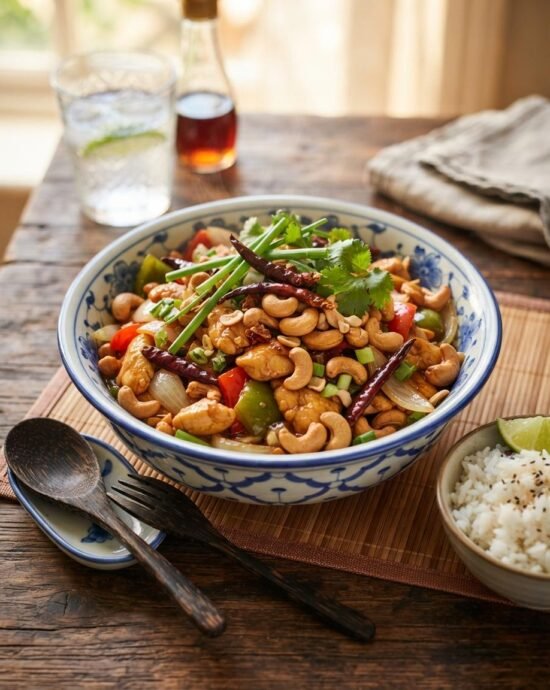
Gai Pad Med Mamuang is a Thai stir-fry of tender chicken, crunchy roasted cashews, and crisp vegetables tossed together in a savory-sweet sauce built on oyster and fish sauce. It's one of the most approachable dishes in Thai cuisine for newcomers, since it skips the intense chili heat of many other stir-fries in favor of a gentler warmth from dried chilies that flavor the oil without dominating the plate. The dish appears on nearly every Thai restaurant menu outside Thailand, often as a gateway dish for diners easing into the cuisine.
The recipe likely developed from the broader tradition of Thai-Chinese stir-frying, which brought wok cooking, oyster sauce, and the technique of quickly searing proteins over high heat into Thai kitchens generations ago. Cashews, while not native to Thailand, were introduced by Portuguese traders centuries back and were gradually folded into Thai cooking, where their buttery crunch became a defining textural element in dishes like this one.
What separates a great Gai Pad Med Mamuang from an average one is timing and heat control. The wok needs to stay hot enough to sear the chicken quickly, keeping it juicy rather than tough, while the cashews are toasted separately so they retain their crunch instead of turning soggy in the sauce. Dried Thai chilies fried briefly in oil at the start infuse the entire dish with a smoky, mild spice that never becomes overwhelming.
Served over steamed jasmine rice, Gai Pad Med Mamuang delivers a satisfying mix of textures and a sauce that's salty, faintly sweet, and deeply savory, making it a reliable weeknight dinner that comes together in well under thirty minutes from start to finish.
Ingredient Notes
- Chicken thighs: Thighs stay juicy through high-heat stir-frying in a way breast meat often doesn't, since their higher fat content resists drying out. Look for pieces with even thickness so they cook uniformly.
- Roasted cashew nuts: Cashews add the dish's signature crunch and buttery richness. Buy raw cashews and toast them yourself for the best flavor and freshness, since pre-roasted nuts can taste stale if they've sat on a shelf too long.
- Dried Thai chilies: These whole dried chilies flavor the cooking oil with a smoky warmth rather than delivering sharp heat. Choose chilies that are still pliable rather than brittle and faded, which is a sign of age.
- Oyster sauce: Oyster sauce provides the dish's savory, slightly sweet backbone. A thicker, glossier sauce generally indicates better quality and will cling to the stir-fry more effectively than a thin, watery one.
Ingredient Suggestions
1. Fresh pineapple chunks: Their juicy sweetness plays well against the salty, savory sauce and adds a tropical brightness.
2. Baby corn: Adds extra crunch and visual color without competing with the other flavors in the dish.
3. A splash of Shaoxing wine: Deglazing the wok with a splash before adding the sauce builds another layer of savory depth.
4. Thai basil: A handful stirred in at the very end adds a fragrant, slightly peppery lift to the finished dish.
5. Extra dried chilies: For those who like more heat, doubling the dried chilies intensifies the smoky warmth without making the dish sharply spicy.
Helpful Tips & Pro Tips
- Keep the wok screaming hot before adding the chicken. A wok that isn't hot enough causes the chicken to release liquid and steam instead of sear, resulting in pale, rubbery pieces instead of lightly browned ones.
- Toast the cashews separately from the stir-fry itself. Adding raw or already-toasted cashews directly into the sauce softens their crunch, which is one of the dish's main textural appeals.
- Cut all your vegetables and chicken to a similar size before you start cooking, since stir-frying moves fast and there's no time to trim pieces once the wok is hot.
- If your finished sauce tastes flat, it likely needs more fish sauce rather than salt, since fish sauce adds both salinity and a savory depth that plain salt can't replicate.
- Don't walk away from the dried chilies while they fry in the oil. They go from fragrant to burnt within seconds, and burnt chilies will turn the entire dish bitter.
How to Serve and Store
Serve Gai Pad Med Mamuang immediately over steamed jasmine rice while the cashews are still at their crunchiest and the vegetables retain some bite. This dish reheats reasonably well, making it a good candidate for meal prep; store leftovers in an airtight container in the refrigerator for up to three days. When reheating, use a hot skillet rather than a microwave if possible, since dry, high heat helps revive some of the texture that softens during refrigeration. The dish is not recommended for freezing, as the vegetables and cashews both lose their crispness significantly once thawed.
Substitutions
- Chicken thighs → Extra-firm tofu, pressed and cubed — Tofu soaks up the savory sauce well and provides a satisfying bite when pan-fried before stir-frying. (Vegan)
- Oyster sauce → Vegetarian mushroom stir-fry sauce — This plant-based alternative delivers a similar glossy, umami-rich coating without any animal products. (Vegan)
- Soy sauce → Tamari — Tamari provides the same salty depth as regular soy sauce without the wheat, making the dish gluten-free. (Gluten-Free)
- Roasted cashews → Roasted peanuts — Peanuts are typically less expensive than cashews and offer a similar crunch, though with a slightly different flavor. (Budget-Friendly)
- Fish sauce → Additional soy sauce with a pinch of sugar — This combination approximates the salty-sweet depth of fish sauce for those avoiding animal products or shellfish.
Suggested Recipes
1. Moo Ping: Both dishes share a similar sweet-savory sauce profile, making them a natural pairing for a Thai grilling and stir-fry spread.
2. Pla Nueng Manao: Balance out the mild sweetness of this stir-fry with the sharp, sour heat of a classic steamed lime fish.
3. Boat Noodles: For a heartier meal, add a small bowl of rich noodle soup alongside this quick weeknight stir-fry.
4. Khao Niew Ma Muang: Finish the meal with cooling mango sticky rice, a classic pairing after savory Thai stir-fried dishes.

Jeff Smith
"Cooking is the intersection of history, science, and emotion."
For me, the kitchen has always been a laboratory of culture. With a background deeply rooted in digital strategy and precision, I approach the culinary arts with the same rigor I apply to the digital landscape—analyzing flavors, perfecting techniques, and documenting the nuance that makes Filipino cuisine truly world-class.
Findme Recipe was born from a desire to bridge the gap between traditional heritage and the modern home cook. Whether it is mastering the perfect balance of acidity in a classic Adobo or simplifying complex regional dishes for everyday kitchens, my mission is to preserve our culinary identity through accessible, data-backed, and delicious content.
I am not just building a database; I am cultivating a community where every Filipino kitchen feels empowered, every ingredient is celebrated, and every family heirloom recipe finds a place to thrive.
Join me as we translate the soul of our islands into recipes for the next generation.