
- Simmer the beef and bones
Place the beef shank and beef bones in a large pot and cover generously with water. Bring to a boil, skim off any foam that rises to the top, then reduce to a gentle simmer. Cook for about ninety minutes, or until the beef shank is fork-tender and the broth has taken on a deep, meaty flavor.
- Toast the spices
In a dry pan over medium heat, toast the cinnamon stick and star anise for about a minute until fragrant, being careful not to let them burn. This brief toasting wakes up their essential oils and gives the finished broth a warmer, more aromatic backbone than adding the spices raw.
- Build the spiced broth
Add the toasted cinnamon and star anise directly to the simmering beef broth along with the dark soy sauce, fermented bean curd, and palm sugar, stirring to combine. Let the broth continue simmering for another twenty to thirty minutes so the spices infuse fully and the flavors meld together.
- Blanch the noodles and greens
Bring a separate pot of water to a boil and blanch the flat rice noodles for about ten seconds until softened. Quickly blanch the morning glory and bean sprouts in the same water for a few seconds, keeping them bright and slightly crisp rather than fully wilted.
- Slice the beef
Remove the cooked beef shank from the broth and let it rest for a few minutes before slicing it thinly against the grain. Strain the spices out of the broth if desired, or leave the whole spices in for a more rustic presentation at the table.
- Assemble the bowls
Divide the blanched noodles among small serving bowls and top with the sliced beef, beef meatballs, morning glory, and bean sprouts. Keep the portions modest in the traditional boat noodle style, since diners typically enjoy several bowls throughout the meal.
- Top and serve
Ladle the hot spiced broth over each bowl and finish with a sprinkle of fried garlic on top. Serve immediately with condiments such as chili flakes, vinegar, and extra fish sauce on the side for diners to season to their own taste.
- Calories:440 kcal22%
- Protein:28 g56%
- Carbohydrates:54 g18%
- Sugar:5 g10%
- Energy:1840 kJ22%
- Salt:2.2 g96%
- Fat:13 g17%
What Is Kuay Teow Reua?
Kuay Teow Reua is the original name for what English-speaking menus often shorten to “boat noodles,” and this Ayutthaya-style version builds its broth around slow-simmered beef, warm spices like cinnamon and star anise, and fermented bean curd for a deeper, more complex flavor than the more common pork-based bowls found elsewhere. Ayutthaya, the former Thai capital north of Bangkok, is widely credited as the birthplace of boat noodles, and beef-based versions from the region are considered by many food lovers to be the most authentic expression of the dish.
The name itself literally translates to “noodles from the boat,” referencing the vendors who once paddled along Ayutthaya’s canals selling small bowls to customers gathered at the water’s edge. That history of limited boat space explains why portions remain small even today, encouraging a style of eating where diners sample several bowls with different toppings rather than filling up on one large serving.
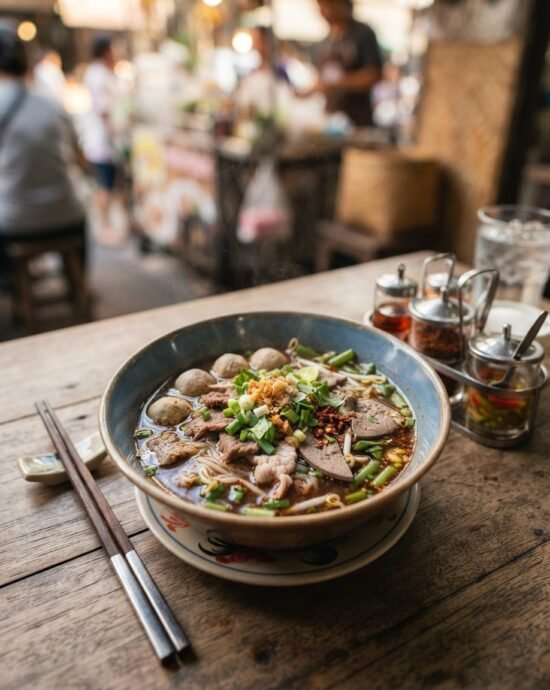
What sets this Ayutthaya-style beef version apart is its broth, which layers toasted whole spices and fermented bean curd over a long-simmered beef and bone stock, producing a broth that’s darker, spicier, and more aromatic than simpler pork-based renditions. Thin slices of tender beef shank, along with beef meatballs, sit atop delicate rice noodles and a scattering of morning glory and bean sprouts.
Fried garlic sprinkled over the top adds a final layer of savory crunch, while condiments at the table let each diner fine-tune the heat and acidity to their own preference. It’s a dish deeply tied to place and history, and tasting it is often described by Thai food enthusiasts as tracing the origin of boat noodles back to where the tradition began.
Ingredient Notes
- Beef shank: Beef shank turns fork-tender after a long simmer while still holding its shape well enough to slice thinly. Choose a piece with good marbling and connective tissue, which breaks down into rich, silky gelatin over time.
- Star anise and cinnamon: These whole spices give the broth its warm, aromatic backbone. Toast them briefly before adding to the broth to release more of their essential oils and deepen their flavor.
- Fermented bean curd: This pungent, salty condiment adds a distinctive umami depth found in many traditional Ayutthaya-style broths. A little goes a long way, so start with a small amount and adjust to taste.
- Flat rice noodles (sen lek): As with the pork version, thin rice noodles are the traditional choice, chosen for how well they carry the rich, spiced broth without becoming heavy.
Ingredient Suggestions
1. Beef tendon: Simmered until tender, it adds a chewy, gelatinous texture that’s prized in traditional versions of this dish.
2. Chinese celery: A few chopped leaves add a fresh, slightly peppery aroma that complements the rich, spiced broth.
3. Crispy fried shallots: An extra sprinkle on top adds sweetness and crunch alongside the fried garlic.
4. Bean curd puffs: These absorb the broth beautifully and add a soft, spongy texture alongside the beef.
5. A dash of Chinese five-spice: For an even more layered broth, a small pinch alongside the whole spices deepens the aromatic complexity.
Helpful Tips & Pro Tips
- Toast the whole spices briefly before adding them to the broth; this step significantly deepens their aroma compared to adding them raw straight from the jar.
- Simmer the beef shank low and slow rather than at a rolling boil, which keeps the meat tender rather than toughening it and clouds the broth less.
- Slice the cooked beef against the grain for the most tender bite; slicing with the grain results in noticeably chewier pieces even after a long simmer.
- Use fermented bean curd sparingly at first and taste as you go, since it’s quite salty and pungent and easy to overdo in a broth this size.
- Strain out the whole spices before serving if you prefer a cleaner presentation, or leave them in for a more rustic, traditional look at the table.
How to Serve and Store
Serve this beef version of boat noodles hot, in small traditional portions, with fried garlic sprinkled on top and condiments like chili flakes and vinegar available at the table. The spiced beef broth stores exceptionally well, keeping in the refrigerator for up to three days or in the freezer for up to three months, since the long-simmered flavors actually deepen slightly overnight. Store the sliced beef separately from the broth to prevent it from drying out, and always blanch fresh noodles just before serving rather than storing them pre-cooked in the broth.
Substitutions
- Beef shank and bones → Mushroom and kombu-based broth with seitan slices — This plant-based alternative captures a similar depth and chew, keeping the dish fully vegan. (Vegan)
- Fermented bean curd → Miso paste — Miso offers a comparable salty, fermented depth if fermented bean curd isn’t available locally. (Budget-Friendly)
- Dark soy sauce → Tamari with a touch of molasses — This combination replicates the color and gentle sweetness of dark soy sauce while keeping the dish gluten-free. (Gluten-Free)
- Beef meatballs → Additional sliced beef shank — Simply using more sliced beef in place of meatballs works well if meatballs aren’t readily available.
- Star anise → A small pinch of Chinese five-spice powder — Five-spice powder already contains star anise and can substitute for the whole spice in a pinch.
Suggested Recipes
1. Boat Noodles: Compare this deeper, spiced beef broth to the classic pork version for a full boat noodle tasting experience.
2. Moo Ping: Grilled pork skewers make a great starter or side dish alongside a rich bowl of spiced beef noodle soup.
3. Gai Pad Med Mamuang: For a lighter, drier dish to balance the richness of this broth, this cashew chicken stir-fry works well.
4. Tub Tim Grob: A cold, refreshing dessert like this one is an ideal way to finish a meal built around a warm, spiced broth.

Jeff Smith
"Cooking is the intersection of history, science, and emotion."
For me, the kitchen has always been a laboratory of culture. With a background deeply rooted in digital strategy and precision, I approach the culinary arts with the same rigor I apply to the digital landscape—analyzing flavors, perfecting techniques, and documenting the nuance that makes Filipino cuisine truly world-class.
Findme Recipe was born from a desire to bridge the gap between traditional heritage and the modern home cook. Whether it is mastering the perfect balance of acidity in a classic Adobo or simplifying complex regional dishes for everyday kitchens, my mission is to preserve our culinary identity through accessible, data-backed, and delicious content.
I am not just building a database; I am cultivating a community where every Filipino kitchen feels empowered, every ingredient is celebrated, and every family heirloom recipe finds a place to thrive.
Join me as we translate the soul of our islands into recipes for the next generation.